Shekhawat hails ₹23,731 Cr GOBARdhan CBG push
Synopsis
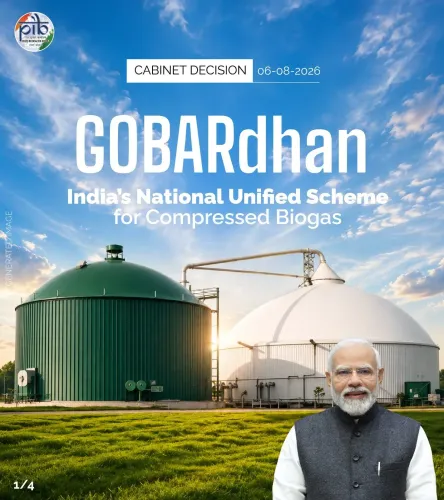
The Cabinet has approved the National Integrated GOBARdhan Scheme with a ₹23,731 crore outlay to scale Compressed Biogas production from cattle dung and crop waste, boosting rural incomes and cutting India's dependence on imported fuel.
Key Takeaways
The Cabinet approved the National Integrated GOBARdhan Scheme with a ₹23,731 crore outlay on August 6, 2026 .
Union Minister Gajendra Singh Shekhawat hailed the decision as a breakthrough for Compressed Biogas production and rural energy.
The scheme converts cattle dung and agricultural waste into Compressed Biogas (CBG) , a domestic substitute for imported natural gas.
GOBARdhan was originally launched in 2018 under the Swachh Bharat Mission-Gramin ; this upgrade scales it into a national energy infrastructure programme.
New income opportunities are expected for farmers and rural households who supply feedstock to CBG plants.
Key metrics to watch: speed of new CBG plant commissioning and achievement of production targets across states.
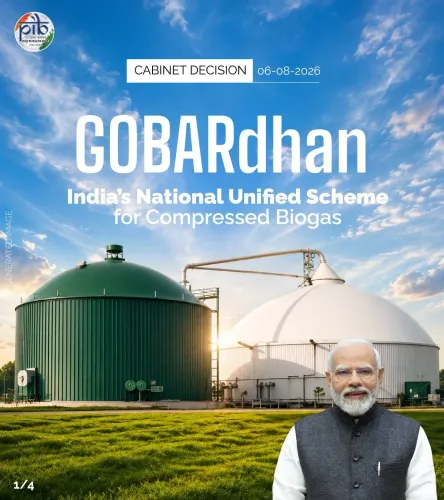
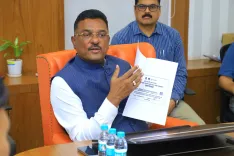
A single Cabinet decision just redrawn India's rural energy map. Union Culture and Tourism Minister Gajendra Singh Shekhawat on Thursday, August 6, 2026, welcomed the government's approval of the National Integrated GOBARdhan Scheme, backed by a ₹23,731 crore outlay, calling it a transformative step for Compressed Biogas production, farm incomes, and India's energy independence.
What the ₹23,731 crore scheme promises farmers
Shekhawat, posting on X under the hashtag #CabinetDecisions, said the scheme will open 'new income opportunities for farmers and rural areas' while promoting clean energy and reducing dependence on imported fuel. The scale of the outlay signals a step-change from earlier, smaller biogas interventions — turning what was once a village-level sanitation tool into a national energy infrastructure play.
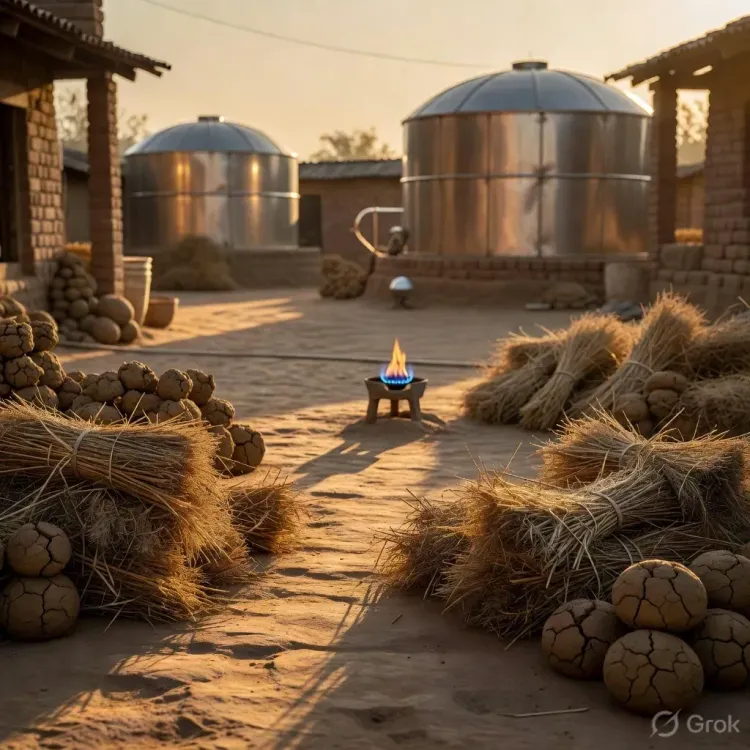
At its core, the scheme converts cattle dung and organic agricultural waste into Compressed Biogas (CBG) — a fuel that can substitute Compressed Natural Gas in vehicles, industry, and cooking. Every tonne of waste processed is a tonne of imported petroleum not bought.
GOBARdhan's journey from Swachh Bharat to energy security
The GOBARdhan scheme was first launched in 2018 under the Swachh Bharat Mission-Gramin, designed to set up biogas plants in villages using cattle dung and crop residue — cleaning the countryside while generating fuel and bio-fertilizer. The 'National Integrated' upgrade now announced scales that village-level idea into a centralised, production-targeted programme with a nine-figure rupee commitment behind it.
India's biofuel policy arc has been building toward exactly this. A string of waste-to-energy programmes over the past decade has steadily widened the feedstock base — from municipal solid waste to agricultural stubble — and the GOBARdhan expansion plugs directly into that lineage. The rural household is no longer just a beneficiary of clean cooking fuel; it becomes a feedstock supplier in a national energy chain.
What to watch as rollout begins
The real test lies in execution: how fast new CBG plants are commissioned, whether production targets are met, and how efficiently farm-gate procurement of dung and crop waste is organised. State governments will be key implementation partners, and any parliamentary updates on plant-wise targets will be an early signal of momentum.
For India's energy import bill — and for the rural household looking for a steady supplementary income — the numbers in those quarterly rollout reports will matter far more than the Cabinet headline.
A scheme seven years in the making now has its biggest funding mandate yet. The clock on delivery has started.
Point of View
Converting a Swachh Bharat sanitation tool into an energy-security instrument. The ₹23,731 crore commitment signals that CBG is no longer a peripheral biofuel experiment but a mainstream policy priority. For the BJP government, the scheme threads together three electoral and governance imperatives — rural income support, clean energy optics, and import substitution — in a single announcement. The real political test will be whether plant commissioning keeps pace with the funding ambition.
NationPress
6 Aug 2026
Frequently Asked Questions
What is the GOBARdhan scheme?
GOBARdhan (Galvanising Organic Bio-Agro Resources Dhan) is a Central government scheme, first launched in 2018 under Swachh Bharat Mission-Gramin, that converts cattle dung and agricultural waste into biogas and bio-fertilizer to support rural incomes and clean energy.
What is Compressed Biogas (CBG) and how is it used?
Compressed Biogas is biogas purified and compressed to a quality similar to Compressed Natural Gas. It can be used as fuel for vehicles, industrial heating, and cooking, and is seen as a domestic alternative to imported natural gas.
How much money has the government approved for the National Integrated GOBARdhan Scheme?
The Cabinet approved an outlay of ₹23,731 crore for the National Integrated GOBARdhan Scheme, as announced on August 6, 2026.
How will GOBARdhan benefit farmers?
Farmers can supply cattle dung and crop residue as feedstock to CBG plants, creating a new income stream alongside existing agricultural earnings, while also gaining access to bio-fertilizer as a byproduct.
What is the link between GOBARdhan and India's energy security?
By producing CBG domestically from agricultural waste, India can substitute imported petroleum and natural gas, reducing its fuel import bill and strengthening overall energy self-reliance.