Shekhawat Hails Cabinet Nod for 117.7 km Kanpur-Bundelkhand Highway
Synopsis
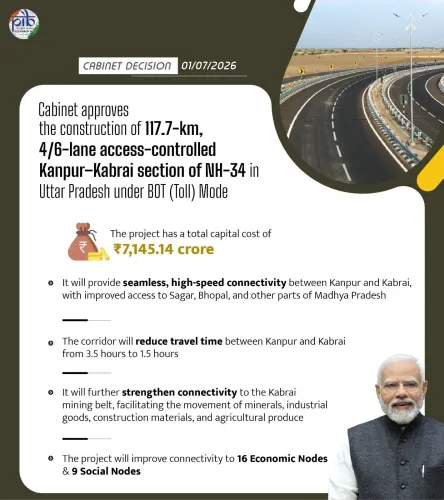
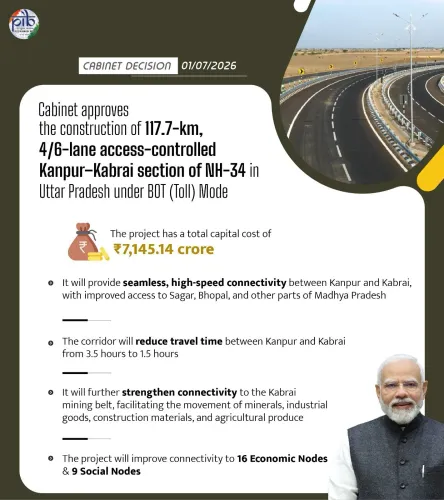
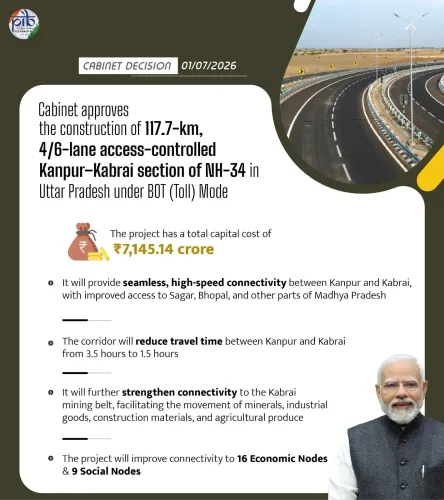
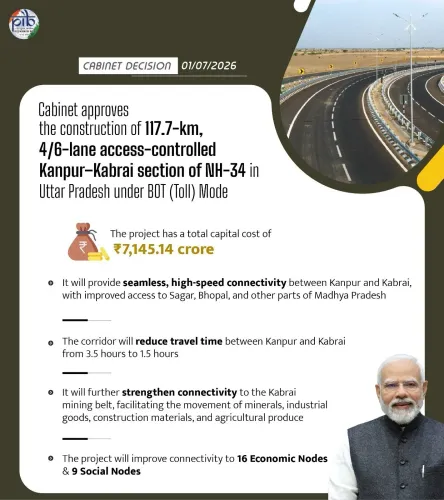
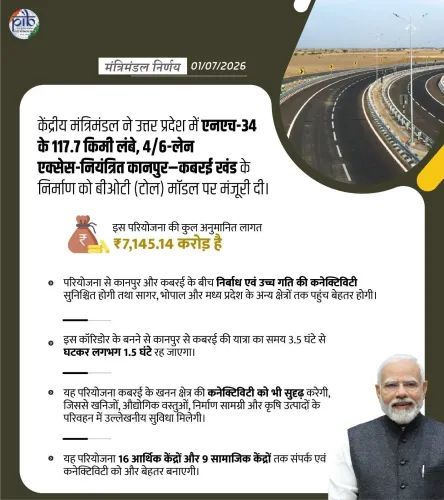
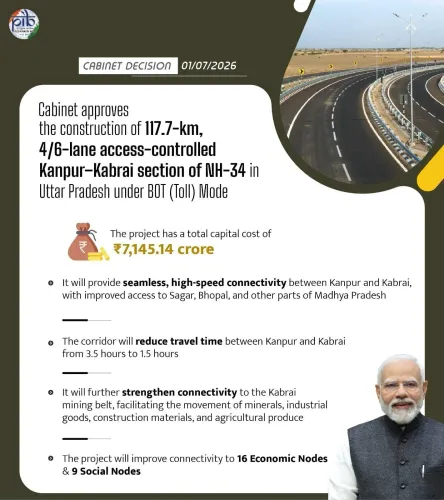
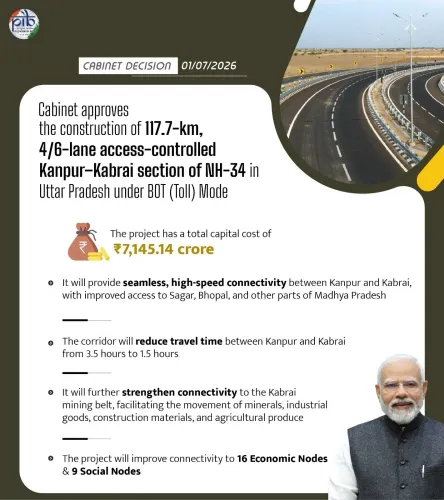
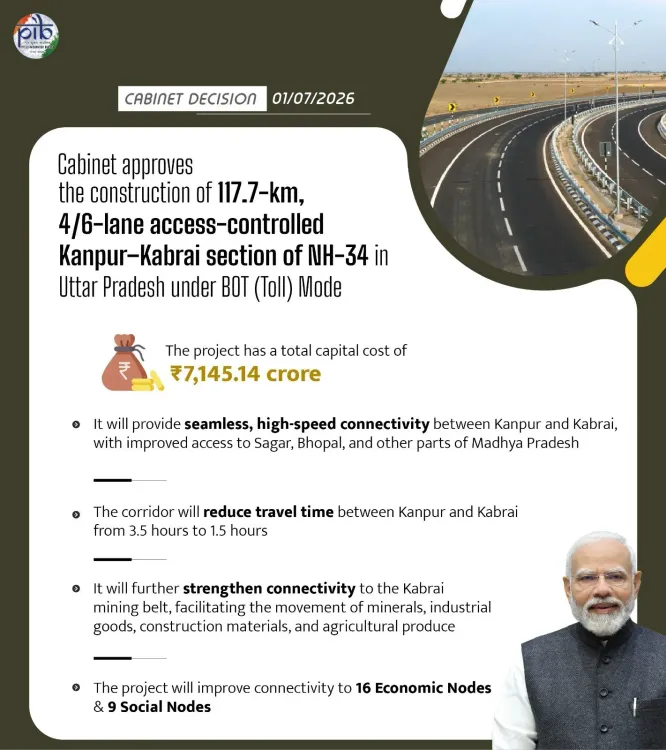
The Union Cabinet has approved a 117.7-kilometre access-controlled national highway linking Kanpur and Bundelkhand, Union Minister Gajendra Singh Shekhawat announced on 1 July 2026, calling it a major boost for regional connectivity, economic growth and employment in central Uttar Pradesh.
Key Takeaways
The Union Cabinet approved construction of a 117.7-km access-controlled national highway connecting Kanpur and Bundelkhand .
Union Minister Gajendra Singh Shekhawat announced the decision on 1 July 2026 via X under #CabinetDecisions .
The project is positioned to improve connectivity for Kanpur, Bundelkhand and surrounding areas of Uttar Pradesh .
The highway aligns with the Bharatmala Pariyojana framework targeting over 34,800 km of national highway construction.
The project is expected to generate local employment during construction and reduce logistics costs for the region's industrial and agricultural sectors.
Next steps include a detailed project report, land acquisition notifications and tendering by NHAI .
Union Culture and Tourism Minister Gajendra Singh Shekhawat on Wednesday, 1 July 2026, welcomed a Cabinet decision to construct a 117.7-kilometre access-controlled national highway that will link Kanpur with the Bundelkhand region, calling it a landmark step toward economic development and job creation in central Uttar Pradesh.
Context
Posting on X under the hashtag #CabinetDecisions, Shekhawat said the project would bring 'shandar sudhar' (remarkable improvement) to connectivity across Kanpur, Bundelkhand and surrounding areas. He described it as 'ek mahatvapurn kadam' — an important step — toward the region's holistic economic growth and employment generation. The post accompanied an image flagged alongside the announcement, signalling the government's intent to publicise the Cabinet clearance widely.
Policy Backdrop
The highway fits within the broader architecture of Bharatmala Pariyojana, launched in 2015, which targets the construction of roughly 34,800 km of national highways and expressways across India. The National Infrastructure Pipeline, announced in 2019, separately earmarked substantial road-sector allocations for Uttar Pradesh, with successive central governments prioritising access-controlled corridors to cut travel times and reduce logistics costs in the state's central and eastern belts.
Bundelkhand — a drought-prone plateau straddling Uttar Pradesh and Madhya Pradesh — and the industrial city of Kanpur have featured in multiple phases of national highway expansion aimed at integrating manufacturing clusters with markets in Delhi-NCR and central India. The National Highways Authority of India (NHAI), operating under the Ministry of Road Transport and Highways, is the nodal agency responsible for executing such projects.
Stakeholders and Impact
Residents across the Bundelkhand belt — long underserved by high-quality road infrastructure — stand to benefit most directly from reduced travel times and lower freight costs. Kanpur, historically one of Uttar Pradesh's largest industrial centres with a significant leather, textile and manufacturing base, is expected to gain improved supply-chain connectivity to both regional and national markets.
Businesses operating logistics, agriculture and mineral extraction in Bundelkhand could see reduced turnaround times, while the construction phase itself is anticipated to generate local employment, a point Shekhawat specifically highlighted in his post. Access-controlled highways also typically improve road-safety outcomes compared with conventional two-lane or four-lane stretches.
What's Next
Following Cabinet approval, the standard procedural sequence involves the release of a detailed project report, land acquisition notifications under the relevant highway laws, and tendering by NHAI. Timelines for each stage will depend on the pace of land acquisition — historically the most time-sensitive element of highway projects in densely populated corridors of Uttar Pradesh. Stakeholders and regional industry bodies will closely watch the alignment notification and environmental clearance process in the months ahead.
Point of View
Making this approval as much a political signal as an infrastructure milestone. For Shekhawat — a Culture and Tourism minister amplifying a Road Transport decision — the post underscores how Cabinet approvals are now routinely cross-promoted by the entire Cabinet to maximise outreach. The real test will be execution speed, particularly land acquisition, which has historically been the critical bottleneck for highway projects in densely populated Uttar Pradesh corridors.
NationPress
1 Jul 2026
Frequently Asked Questions
What is the Kanpur-Bundelkhand national highway project approved by the Cabinet?
The Union Cabinet approved the construction of a 117.7-kilometre access-controlled national highway designed to improve connectivity between Kanpur, Bundelkhand and surrounding areas of Uttar Pradesh, as announced on 1 July 2026.
How will the 117.7 km highway benefit Bundelkhand?
The highway is expected to reduce travel and freight costs for Bundelkhand's agriculture, mineral and logistics sectors, generate local employment during construction, and link the region more efficiently with industrial centres and markets in Delhi-NCR and central India.
Which government agency will build the Kanpur-Bundelkhand highway?
The National Highways Authority of India (NHAI), operating under the Ministry of Road Transport and Highways, is the nodal agency responsible for developing and maintaining such national highway projects.
What is Bharatmala Pariyojana and how does this highway relate to it?
Bharatmala Pariyojana is a central government programme launched in 2015 targeting the construction of approximately 34,800 km of national highways and expressways. The Kanpur-Bundelkhand access-controlled corridor fits within this broader highway expansion framework for Uttar Pradesh.
What are the next steps after Cabinet approval of the highway?
After Cabinet approval, the process moves to release of a detailed project report, land acquisition notifications under highway laws, and tendering by NHAI. Land acquisition is typically the most time-sensitive phase for highway projects in Uttar Pradesh.