China's 'two-faced diplomacy' in Central Africa: Arms, mines, and mixed signals
Synopsis
A new Africa Defense Forum report exposes China's calculated double game in Central Africa: publicly calling for peace in Sudan while arming both sides of its civil war, and protecting cobalt and copper mines in the DRC by funding security for both the government and its rivals. The pattern, analysts say, is not an anomaly — it mirrors Beijing's posture in the South China Sea almost exactly.
Key Takeaways
Africa Defense Forum magazine published a report accusing China of deploying 'two-faced diplomacy' in Central Africa , publicly backing peace while enabling conflict.
In Sudan , Chinese state-owned companies have reportedly supplied weapons to both sides of the civil war, even as Beijing presents itself as a potential mediator.
In the DRC , firms linked to Beijing control major cobalt, coltan, copper, and uranium mines; Congolese troops have been deployed repeatedly to protect Chinese-operated sites.
Samir Bhattacharya of the Observer Research Foundation wrote that China maintains simultaneous defence ties with the DRC government , Rwanda , and Uganda — fuelling the very instability it claims to oppose.
Philippines Defence Secretary Gilberto Teodoro Jr. separately accused Beijing of 'insincerity and hypocrisy' over its rejection of the 2016 South China Sea arbitral ruling .
Teodoro, reportedly barred from entering China since 11 June , vowed Manila would continue defending its territorial sovereignty.
China is publicly championing peace and regional stability in Central Africa while simultaneously enabling violence through weapons sales and strategic economic manoeuvring, according to a detailed report in Africa Defense Forum (ADF) magazine. The findings, published in July 2025, accuse Beijing of deploying a calculated dual-track strategy that protects its resource interests even as it prolongs the conflicts it claims to oppose.
The Sudan Contradiction
In Sudan, China has publicly positioned itself as a potential peace mediator in the ongoing civil war. Yet that diplomatic posture sits in sharp contrast to the documented proliferation of weapons manufactured by Chinese state-owned companies, which have reportedly supplied arms to both sides of the conflict, according to the ADF report. Critics argue this approach extends the very instability Beijing claims to want resolved.
The DRC: Mining Interests Drive Security Calculus
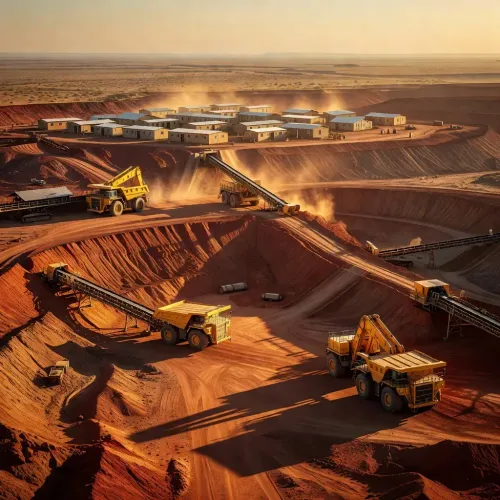
Nowhere is this contradiction more visible than in the Democratic Republic of the Congo (DRC). China's primary interests there are economic — firms linked to Beijing reportedly control a dominant share of the country's cobalt, coltan, copper, and uranium mines. Congolese armed forces have been repeatedly deployed to mining sites in the country's east specifically to protect Chinese-operated facilities, the ADF report noted.
Samir Bhattacharya, an associate fellow at the Observer Research Foundation, wrote in his 11 May essay titled 'The Two Faces of China's Security Engagement in Central Africa' that Beijing has simultaneously partnered with the DRC government while maintaining defence and economic ties with Rwanda and Uganda — two countries whose interests frequently conflict with Kinshasa's.
According to Bhattacharya, China has 'supported training programmes for Congolese security personnel, provided logistical assistance, and encouraged the deployment of local troops to protect Chinese-operated mining facilities.' This approach, he argued, allows Beijing to secure its investments while maintaining the appearance of a non-interventionist state.
The DRC's ongoing battles with M23 rebels have seen Chinese drones and weaponry deployed on both sides of the front line, as the DRC, Rwanda, and Uganda have all procured Chinese arms. 'Beijing's growing military and defence-industrial activities in the region signal a narrow, opportunistic turn that risks fueling further instability,' Bhattacharya wrote.
'This two-faced diplomacy — designed to protect investments and enhance influence — risks ultimately undermining the very investments it seeks to secure,' he added, in a warning that frames China's short-term opportunism as a long-term strategic liability.
A Pattern Echoed in the South China Sea
The Central Africa findings arrive amid a parallel diplomatic confrontation in the South China Sea, where Philippines Defence Secretary Gilberto Teodoro Jr. recently accused China of 'insincerity and hypocrisy' after Beijing rejected Manila's demand to comply with the landmark 2016 arbitral ruling by the Permanent Court of Arbitration — a decision that invalidated Beijing's expansive territorial claims and ruled in favour of the Philippines.
Teodoro, who has reportedly been barred from entering China since 11 June, described Beijing's response to the Philippine foreign ministry's statement as 'an arrogant display of deceptive indignation,' adding that 'what they say is no longer credible, that's why they are resorting to agitation.'
Despite the escalating rhetoric, Teodoro reaffirmed that Manila would continue defending its territorial interests. 'We will not be oppressed,' he said, underscoring the Philippine government's commitment to sovereignty in the disputed waters.
Strategic Significance and What Comes Next
The South China Sea remains one of Asia's most volatile geopolitical flashpoints, bordered by China and several Southeast Asian nations including the Philippines, Vietnam, Malaysia, Brunei, and Taiwan. Analysts note that Beijing's dual-track behaviour — economic partnership on one hand, coercive military positioning on the other — appears consistent across theatres, from Central Africa's mineral corridors to the Indo-Pacific's contested maritime lanes.
Whether international pressure, multilateral scrutiny, or the economic risks flagged by analysts like Bhattacharya will alter Beijing's calculus remains an open question as both regions watch China's next moves closely.
Point of View
Deliberate strategy rather than isolated commercial decisions. Beijing's ability to arm both the DRC government and its adversaries while positioning itself as a neutral economic partner is a masterclass in strategic ambiguity, and it is working precisely because no multilateral body has the leverage or will to call it out. The parallel with the South China Sea is instructive: China's playbook — economic dependency, selective security partnerships, and rhetorical non-interventionism — is being exported globally. The question mainstream coverage rarely asks is why African governments continue to deepen ties with an actor that, by the ADF's own account, is prolonging their conflicts. The answer likely lies in the absence of credible alternatives for infrastructure finance and arms supply, which is itself an indictment of the West's disengagement from the continent.
NationPress
30 Sept 2026
Frequently Asked Questions
What is China's 'two-faced diplomacy' in Central Africa?
The term refers to Beijing's practice of publicly advocating for peace and non-intervention in Central Africa while simultaneously arming conflict parties and securing economic interests through strategic security partnerships. The Africa Defense Forum report documents this dual approach in both Sudan and the DRC.
How is China involved in the DRC conflict?
Firms linked to Beijing reportedly control a dominant share of DRC's cobalt, coltan, copper, and uranium mines. China has also maintained defence ties with the DRC government, Rwanda, and Uganda simultaneously, and Chinese drones and weapons have been found on both sides of the DRC's conflict with M23 rebels.
What did Samir Bhattacharya say about China's role in Central Africa?
Bhattacharya, an associate fellow at the Observer Research Foundation, wrote in his 11 May essay that Beijing's growing military and defence-industrial activities in the region signal a 'narrow, opportunistic turn' that risks fuelling further instability. He warned that China's two-faced diplomacy could ultimately undermine the very investments it seeks to protect.
What is China's position in Sudan, and why is it controversial?
China has presented itself as a potential peace mediator in Sudan's civil war. However, Chinese state-owned companies have reportedly supplied weapons to both sides of the conflict, directly contradicting Beijing's stated neutrality and prolonging the violence, according to the ADF report.
How does China's behaviour in Central Africa relate to the South China Sea dispute?
Analysts note a consistent pattern: in both theatres, China publicly espouses dialogue and non-aggression while taking coercive or destabilising actions on the ground. In the South China Sea, Philippines Defence Secretary Teodoro accused Beijing of 'insincerity and hypocrisy' after it rejected the binding 2016 arbitral ruling that invalidated China's territorial claims.