China's $50bn African port push raises sovereignty and military concerns: Report
Synopsis
China controls or influences nearly 78 ports across 32 African nations — and a new ADF report argues the $50 billion BRI investment is less about trade than leverage. With Djibouti already converted into a PLA Navy base and Kenya bleeding over $1 billion a year on railway debt, the report frames Beijing's African port strategy as a dual-use playbook: infrastructure today, military foothold tomorrow.
Key Takeaways
China has invested an estimated $50 billion in African port infrastructure since 2013 under the Belt and Road Initiative .
Beijing is financing, building, or operating nearly 78 trade ports across 32 African countries .
Kenya pays over $1 billion per year to service railway debt to China; the line ends 468 km short of its intended Ugandan destination.
Djibouti's Doraleh Port was converted into China's first overseas military base in 2017 .
Researcher Paul Nantulya warns that AI and automation systems in Chinese-built ports create long-term financial and strategic dependencies for African governments.
China's expanding footprint across African ports is undermining the sovereignty of host nations and enabling potential military and intelligence repurposing, according to a new report by the US-based Africa Defense Forum (ADF). The findings, released on 15 July, draw on a decade of investment data and expert assessments to flag structural risks embedded in Beijing's infrastructure strategy on the continent.
Scale of Chinese Investment
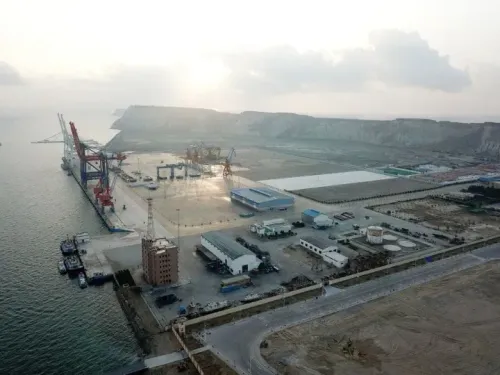
Since 2013, China has poured an estimated $50 billion into African port infrastructure as part of its Belt and Road Initiative (BRI), which encompasses port upgrades, railway corridors, and industrial zone development. According to the report, China is currently financing, constructing, holding equity stakes in, or operating nearly 78 trade ports across 32 African countries — a presence that makes it the continent's single largest external port operator.
Debt Dependency and Lack of Transparency
While Chinese investment has undeniably expanded trade volumes, analysts cited in the report warn that many deals are structured without adequate public disclosure, saddling governments with heavy debt obligations and long-term operational dependencies. Paul Nantulya, a researcher at the Africa Center for Strategic Studies, cautioned that reliance on Chinese technical support — particularly automation and artificial intelligence systems now embedded in African port operations — could cost recipient nations billions of dollars in ongoing maintenance commitments.
Nantulya further noted that the absence of public access to agreements and weak institutional oversight has raised concerns that Chinese firms could consolidate influence over strategically important infrastructure through equity participation, long-term leases, or operational management arrangements.
Kenya's Railway: A Cautionary Tale
The report highlights Kenya's Standard Gauge Railway — built by Chinese contractors and once promoted as a transformative economic corridor for East Africa — as a stark illustration of BRI overreach. The line, stretching from Mombasa to Nairobi and intended to reach Uganda, now ends 468 kilometres short of the Ugandan border, with the terminal unused in a cornfield. Kenya currently spends over $1 billion per year servicing its railway debt to China, which has become the country's largest external creditor.
Military Dimension
The sovereignty concerns extend beyond economics. The ADF report cited an Italian digital newspaper's findings suggesting China may be using African port facilities for military purposes, pointing to a marked increase in port calls by the People's Liberation Army Navy (PLAN). The most concrete precedent is Djibouti's Doraleh Port, a Chinese-developed facility that was converted into China's first overseas military base in 2017 — a development that set off alarm bells among Western defence analysts and African security researchers alike.
This comes amid broader international scrutiny of BRI's dual-use infrastructure model, with similar concerns raised in Sri Lanka, Pakistan, and parts of Southeast Asia. Notably, this is not the first time an ADF-linked report has flagged the PLAN's expanding African port access; the pattern has been documented across multiple assessments since 2020.
What Comes Next
The report stops short of prescribing policy remedies but implicitly calls for greater transparency in port concession agreements and stronger multilateral oversight frameworks. African governments face a difficult balance: Chinese capital remains among the few readily available sources of large-scale infrastructure financing, yet the structural terms of these deals are increasingly drawing scrutiny from domestic civil society groups and international watchdogs alike. How individual nations renegotiate or audit existing agreements will likely define the next chapter of China-Africa infrastructure relations.
Point of View
But its framing risks obscuring a harder question: African governments signed these deals, often with full knowledge of the terms. The sovereignty crisis is as much about weak domestic institutions and limited financing alternatives as it is about Chinese strategy. That said, the Djibouti precedent is unambiguous — a commercial port became a PLA base, and the transition was seamless. If that template is replicable across 78 facilities, the strategic calculus for the Indian Ocean region changes materially. India, which shares maritime space with several of these ports, has particular reason to track this trajectory closely.
NationPress
13 Oct 2026
Frequently Asked Questions
How much has China invested in African ports?
China has invested an estimated $50 billion in African port infrastructure since 2013, according to the Africa Defense Forum report. This spans financing, construction, equity stakes, and operational control across nearly 78 ports in 32 African countries.
What is the Djibouti Doraleh Port case?
Djibouti's Doraleh Port, developed with Chinese involvement, was converted into China's first overseas military base in 2017. It is cited as the clearest example of a BRI commercial port being repurposed for military use.
Why is Kenya's Standard Gauge Railway controversial?
Kenya's Chinese-built Standard Gauge Railway was promoted as a major economic corridor but ends 468 kilometres short of the Ugandan border, with the terminal unused. Kenya now spends over $1 billion annually servicing the railway debt owed to China, its largest external creditor.
What sovereignty risks do African ports face?
According to the ADF report, many Chinese port deals lack transparency and include equity stakes, long-term leases, or management agreements that could give Chinese firms operational control over strategic infrastructure. Embedded AI and automation systems also create ongoing financial dependencies.
Who is Paul Nantulya and what did he warn?
Paul Nantulya is a researcher at the Africa Center for Strategic Studies. He warned that African nations' reliance on Chinese technical support for port automation and AI systems could cost them billions in future maintenance costs, and that weak oversight could allow Chinese firms to gain undue influence over critical infrastructure.