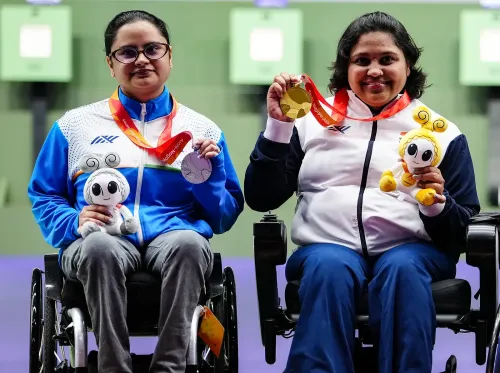
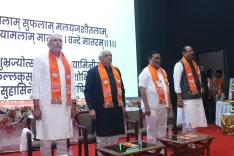
Shekhawat hails India's 114-medal haul at Asian Para Games 2026
Synopsis
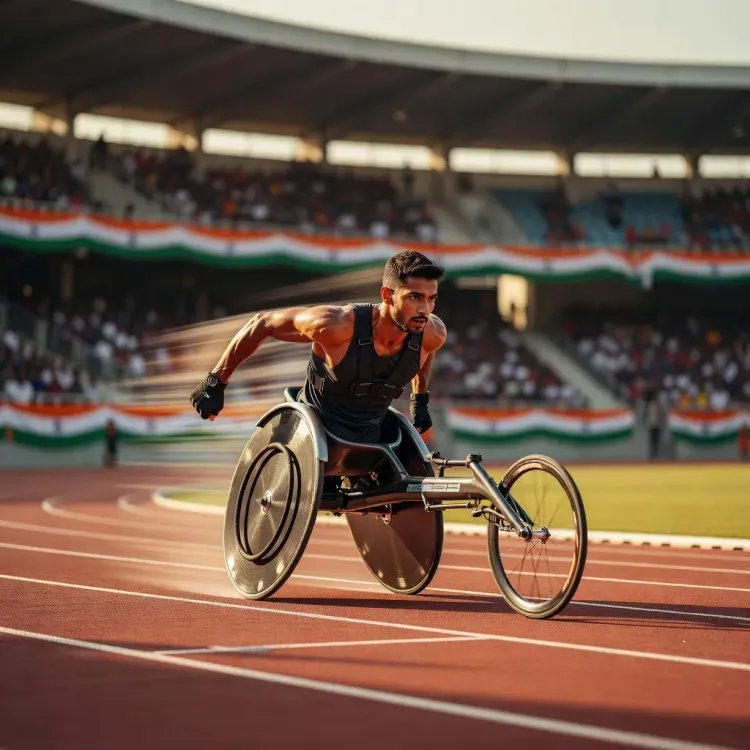
Union Minister Gajendra Singh Shekhawat praised India's para athletes for a record 114-medal tally at the Asian Para Games 2026, crediting PM Modi's sports policy environment — including TOPS and Khelo India — for the historic achievement.
Key Takeaways
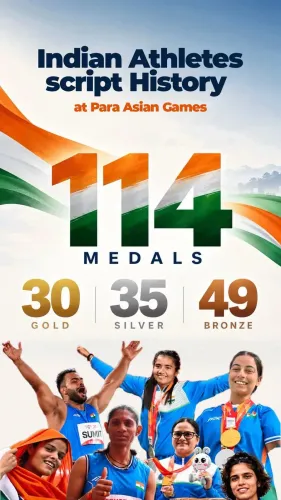
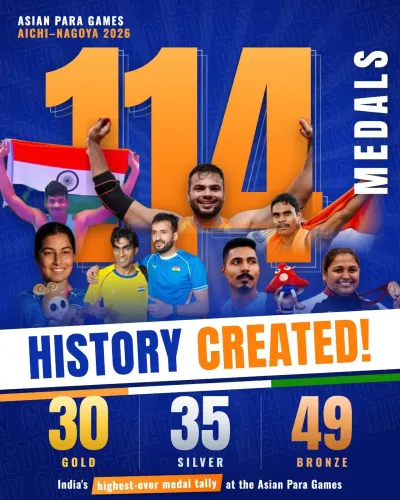
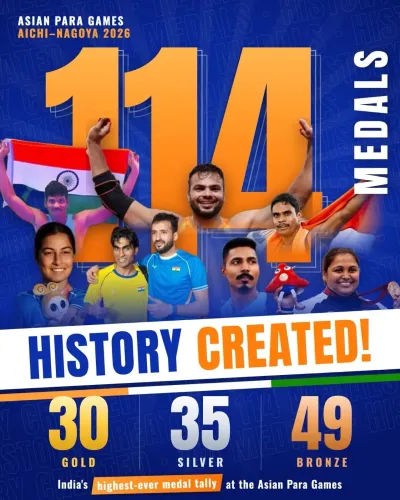
India won a record 114 medals at the Asian Para Games 2026 , its best-ever tally at the continental tournament.
Union Culture and Tourism Minister Gajendra Singh Shekhawat congratulated all para athletes on 25 October 2026 via X.
Shekhawat credited PM Narendra Modi's leadership for creating a 'healthy and positive environment' for sports and athletes in India.
The Target Olympic Podium Scheme (TOPS) , launched in 2014 , and Khelo India , launched in 2017 , are the two flagship programmes underpinning India's para-sports rise.
Para sports have been progressively mainstreamed within India's national sports policy rather than managed as a separate vertical.
The record haul is expected to anchor future government conversations around supplementary budget allocations for para-sports infrastructure.
India's para athletes have written a new chapter in the country's sporting history — and Union Culture and Tourism Minister Gajendra Singh Shekhawat wants every Indian to sit up and take notice. On Sunday, 25 October 2026, the senior BJP leader and Lok Sabha MP from Jodhpur took to X to congratulate every para athlete who contributed to India's record tally of 114 medals at the #AsianParaGames2026, calling it a moment that 'raises the nation's pride.'
In his post, Shekhawat wrote — 'भारत की खेल प्रतिभाएं दुनियाभर में चमक बिखेर रही हैं' ('India's sporting talents are shining across the world') — and specifically praised the 'matchless athletes' whose performance at the continental para games had set a new national benchmark. He added that their 'hard work and self-confidence are not just touching new heights but also paving the way for others to reach them.'
114 medals and a continental record
The Asian Para Games is the premier continental multi-sport competition for para athletes across Asia, held under the aegis of the Asian Paralympic Committee. India's previous appearances at these games had been progressively stronger, and the 114-medal tally in 2026 represents the country's best-ever haul at the tournament. The achievement spans gold, silver, and bronze across multiple disciplines, reflecting the depth of talent that India's para-sports pipeline has been quietly building.
The policy architecture behind the podium
Shekhawat's post was not merely celebratory — it explicitly linked the result to the sports policy environment built under Prime Minister Narendra Modi. That link has a concrete foundation. The Target Olympic Podium Scheme (TOPS), launched in 2014, extended targeted financial and logistical support to elite para sportspersons alongside their Olympic-track counterparts — a deliberate mainstreaming of para disciplines rather than treating them as an afterthought. The Khelo India programme, introduced in 2017, deepened the pipeline further through grassroots talent identification, infrastructure investment, and incentive structures at the state level.
Together, these two pillars have produced a measurable upward curve in India's medal counts at Asian-level competitions over the past decade. The 2026 para haul is, in that sense, the compounding interest on years of institutional investment.
A message to India's sporting youth
Shekhawat's closing line carried an unmistakable signal beyond the congratulations: 'हमारे युवा किसी से कम नहीं' — 'Our youth are second to none.' In a country of 1.4 billion people where para sports have historically been underfunded and underexposed, that framing — delivered by a senior cabinet minister — carries weight. It signals that the Centre intends to keep para sports within the mainstream policy conversation rather than relegating them back to the margins once the medal celebrations fade.
With the next Paralympic cycle now in view and questions about supplementary budget allocations for para-sports infrastructure growing louder, the 114-medal moment may well become a political as much as a sporting milestone — a number the government will anchor future sports-funding conversations around.
Point of View
The deliberate mainstreaming of para sports within TOPS and Khelo India over the past decade represents a structural, not merely rhetorical, shift: para athletes now compete for the same institutional resources as Olympic-track athletes. Whether the political momentum from this milestone translates into a dedicated para-sports budget line in the next Union Budget will be the real test of how deep the government's commitment runs.
NationPress
25 Oct 2026
Frequently Asked Questions
How many medals did India win at the Asian Para Games 2026?
India won a record 114 medals at the Asian Para Games 2026 , its highest-ever tally at the continental para-sports competition.
What did Union Minister Shekhawat say about the Asian Para Games 2026?
Union Culture and Tourism Minister Gajendra Singh Shekhawat congratulated all para athletes on the record 114-medal haul, saying their 'hard work and self-confidence are touching new heights' and attributed the achievement to the sports environment built under PM Modi .
What is the Khelo India programme?
Khelo India is a national sports promotion programme launched in 2017 to identify and support grassroots talent, develop sports infrastructure, and provide incentives for young athletes across India, including para sportspersons.
What is the Target Olympic Podium Scheme (TOPS)?
The Target Olympic Podium Scheme (TOPS) was launched in 2014 to provide elite Indian athletes — including para sportspersons — with direct financial support, coaching, equipment, and access to international competition exposure.
Why is India improving in para sports?
India's rising para-sports medal counts are linked to a decade of policy investment through TOPS and Khelo India , which mainstreamed para disciplines within the national sports framework, expanded funding, and improved training infrastructure for para athletes.