Shekhawat Hails PM Modi's Hydrogen Train Launch in Jind

Synopsis
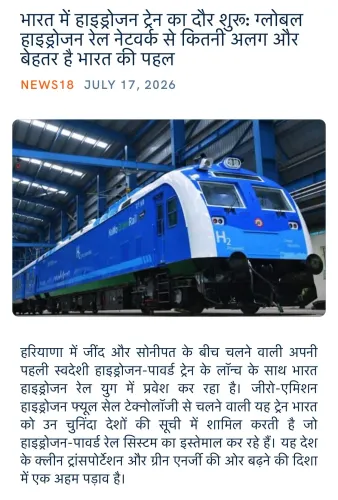
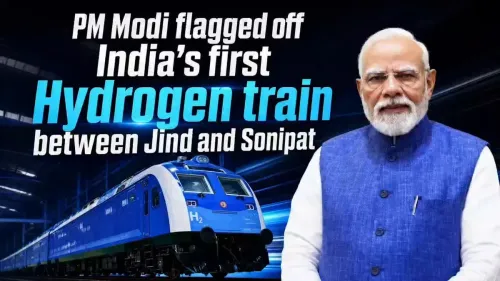
Prime Minister Narendra Modi flagged off India's first hydrogen train in Jind, Haryana, on 17 July 2026, also inaugurating multiple development projects. Union Minister Gajendra Singh Shekhawat hailed the massive public reception, calling it unprecedented. The launch advances India's National Green Hydrogen Mission and its net-zero rail decarbonisation goals.
Key Takeaways
PM Narendra Modi visited Jind, Haryana on 17 July 2026 to flag off India's first hydrogen-powered train.
The event also saw Modi inaugurate and lay the foundation stone of multiple development projects in the region.
Union Minister Gajendra Singh Shekhawat described the public turnout as 'unprecedented' ( अभूतपूर्व ).
The hydrogen train initiative is rooted in Indian Railways' net-zero strategy, with trials planned since the 2020-21 budget .
The National Green Hydrogen Mission , approved in January 2023 , identified hydrogen rail transport as a priority sector.
The launch supports India's broader goal of achieving net-zero carbon emissions by 2070 .
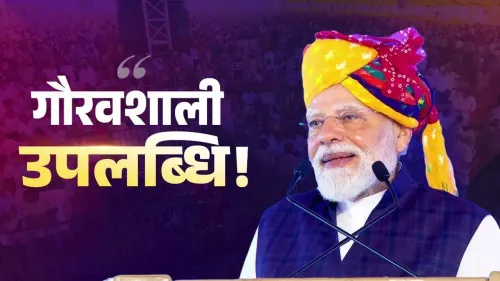
Union Culture and Tourism Minister Gajendra Singh Shekhawat on Friday, 17 July 2026, praised Prime Minister Narendra Modi's visit to Jind, Haryana, where Modi flagged off India's first hydrogen train and inaugurated and laid the foundation stone of multiple development projects, drawing a massive public turnout.
Context
Shekhawat, posting on X, described the reception Modi received in Jind as unprecedented — 'अभूतपूर्व स्वागत' ('an extraordinary welcome') — from the assembled crowd. The minister noted that Modi had arrived in the Haryana district specifically to flag off the country's first hydrogen-powered train and to dedicate and lay the groundwork for various development projects. The post was accompanied by a video capturing the event's scale.
The flagging-off of India's first hydrogen train marks a significant milestone in the country's push toward green mobility. Jind, a district in central Haryana, served as the venue for what is being projected as a landmark moment in Indian Railways' decarbonisation journey.
Policy Backdrop
Indian Railways had outlined plans for hydrogen fuel-cell train trials as far back as its 2020-21 budget announcements, framing them as part of a broader net-zero emissions strategy. The National Green Hydrogen Mission, approved in January 2023, further elevated hydrogen-powered rail transport as a priority sector, allocating focus and resources toward pilot projects of this nature.
India's rail network has been simultaneously pursuing 100 percent electrification of its broad-gauge routes, and the introduction of hydrogen trains is seen as complementary to that effort — targeting routes where overhead electrification may be less viable. The initiative feeds into India's stated goal of achieving net-zero carbon emissions by 2070.
Stakeholders and Impact
Railway passengers and residents of Haryana stand to benefit most immediately from the hydrogen train rollout, which promises cleaner, quieter operations compared to diesel-powered alternatives. For the state, the choice of Jind as the launch venue carries both logistical and political significance, placing a national infrastructure milestone within the heartland of Haryana.
Broader stakeholders include India's emerging green hydrogen industry, which stands to gain from demonstrated demand in the transport sector. The National Green Hydrogen Mission has set ambitious targets for domestic production, and a functioning hydrogen train in commercial or trial operation provides a high-visibility use case that can catalyse further investment.
What's Next
Attention will now turn to the operational details of the hydrogen train — including its designated route, passenger capacity, and the timeline for expanding the fleet beyond this inaugural unit. Indian Railways is expected to evaluate performance data from this pilot before committing to a wider rollout across additional corridors.
Integration with state-level green mobility plans, particularly in states like Haryana that have shown receptiveness to clean-energy infrastructure, will also be closely watched. The success of this launch could accelerate the pace at which hydrogen technology is adopted across India's vast rail network.
Point of View
A politically significant state, as the venue for this launch is consistent with the BJP's pattern of anchoring national infrastructure moments in electorally salient geographies. For Indian Railways, the hydrogen train represents a hedge against the limitations of full electrification, particularly on routes where overhead infrastructure is difficult to deploy. Minister Shekhawat's amplification of the event underscores how the BJP's senior leadership is collectively invested in projecting green infrastructure as a governance achievement ahead of the political cycle.
NationPress
17 Jul 2026
Frequently Asked Questions
What is India's first hydrogen train and where was it launched?
India's first hydrogen-powered train was flagged off by Prime Minister Narendra Modi in Jind, Haryana, on 17 July 2026, marking a landmark moment in the country's push for green rail mobility.
What is the National Green Hydrogen Mission?
The National Green Hydrogen Mission is a central government scheme approved in January 2023 to scale up domestic green hydrogen production and its application in priority sectors, including railway transport.
Why is a hydrogen train significant for Indian Railways?
Hydrogen fuel-cell trains offer a clean alternative to diesel on routes where overhead electrification is not viable, helping Indian Railways work toward its net-zero emissions target by 2070.
What development projects did PM Modi inaugurate in Jind?
Alongside flagging off the hydrogen train, PM Modi inaugurated and laid the foundation stone of multiple development projects in Jind, Haryana, though specific project details were not enumerated in the minister's post.
What did Minister Gajendra Singh Shekhawat say about the Jind event?
Shekhawat described the public reception for PM Modi in Jind as 'unprecedented' ( अभूतपूर्व स्वागत ), noting the large crowd that gathered to witness the hydrogen train launch and project inaugurations.