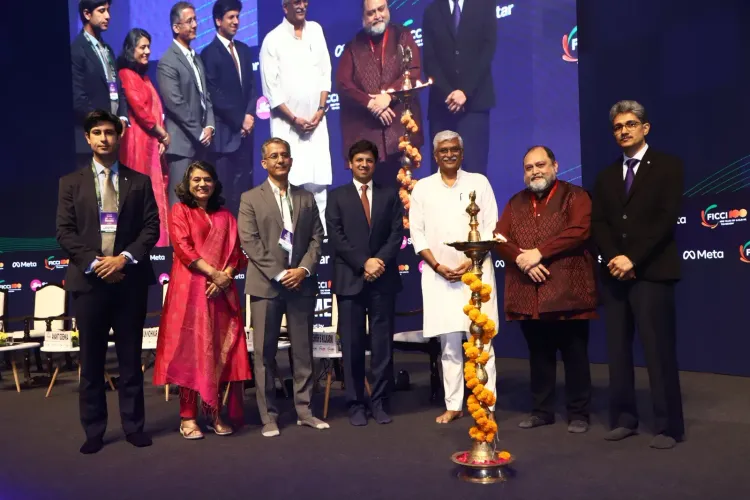
Shekhawat Inaugurates FICCI FRAMES 26 in Mumbai
Synopsis
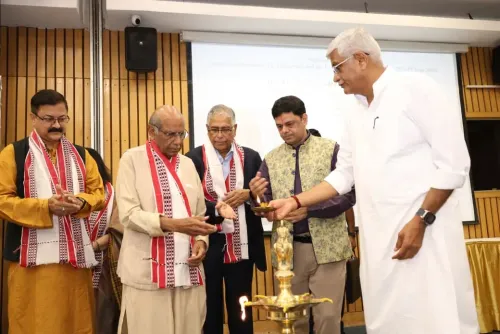
Union Culture and Tourism Minister Gajendra Singh Shekhawat inaugurated FICCI FRAMES 26 in Mumbai on 29 September 2026, positioning India as a global content hub spanning cinema, streaming, gaming, AI, and the creator economy under PM Modi's 'create for the world' vision.
Key Takeaways
FICCI FRAMES 26 was inaugurated by Union Minister Gajendra Singh Shekhawat in Mumbai on 29 September 2026 .
The conference theme — 'India's Media Moment: Creating Value in an Age of Infinite Content' — signals a pivot from domestic focus to global content export.
Shekhawat cited cinema, streaming, gaming, AI, and the creator economy as the five pillars of India's content future.
The minister linked the vision to PM Modi's directive to 'create in India and create for the world,' an extension of the Make in India doctrine to creative sectors.
The 'Vikas Bhi, Virasat Bhi' framing positions technology and cultural heritage as complementary, not competing, forces in India's media growth.
Tourism and culture were explicitly connected: Indian stories seen globally are also a vehicle for promoting Indian heritage destinations worldwide.
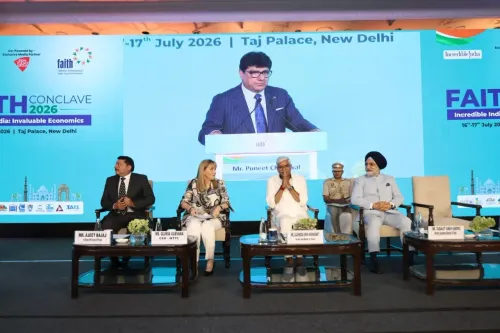
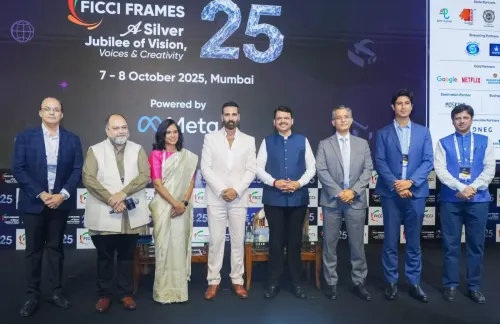
India's creative economy stepped into the spotlight on Tuesday, 29 September 2026, as Union Culture and Tourism Minister Gajendra Singh Shekhawat inaugurated the 26th edition of FICCI FRAMES in Mumbai — the country's entertainment capital — under the theme 'India's Media Moment: Creating Value in an Age of Infinite Content.' The choice of theme was no accident: it signals that India's media industry is no longer content to play catch-up.
A 26-Year-Old Stage, a Brand-New Mandate
FICCI FRAMES, organised by the Federation of Indian Chambers of Commerce and Industry, has been the media and entertainment sector's annual reckoning since its first edition. By its 26th iteration, the conversation has shifted dramatically — from protecting domestic box-office share to exporting Indian stories to every streaming queue on the planet. Shekhawat framed the moment precisely: 'From cinema and streaming to gaming, AI and the creator economy, the future belongs to those who can combine technology with human creativity and authentic stories.'
That is a wider aperture than the conference has historically trained on. Gaming, artificial intelligence, and the creator economy now sit alongside film and television as first-class agenda items — reflecting where the money, the talent, and the global audience attention are actually moving.
'Create in India, Create for the World'
The minister explicitly anchored the session in Prime Minister Narendra Modi's vision, invoking the directive that India must 'create in India and create for the world.' The phrase is a creative-economy extension of the broader Make in India doctrine launched in 2014, now applied to content rather than just manufactured goods. The logic is straightforward: India has the storytelling heritage, the technical workforce, and — increasingly — the digital infrastructure to serve not just 1.4 billion domestic consumers but global audiences hungry for non-Western narratives.
Shekhawat tied the ambition to tourism as well, arguing that authentic Indian stories can carry 'our culture, heritage and destinations to every corner of the globe.' For a minister who holds both the Culture and Tourism portfolios, that linkage is strategic: a hit Indian streaming series or a globally distributed film is also a tourism advertisement that no paid campaign can replicate.
'Vikas Bhi, Virasat Bhi' — Development and Heritage, Together
The minister closed with the government's signature cultural framing — 'Vikas Bhi, Virasat Bhi' (Development too, Heritage too) — a phrase that has become the BJP government's shorthand for arguing that modernisation and tradition are not in tension but in partnership. Applied to the media sector, it positions AI-assisted production and ancient storytelling traditions as complementary rather than competing forces.
The AVGC sector — Animation, Visual Effects, Gaming, and Comics — has been a stated policy priority, with the government having set up a task force in recent years to chart its growth. FICCI FRAMES is the industry's most visible annual platform to translate that policy intent into deals, partnerships, and international co-production agreements. Whether fresh incentives or new bilateral content agreements emerge from this edition will be the metric by which the conference's ambition is ultimately judged.
India has the raw material. The question FICCI FRAMES 26 puts on the table is whether the ecosystem — policy, capital, and creative talent — can now industrialise it at global scale. Shekhawat just raised the bar for what the answer needs to look like.
Point of View
Not just a domestic cultural asset. Holding both Culture and Tourism portfolios, Shekhawat is uniquely positioned to push the argument that content is infrastructure for soft power and inbound tourism alike. The 'Vikas Bhi, Virasat Bhi' framing, repeated at a commercial industry summit, suggests the BJP is consciously weaving its cultural identity politics into economic policy. The real test will be whether FICCI FRAMES 26 produces concrete AVGC incentives or international co-production frameworks — or remains an aspirational statement.
NationPress
29 Sept 2026
Frequently Asked Questions
What is FICCI FRAMES and why is the 26th edition significant?
FICCI FRAMES is an annual media and entertainment industry conference organised by the Federation of Indian Chambers of Commerce and Industry. The 26th edition, held in Mumbai in September 2026, is significant because it broadens its focus to include gaming, AI, and the creator economy alongside traditional film and television, reflecting the sector's rapid digital transformation.
What did Gajendra Singh Shekhawat say at FICCI FRAMES 26?
Shekhawat said India's rich storytelling heritage, creative talent, and evolving technology present a 'tremendous opportunity' to become a global content hub, and called on the industry to combine technology with human creativity and authentic stories as envisioned by PM Modi.
What does 'Vikas Bhi, Virasat Bhi' mean in the context of media?
'Vikas Bhi, Virasat Bhi' translates to 'Development too, Heritage too.' Applied to the media sector, it means India should pursue modern technologies like AI and streaming while grounding its content in its rich cultural and historical traditions.
How does India plan to become a global content creation hub?
India's strategy rests on leveraging its storytelling traditions, a large English and multilingual talent pool, and expanding digital infrastructure, supported by government policies like Make in India extended to creative sectors and a dedicated AVGC task force.
What is the AVGC sector and why does it matter for India?
AVGC stands for Animation, Visual Effects, Gaming, and Comics — a high-growth segment of the creative economy. India has identified it as a priority sector for job creation and global export, and FICCI FRAMES serves as its primary annual industry platform.