Shekhawat Greets Fathers on Father's Day, Invokes 'Pitrudevo Bhavah'
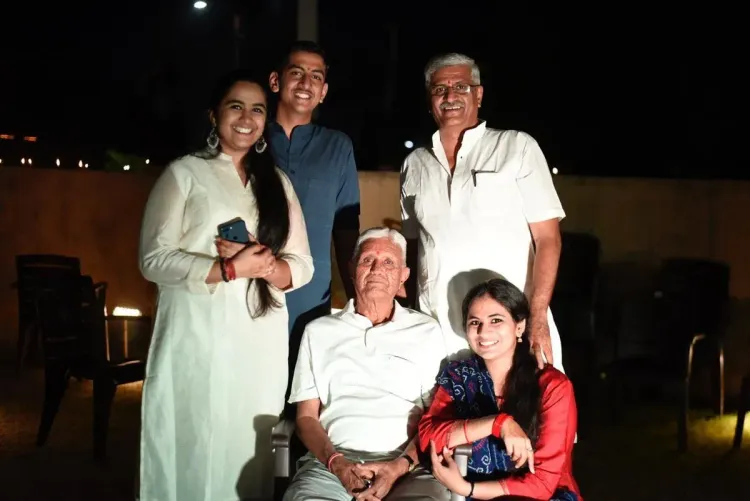
Synopsis
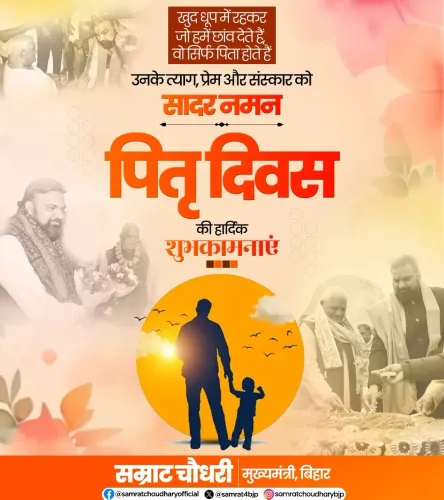
Union Culture and Tourism Minister Gajendra Singh Shekhawat marked Father's Day on 21 June 2026 with a Sanskrit-rooted tribute on X, honouring fathers for their sacrifice and endurance and closing with the Vedic invocation 'Pitrudevo Bhavah' from the Taittiriya Upanishad.
Key Takeaways
Gajendra Singh Shekhawat , Union Minister of Culture and Tourism, posted a Father's Day tribute on X on 21 June 2026 .
He praised fathers for enduring the 'struggles and hardships of the world' to bring happiness to their children.
The post described a father's sacrifice, affection, dedication, and tenderness as 'an invaluable blessing of life.' He closed with the Vedic invocation Pitrudevo Bhavah , drawn from the Taittiriya Upanishad , meaning 'the father is divine.' The post reflects the Ministry of Culture's consistent practice of anchoring contemporary observances in classical Indian civilisational values.
Union Culture and Tourism Minister Gajendra Singh Shekhawat on Sunday, 21 June 2026, extended greetings on Father's Day, paying tribute to fathers across the country and invoking the ancient Sanskrit ideal of Pitrudevo Bhavah — 'the father is divine.'
Context
In his post on X, Shekhawat offered a respectful salute to all fathers who, as he wrote, 'sansar ke sangharshon aur kathinaiyon ko sahan kar' — 'endure the struggles and hardships of the world' — and labour ceaselessly to bring happiness to their children's faces. He described the sacrifice, affection, dedication, and tenderness of the father figure as 'an invaluable blessing of life,' closing with the Vedic invocation Pitrudevo Bhavah.
Father's Day is observed annually on the third Sunday of June. In recent years, the occasion has seen growing social-media participation across India, with public figures blending the global observance with traditional cultural messaging.
Policy Backdrop
The phrase Pitrudevo Bhavah originates in the Taittiriya Upanishad, one of the principal Upanishads of the Vedic corpus, which also enshrines the parallel ideals of reverence for the mother, the teacher, and the guest. The Ministry of Culture under Shekhawat has consistently drawn on such classical Sanskrit texts in its public communication, framing civilisational values as central to India's cultural identity.
BJP leaders have made it a pattern to use family-oriented observances — from Mother's Day to Father's Day — to reinforce messaging around Indian familial ideals, often weaving Sanskrit shlokas and references to classical literature into social-media greetings. This aligns with the ministry's broader mandate of promoting Indian heritage and civilisational values.
Stakeholders and Impact
The post is addressed to Indian families at large, particularly fathers whose everyday sacrifices, the minister noted, form the quiet foundation of family life. By anchoring a globally observed day in a Vedic phrase, Shekhawat signals the government's intent to reclaim and reinforce indigenous frameworks of familial reverence alongside contemporary observances.
Cultural observers note that the use of classical Sanskrit in ministerial social-media communication serves a dual purpose: it resonates with a culturally attuned domestic audience while also projecting the depth of India's textual heritage to a wider readership.
What's Next
The Ministry of Culture is expected to continue its calendar of social-media engagement around annual family observances and festivals, using such occasions to amplify the government's civilisational-values messaging. As India's festival and observance calendar is dense, similar posts invoking Sanskrit ideals and traditional family roles are likely to follow through the year.
Point of View
Western-origin occasion with classical Indian textual authority. By closing with 'Pitrudevo Bhavah' from the Taittiriya Upanishad, the minister does more than send greetings — he positions the Ministry of Culture as the custodian of a living Vedic tradition. This is consistent with a broader pattern in which the ministry's public communication doubles as soft-power outreach, reinforcing the government's civilisational-values narrative ahead of a packed festival calendar. Such posts cost nothing politically and earn significant cultural capital among the ministry's core constituency.
NationPress
20 Sept 2026
Frequently Asked Questions
What did Gajendra Singh Shekhawat post on Father's Day 2026?
Union Culture and Tourism Minister Gajendra Singh Shekhawat posted a tribute on X on 21 June 2026, honouring all fathers for their sacrifice and endurance and invoking the Sanskrit phrase 'Pitrudevo Bhavah,' meaning 'the father is divine.'
What does 'Pitrudevo Bhavah' mean?
'Pitrudevo Bhavah' is a Sanskrit phrase from the Taittiriya Upanishad meaning 'the father is divine' or 'may the father be unto you as a god.' It is part of a set of Vedic injunctions on reverence for parents, teachers, and guests.
When is Father's Day celebrated in India in 2026?
Father's Day in 2026 falls on Sunday, 21 June, as it is observed on the third Sunday of June each year.
Why do BJP ministers use Sanskrit phrases in Father's Day greetings?
BJP ministers frequently invoke Sanskrit shlokas and classical Indian texts on family-oriented occasions to align with the party's emphasis on promoting Indian civilisational values and heritage, a theme central to the Ministry of Culture's public outreach.
Who is Gajendra Singh Shekhawat?
Gajendra Singh Shekhawat is a senior BJP leader, Lok Sabha MP from Jodhpur in Rajasthan, and currently serves as India's Union Minister of Culture and Tourism.