Shekhawat joins Goa architecture confab in New Delhi
Synopsis
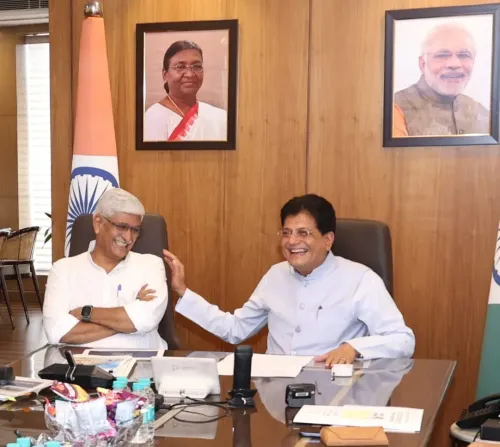
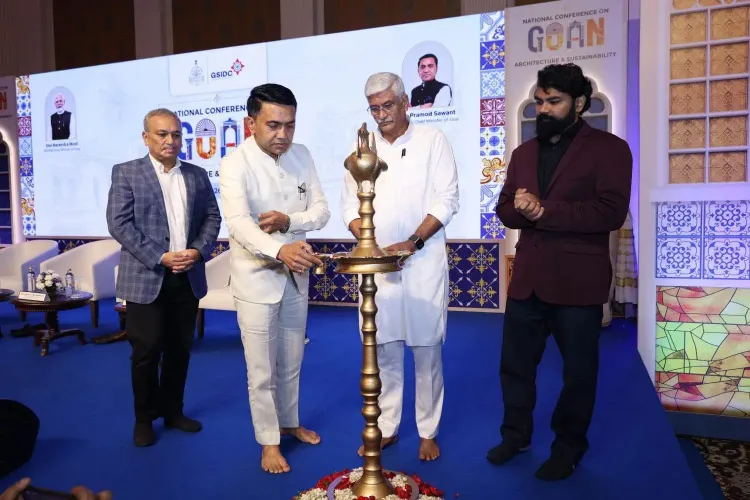
Union Culture and Tourism Minister Gajendra Singh Shekhawat joined Goa Chief Minister Dr. Pramod Sawant at a national conference on Goa's architecture and sustainable development in New Delhi, calling Goa's heritage model an inspiration for the country.
Key Takeaways
The national conference on Goa's Architecture and Sustainable Development was held in New Delhi on 31 July 2026 .
Union Culture and Tourism Minister Gajendra Singh Shekhawat participated alongside Goa Chief Minister Dr.
Shekhawat described Goa's heritage and sustainability model as 'inspirational for the country.' The event aligns with the Ministry of Culture's broader push to link traditional architecture with sustainable urban and tourism planning, including the HRIDAY scheme launched in 2015 .
Shekhawat praised Dr.
Sawant's personal engagement with culture and heritage as 'heartening and meaningful.'
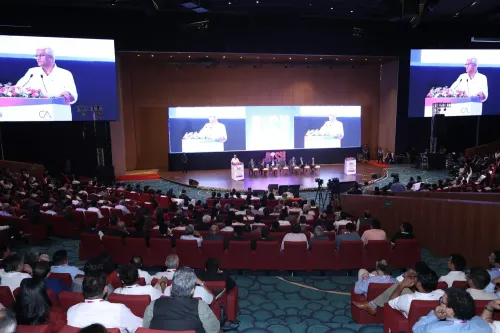
Goa's centuries-old built heritage — a layered conversation between laterite stone, Portuguese arches, and indigenous craft — took centre stage in New Delhi on Friday, 31 July 2026, when Union Culture and Tourism Minister Gajendra Singh Shekhawat participated in the national conference on 'Goa ki Vastukala evam Satat Vikas' ('Goa's Architecture and Sustainable Development'), held in the presence of Goa Chief Minister Dr. Pramod Sawant.
Shekhawat, sharing his participation on X, described Goa's model as 'inspirational for the country' and noted that India's rich architectural heritage and tradition of sustainable development form 'the foundation for building the future.' He also praised Dr. Sawant's personal engagement with culture and heritage as 'heartening and meaningful.'
Why Goa's architecture is a national conversation
Goa holds a singular place in India's built heritage map. Its townscapes carry the imprint of over four centuries of Indo-Portuguese influence — laterite churches, whitewashed mansions, tiled rooftops — sitting alongside vernacular Konkani forms. That layered identity makes it both a conservation challenge and a living laboratory for how heritage and modern development can coexist. Bringing that model to a national platform in New Delhi signals an intent to extract transferable lessons for other heritage-rich states.
The conference fits within a broader pattern of the Ministry of Culture convening thematic national dialogues that spotlight state-specific heritage models. The Ministry's HRIDAY (Heritage City Development and Augmentation Yojana) scheme, launched in 2015, had already established the principle of linking sustainable urban conservation with tourism and liveability — and events like this one extend that thinking into the architecture and planning domain.
Sawant's presence and the state-centre alignment
Dr. Pramod Sawant, Goa's Chief Minister, has consistently foregrounded culture and heritage in his public agenda. His presence at a New Delhi conference — rather than a state-level event — underscores the degree to which Goa's approach to its built environment is being positioned as a replicable framework, not merely a local concern. Shekhawat's warm acknowledgement of Sawant's 'attachment to culture and heritage' reinforces the political alignment between the state government and the Union Ministry on this agenda.
Heritage conservation experts and state tourism departments are the key constituencies watching this space. A national conference of this nature often precedes the drafting of advisory frameworks or state-central collaboration protocols — though no specific outcomes from this event have been confirmed.
India's architectural past has always been its most durable argument for the future. Whether New Delhi now translates Goa's model into a national blueprint will be the real test of this gathering's legacy.
Point of View
' the Ministry of Culture is effectively building a case for expanding the HRIDAY framework into architecture and planning policy. The warm bilateral optics between Shekhawat and Sawant also reinforce the Centre-state alignment ahead of any potential national guidelines on sustainable heritage urbanism. Whether this translates into binding frameworks or remains at the level of ministerial goodwill is the question the sector will be watching.
NationPress
31 Jul 2026
Frequently Asked Questions
What was the national conference on Goa's architecture about?
The conference, held in New Delhi on 31 July 2026, focused on Goa's distinctive architectural heritage and its model for integrating sustainable development with conservation of built heritage.
Who attended the Goa architecture conference in New Delhi?
Union Culture and Tourism Minister Gajendra Singh Shekhawat and Goa Chief Minister Dr. Pramod Sawant were among the key participants at the national conference.
What is the HRIDAY scheme and how does it relate to this event?
HRIDAY (Heritage City Development and Augmentation Yojana) is a Ministry of Culture scheme launched in 2015 to promote sustainable conservation of heritage cities. The conference on Goa's architecture aligns with its goals of linking traditional built heritage with modern planning.
Why is Goa's architecture considered a model for India?
Goa's built environment uniquely blends Indo-Portuguese and vernacular Konkani forms, making it a living example of how layered heritage can coexist with sustainable urban development — a template other heritage-rich Indian states could adapt.
What did Shekhawat say about Goa Chief Minister Pramod Sawant?
Shekhawat praised Dr. Pramod Sawant's personal interest in culture and heritage, calling it 'heartening and meaningful,' and highlighted Goa's model as an inspiration for the rest of the country.