Shekhawat joins Gyan Bharatam workshop to digitise India's manuscripts
Synopsis
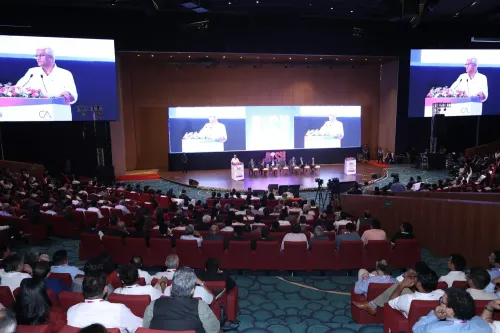
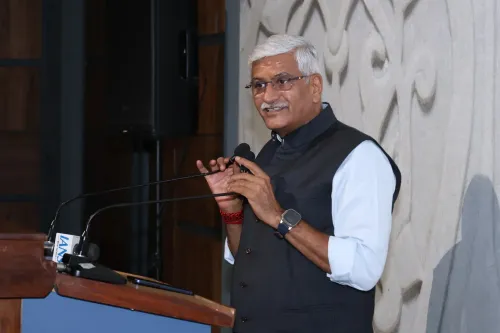
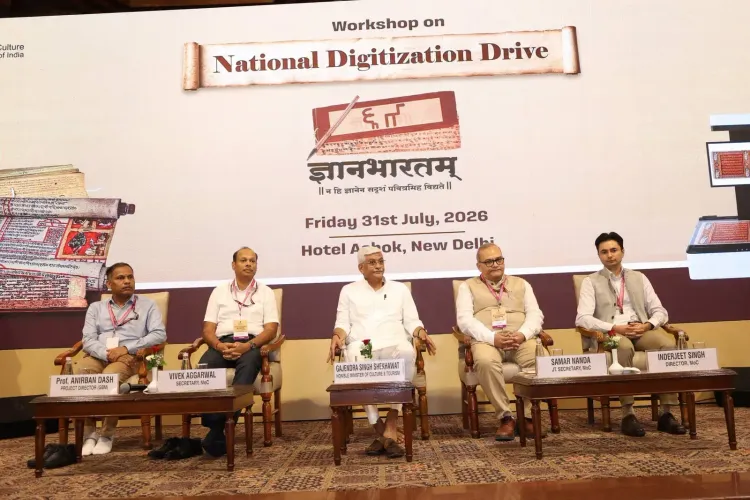
Union Culture Minister Gajendra Singh Shekhawat attended the Gyan Bharatam national digitization workshop in New Delhi on July 31, 2026, calling India's manuscripts and cultural heritage an 'inexhaustible source of knowledge' that must be preserved digitally for future generations.
Key Takeaways
Gajendra Singh Shekhawat attended the Gyan Bharatam national digitization workshop in New Delhi on 31 July 2026 .
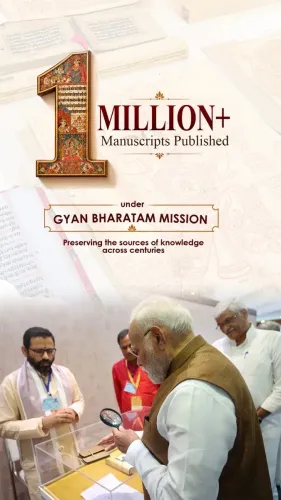
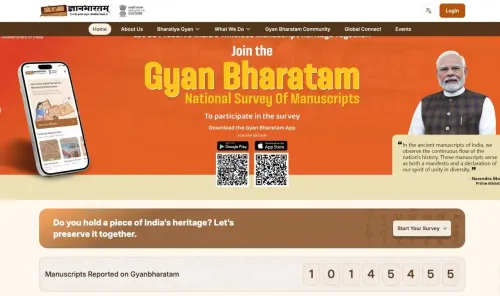
Gyan Bharatam is a Ministry of Culture campaign to digitize India's manuscripts, ancient texts and cultural heritage.
The initiative builds on the National Mission for Manuscripts , first launched in 2003 to survey and catalogue India's manuscript repositories.
The campaign aims to make heritage material 'secure and accessible' for future generations under the broader Digital India framework.
Key beneficiaries include researchers, scholars and students who would gain remote access to digitized collections without handling fragile originals.
India's ancient manuscripts — crumbling on shelves, locked in temple trusts and dusty repositories — are getting a digital lifeline. Union Culture and Tourism Minister Gajendra Singh Shekhawat attended the national workshop of the Gyan Bharatam digitization campaign in New Delhi on Friday, July 31, 2026, calling India's civilisational heritage 'an inexhaustible source of knowledge' that must reach future generations in preserved, accessible form.
Posting in Hindi, Shekhawat framed the mission in sweeping terms: 'भारत की संस्कृति अनंत ज्ञान का स्रोत है' ('India's culture is a source of infinite knowledge'). He added that engaging with India's civilisation, traditions, texts, manuscripts and cultural heritage does not merely illuminate the past — it 'gives direction to our present and paves the path for the future.'
What Gyan Bharatam is trying to do
Gyan Bharatam is a national digitization campaign run by the Ministry of Culture targeting India's vast corpus of manuscripts, ancient texts and intangible cultural heritage. The workshop in Delhi brought together participants to advance what the Minister described as a mission to make 'priceless cultural heritage' secure and accessible in digital form — a task the Ministry sees as its defining preservation challenge of the decade. The initiative sits within a longer policy arc. The National Mission for Manuscripts, launched in 2003, first attempted to survey, catalogue and digitize Indian manuscripts held across thousands of repositories — from private collections to temple libraries. Gyan Bharatam builds on that foundation, folding the work into the broader Digital India framework and extending reach to new categories of heritage material.The scale of what's at stake
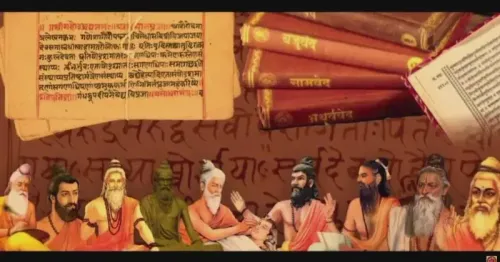
India holds one of the world's largest concentrations of handwritten manuscripts — estimates run into the millions — spanning Sanskrit, Arabic, Persian, Tamil, Telugu and dozens of other languages. Physical degradation, humidity, insects and simple neglect have already claimed an unknown share of that corpus. Digitization is the only credible insurance policy: a high-resolution scan survives where a palm-leaf folio cannot. For researchers and scholars, the downstream benefit is direct access — no travel to distant archives, no handling of fragile originals. For students and the general public, it means a civilisational record that has been largely inaccessible becomes searchable and readable. That is the promise Shekhawat put at the centre of his remarks at the Delhi workshop. The next test for Gyan Bharatam will be whether subsequent phases of the campaign can match the ambition of the launch — integrating digitized collections with national digital libraries and making the material genuinely discoverable, not just stored.Point of View
Suggesting cross-government consensus on preservation even as the political framing differs sharply. The real measure of ambition will be integration with national digital libraries, which remains the unfinished work.
NationPress
25 Oct 2026
Frequently Asked Questions
What is Gyan Bharatam?
Gyan Bharatam is a national digitization campaign run by India's Ministry of Culture to preserve and provide public access to the country's manuscripts, ancient texts and cultural heritage in digital form.
What happened at the Gyan Bharatam workshop in Delhi on July 31 2026?
Union Culture and Tourism Minister Gajendra Singh Shekhawat participated in the national digitization campaign workshop held in New Delhi, emphasising the importance of making India's cultural heritage digitally accessible to future generations.
How is Gyan Bharatam different from the National Mission for Manuscripts?
The National Mission for Manuscripts was launched in 2003 to survey and catalogue India's manuscript repositories. Gyan Bharatam builds on that foundation and operates under the broader Digital India framework, extending the scope to wider categories of cultural heritage material.
Why is digitizing Indian manuscripts important?
India holds one of the world's largest concentrations of handwritten manuscripts across multiple languages. Physical degradation, humidity and neglect pose ongoing threats; digitization creates durable copies and makes collections accessible to researchers and the public without risking the originals.
Who benefits from the Gyan Bharatam digitization campaign?
The primary beneficiaries are researchers, scholars, students and future generations who gain remote, searchable access to ancient texts that were previously confined to distant or restricted archives.