Shekhawat marks Navratri Day 7 with Maa Kalratri prayers
Synopsis
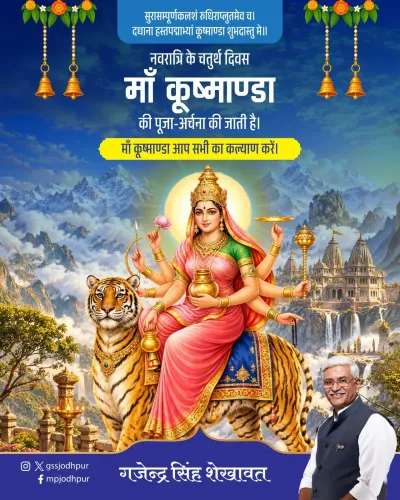
Union Culture and Tourism Minister Gajendra Singh Shekhawat marked Navratri's seventh day with a Sanskrit verse honouring Maa Kalratri, praying that the darkness-destroying goddess bring welfare to all devotees.
Key Takeaways
Gajendra Singh Shekhawat posted devotional greetings for the seventh day of Shardiya Navratri on October 17, 2026 .
The day is dedicated to Maa Kalratri , the seventh and most fierce form of the nine Navadurgas.
The minister shared a Sanskrit shloka invoking the trident of Bhadrakali as a shield against fear and adversity.
Shardiya Navratri culminates in Vijayadashami, the festival of righteousness triumphing over evil.
Indian political leaders, particularly those holding the culture portfolio, routinely share devotional content during major Hindu festivals.
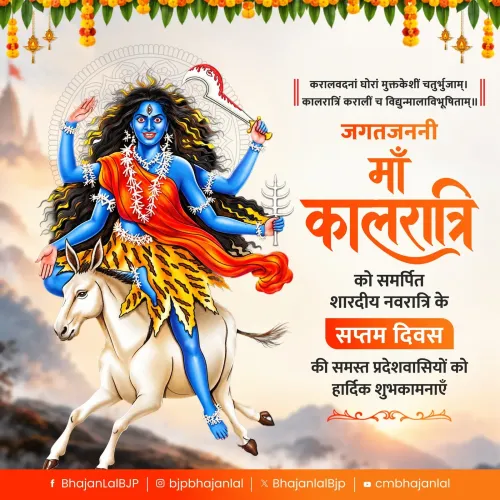
On the seventh day of Shardiya Navratri, Union Culture and Tourism Minister Gajendra Singh Shekhawat invoked the blessings of Maa Kalratri — the fierce, darkness-vanquishing seventh form of Goddess Durga — with a Sanskrit verse and a prayer for the welfare of all devotees.
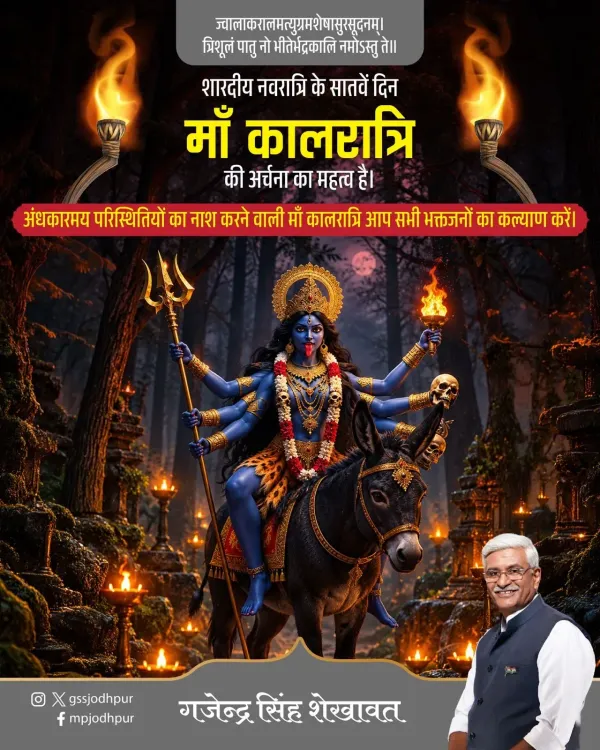
Posting on Saturday, October 17, the minister shared the verse: 'Jwalakaaralamatatyugram asheshaasura soodanam, Trishoolam paatu no bheetar bhadrakaali namostu te' — roughly, 'May the trident that blazes with terrifying, demon-destroying fury protect us from fear; salutations to thee, O Bhadrakali.' He followed it with a note that the seventh day of Shardiya Navratri is dedicated to the worship of Maa Kalratri, and prayed that the goddess — destroyer of dark and adverse circumstances — bring welfare to all devotees.
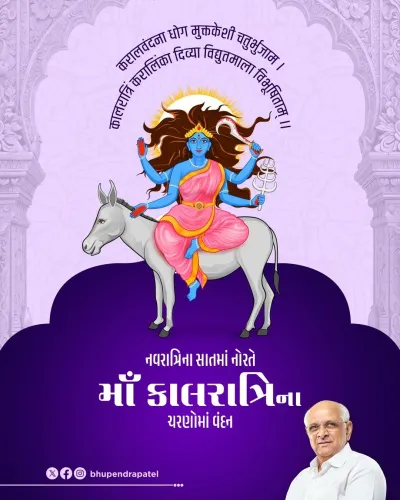
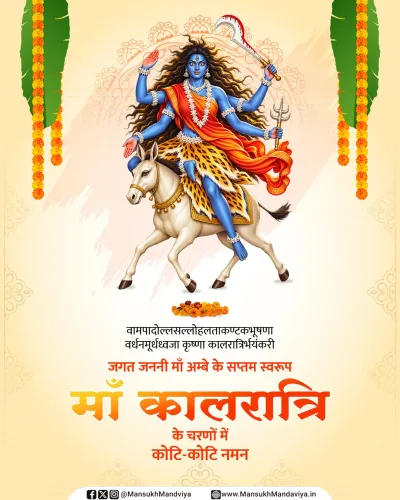
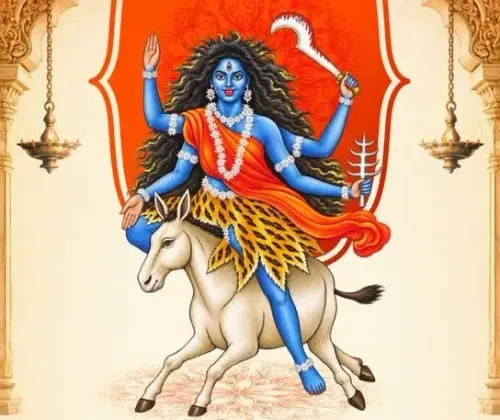
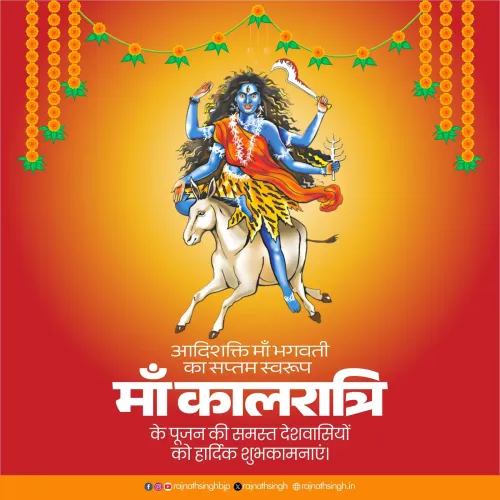
Maa Kalratri is traditionally regarded as the most fierce avatar among the Navadurgas. Her iconography — dark complexion, flowing hair, four arms, a sword and noose in hand — represents the annihilation of ignorance and evil. Devotees observe the seventh day with special rituals, chanting, and offerings, believing her grace removes fear and adversity.
Shardiya Navratri, the nine-night autumn festival honouring the nine forms of Goddess Durga, is among the most widely celebrated Hindu festivals in India. It culminates in Vijayadashami, which marks the triumph of righteousness over evil, and is accompanied by large-scale cultural events, Ram Lila performances, and Durga Puja pandals across the country. As minister holding the culture portfolio, Shekhawat's public devotional expression carries both spiritual and institutional resonance.
Point of View
Particularly in states like Rajasthan where Navratri observance is deeply rooted. For a minister holding the culture portfolio, such expressions carry added institutional weight, signalling alignment between personal faith and the government's broader cultural agenda. The invocation of a fierce, protective goddess on the penultimate stretch of Navratri also coincides with the build-up to Vijayadashami, when cultural programming under the ministry typically peaks. The post contains no policy announcement, but the cultural signalling is deliberate and consistent.
NationPress
17 Oct 2026
Frequently Asked Questions
Which goddess is worshipped on the seventh day of Navratri?
The seventh day of Navratri is dedicated to Maa Kalratri , regarded as the most fierce of the nine Navadurga forms, symbolising the destruction of darkness, ignorance, and evil.
What does the Sanskrit shloka shared by Shekhawat mean?
The verse prays that the blazing trident — which destroys all demons — protect devotees from fear, and offers salutations to Bhadrakali , another name for Maa Kalratri.
When does Shardiya Navratri end in 2026?
Shardiya Navratri spans nine nights and culminates in Vijayadashami , which follows the ninth day (Navami). The exact date in 2026 falls shortly after October 17 , the seventh day marked in this post.
Who is Gajendra Singh Shekhawat?
Gajendra Singh Shekhawat is the Union Minister of Culture and Tourism, a senior BJP leader and a Lok Sabha Member of Parliament from Jodhpur, Rajasthan .
Why do Indian ministers post about Hindu festivals on social media?
Indian political leaders, especially those from the BJP, routinely share devotional content during major festivals to connect with their constituencies and publicly express cultural and religious identity.