Shekhawat marks Samvidhan Hatya Diwas, slams 1975 Emergency
Synopsis
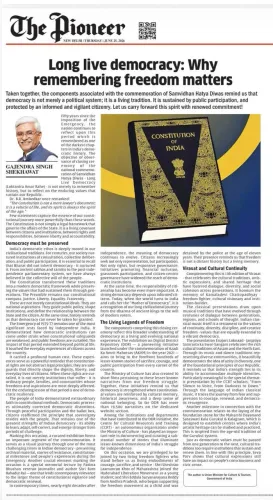
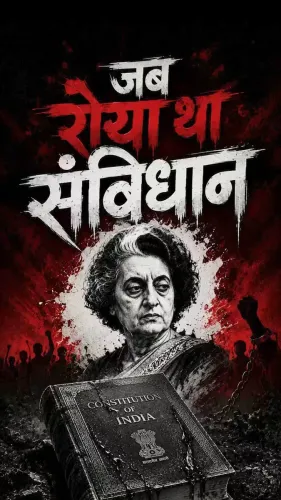
Union Culture and Tourism Minister Gajendra Singh Shekhawat marked the 51st anniversary of the 1975 Emergency on 26 June 2026, calling it an attempt to eclipse the Constitution's soul and condemning the suspension of fundamental rights under #SamvidhanHatyaDiwas.
Key Takeaways
Gajendra Singh Shekhawat , Union Minister of Culture and Tourism, posted on 26 June 2026 marking the 51st anniversary of the 1975 Emergency .
He described the Emergency as an attempt to 'eclipse the soul of the Constitution' driven by an over-ambitious ruler's ambitions.
The post used the hashtag #SamvidhanHatyaDiwas , which the BJP has observed annually on 25 June .
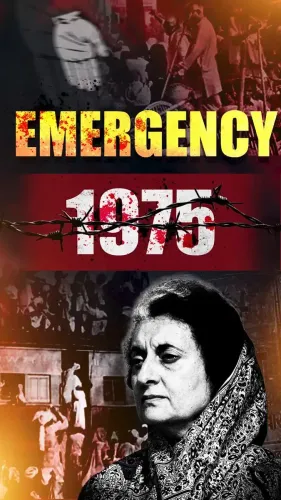
The 1975 Emergency , proclaimed under Article 352 by then PM Indira Gandhi , suspended Articles 14, 19, and 21 and lasted 21 months until March 1977 .
The BJP frames this date as a constitutional landmark, positioning itself as a defender of democratic institutions against historical authoritarian precedents.
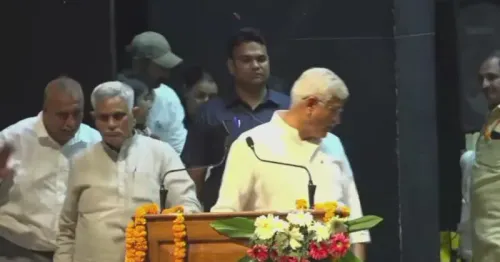
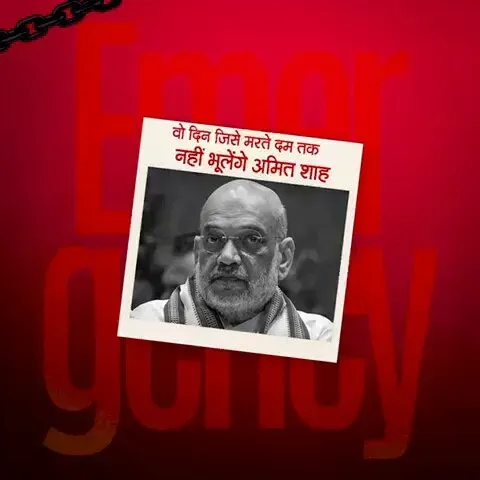
Union Culture and Tourism Minister Gajendra Singh Shekhawat on Friday, 26 June 2026, invoked the 51st anniversary of the imposition of the 1975 Emergency, condemning it as an attempt to eclipse the soul of the Constitution and describing the suspension of fundamental rights as the consequence of an over-ambitious ruler's ambitions.
Posting under the hashtag #SamvidhanHatyaDiwas, Shekhawat wrote in Hindi: '51 varsh poorv Samvidhan ki aatma ko grahan lagane ka prayas kiya gaya' — 'Fifty-one years ago, an attempt was made to eclipse the soul of the Constitution.' He added that citizens' freedom, freedom of expression, and fundamental rights were shackled due to the over-ambition of an ambitious ruler.
Context
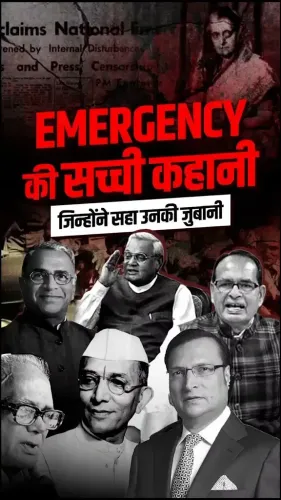
On 25 June 1975, then Prime Minister Indira Gandhi recommended the proclamation of a national Emergency under Article 352 of the Constitution, citing 'internal disturbance.' The Emergency, which lasted 21 months until March 1977, led to the suspension of Articles 14, 19, and 21 — guaranteeing equality, freedom of speech, and the right to life — along with mass detentions without trial and strict press censorship.
The Emergency ended after fresh general elections in which the ruling Congress party was defeated, widely seen as a public verdict against authoritarian governance.
Policy Backdrop
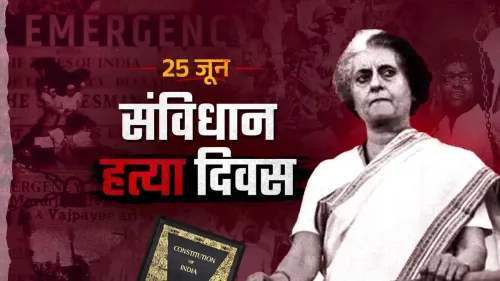
The Bharatiya Janata Party (BJP) has publicly observed 25 June as Samvidhan Hatya Diwas — literally 'Constitution Murder Day' — as part of an annual commemorative practice. The framing positions the 1975–77 Emergency as a foundational assault on constitutional morality, and is used by the party to draw a contrast between its stated commitment to democratic institutions and what it characterises as the Congress leadership's historical authoritarian precedent.
Shekhawat, a senior BJP leader and Lok Sabha MP from Jodhpur, Rajasthan, holds the Union portfolio for Culture and Tourism, making his voice on constitutional heritage particularly resonant within the party's commemorative messaging.
Stakeholders and Impact
The post speaks directly to Indian citizens and the political opposition, invoking the Emergency as a shared historical wound on civil liberties. For the BJP, the annual observance serves as both a reminder of the Congress party's record and a reaffirmation of the ruling party's self-image as a guardian of the Constitution.
Opposition parties, particularly the Indian National Congress, have consistently contested this framing, arguing that the current government's own record on press freedom and civil liberties invites scrutiny. Neither claim is assessed here; both reflect an active political debate.
What's Next
Each year around 25 June, parliamentary references, official events, and commemorative proposals tied to constitutional values tend to intensify across party lines. With the BJP continuing to institutionalise Samvidhan Hatya Diwas, legislative or cultural proposals — potentially involving Shekhawat's Culture Ministry — linking this date to formal national memory may gain further momentum in the coming sessions.
Point of View
Using the culture portfolio's moral authority to amplify the constitutional-betrayal narrative. By anchoring the message in the language of fundamental rights — equality, expression, life — the minister frames a partisan anniversary in universalist terms, widening its potential appeal beyond the party base. The hashtag #SamvidhanHatyaDiwas signals an ongoing effort to institutionalise this date in national memory, much as other commemorative days have been formalised under the current government. Whether the Culture Ministry moves from social-media messaging toward formal state commemoration will be the telling next step.
NationPress
26 Jun 2026
Frequently Asked Questions
What is Samvidhan Hatya Diwas?
Samvidhan Hatya Diwas, meaning 'Constitution Murder Day', is observed on 25 June by the BJP to mark the anniversary of the 1975 Emergency proclaimed by then Prime Minister Indira Gandhi , which suspended fundamental rights for 21 months .
What did Gajendra Singh Shekhawat say about the 1975 Emergency?
Shekhawat said that 51 years ago an attempt was made to 'eclipse the soul of the Constitution', and that citizens' freedom, freedom of expression, and fundamental rights were shackled due to the over-ambition of a ruler.
When was the 1975 Emergency imposed and how long did it last?
The Emergency was proclaimed on 25 June 1975 under Article 352 of the Constitution and lasted 21 months , ending in March 1977 after the Congress party's defeat in general elections.
Which fundamental rights were suspended during the 1975 Emergency?
Articles 14, 19, and 21 — guaranteeing the right to equality, freedom of speech and expression, and the right to life and personal liberty — were suspended during the 1975–77 Emergency .
Who is Gajendra Singh Shekhawat?
Gajendra Singh Shekhawat is the Union Minister of Culture and Tourism, a senior BJP leader, and a Lok Sabha MP from Jodhpur, Rajasthan .