Shekhawat meets Social Justice Minister on EWS reforms
Synopsis
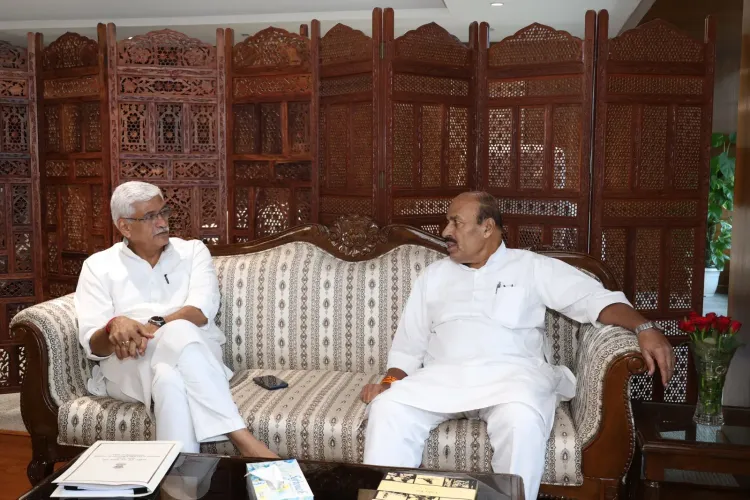
Union Minister Gajendra Singh Shekhawat held his third inter-ministerial meeting in three months with Social Justice Minister Dr. Virendra Kumar on EWS quota reforms, including simplifying eligibility rules and integrating economically weaker upper-caste youth into mainstream opportunities.
Key Takeaways
Gajendra Singh Shekhawat met Dr.
Virendra Kumar in New Delhi on September 30, 2026 to discuss EWS reservation issues.
This was the third such meeting in three months ; two prior meetings were held on directions from Home Minister Amit Shah .
Agenda included simplifying EWS eligibility criteria , equal opportunities, and mainstreaming economically weaker upper-caste youth.
The 103rd Constitutional Amendment (2019) provides a 10% EWS quota in government jobs and education.
The Supreme Court upheld the EWS amendment as constitutionally valid in November 2022 .
Possible next steps include formal notifications on income/asset criteria and consultations with the Ministry of Personnel and state governments.
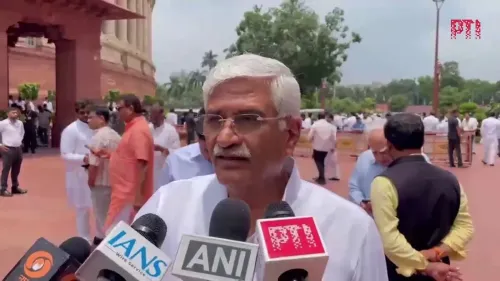
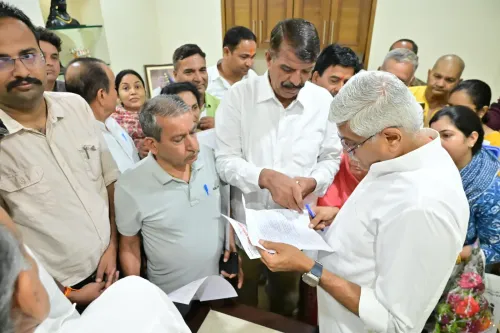
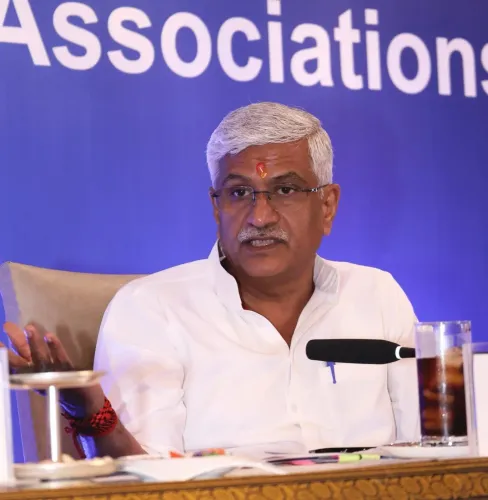
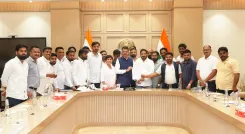
Three meetings in three months — and the file on EWS reservation reforms is clearly still open. Union Culture and Tourism Minister Gajendra Singh Shekhawat met Union Social Justice and Empowerment Minister Dr. Virendra Kumar in New Delhi on Wednesday, September 30, for the third round of inter-ministerial talks on issues affecting economically weaker sections — underscoring that the government's push to fine-tune the 10% EWS quota is moving with quiet but sustained momentum.
Shekhawat disclosed on X that the earlier two meetings over the past three months were held on the directions of Union Home Minister Amit Shah — a detail that signals how high up the priority chain this agenda sits. Today's session, he wrote, covered 'aarthik roop se kamzor savarn yuvao ko samaj ki mukhydhara se jodna' — connecting economically weaker upper-caste youth to the mainstream — along with ensuring equal opportunities and, crucially, simplifying EWS eligibility rules.
What the 103rd Amendment promised — and where the gaps remain
The 103rd Constitutional Amendment Act of 2019 carved out a 10% reservation in government jobs and higher education exclusively for economically weaker sections not covered by existing SC/ST/OBC quotas. The Supreme Court upheld the amendment as constitutionally valid in November 2022, clearing legal clouds that had hung over the quota for three years.
But validity is not the same as smooth implementation. The income and asset criteria that determine EWS eligibility have long drawn criticism for being either too rigid or inconsistently applied across states. Successive administrations have recognised the problem; what today's meeting signals is a structured, cross-ministry attempt to actually fix it — without disturbing the existing 50% reservation ceiling for SC, ST, and OBC categories.
Why Home Minister Shah's name in this conversation matters
The explicit mention of Amit Shah directing prior meetings is more than a protocol courtesy. It places EWS reform within the BJP's broader political architecture — the party has consistently positioned itself as a champion of upper-caste economic grievances that older reservation frameworks left unaddressed. With Shekhawat, a senior Rajasthan MP, acting as a bridge between the Culture Ministry and Social Justice Ministry, the coordination suggests a political actor with constituency-level stakes is driving administrative follow-through.
The Ministry of Social Justice and Empowerment, helmed by Dr. Virendra Kumar, is the nodal body for reservation implementation and welfare policy for disadvantaged groups — making it the right table for any eligibility simplification to be hammered out.
The next move: notifications or more deliberation?
The research trail points to two possible near-term outcomes: a formal notification simplifying EWS income or asset thresholds, or follow-up consultations that bring in the Ministry of Personnel and state governments — since states are the last mile for quota implementation in education and public employment.
For the EWS youth at the centre of these discussions, the stakes are straightforward: cleaner eligibility criteria mean fewer wrongful exclusions and faster access to the opportunities the amendment was designed to deliver. Three high-level meetings in ninety days suggest the government is no longer treating this as a bureaucratic footnote.
The meetings are stacking up — now watch for the notification.
Point of View
Anchored by Home Minister Shah's personal directions — signals that EWS reform has moved from a legislative achievement to an active political deliverable ahead of upcoming electoral cycles. Simplifying eligibility criteria addresses a real implementation gap left by the 103rd Amendment, but it also serves as a visible signal to upper-caste voters who feel the quota's promise has been blunted by bureaucratic complexity. The involvement of a Culture Minister rather than a directly relevant portfolio-holder as the interlocutor suggests this is as much a political coordination exercise as a technocratic one. How quickly a formal notification follows will reveal whether the momentum translates into policy or remains in the meeting-room.
NationPress
30 Sept 2026
Frequently Asked Questions
What is EWS reservation and who is eligible?
The EWS reservation provides a 10% quota in government jobs and higher education for citizens not covered by SC/ST/OBC reservations who fall below a defined economic threshold. It was enacted through the 103rd Constitutional Amendment Act of 2019 .
Why did Gajendra Singh Shekhawat meet Dr. Virendra Kumar on September 30?
The meeting focused on EWS-related policy issues , including simplifying eligibility rules, ensuring equal opportunities, and connecting economically weaker upper-caste youth to mainstream opportunities — the third such discussion in three months.
Is EWS reservation constitutionally valid?
Yes. The Supreme Court of India upheld the 103rd Constitutional Amendment in November 2022 , confirming that the 10% EWS quota does not violate the basic structure of the Constitution.
What role did Amit Shah play in the EWS inter-ministerial talks?
Union Home Minister Amit Shah directed the earlier two rounds of inter-ministerial meetings between Shekhawat and Dr. Virendra Kumar over the three months preceding September 30, 2026.
What changes to EWS eligibility rules are being considered?
Discussions are centred on simplifying income and asset criteria for EWS eligibility to reduce wrongful exclusions and ease implementation across states, without altering the existing 50% reservation ceiling for SC/ST/OBC categories.