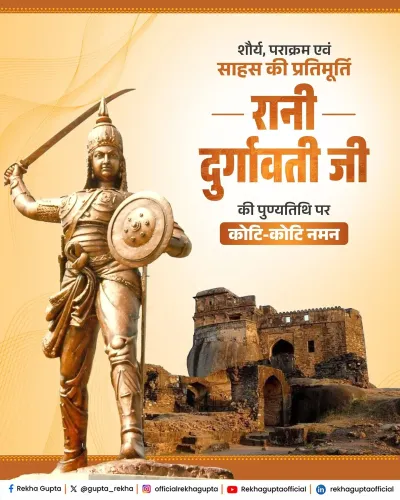
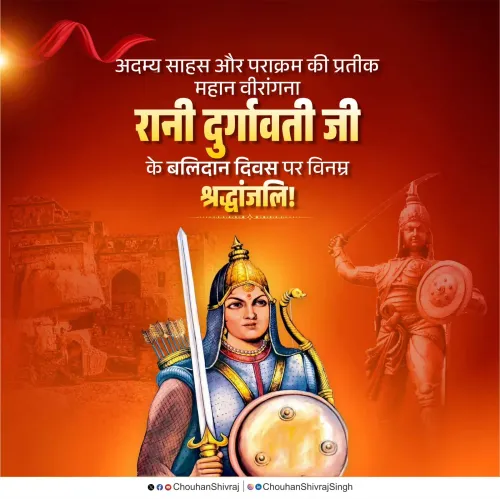
Shekhawat pays tribute to Rani Durgavati on her punyatithi
Synopsis
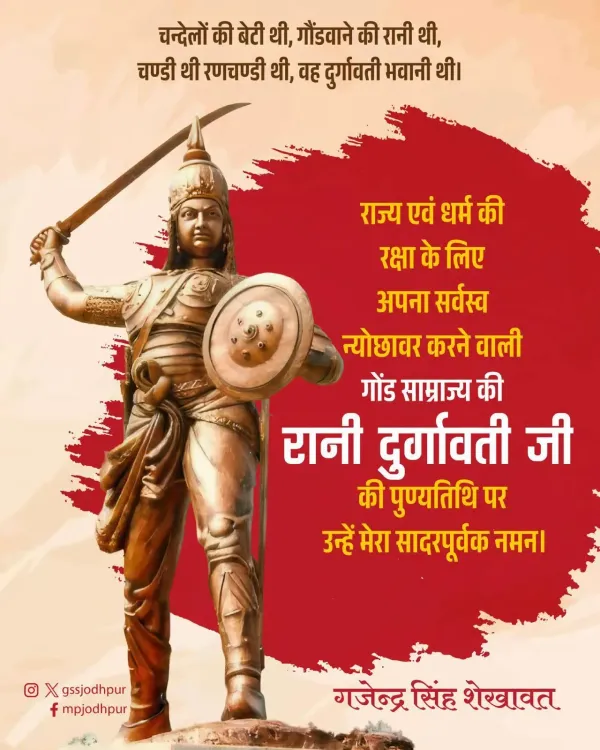
Union Culture and Tourism Minister Gajendra Singh Shekhawat paid homage to Rani Durgavati, the 16th-century Gond queen of Garha-Mandla, on her punyatithi on 24 June 2026, saluting her sacrifice in resisting Mughal forces and dying in battle in 1564.
Key Takeaways
Union Culture and Tourism Minister Gajendra Singh Shekhawat posted a tribute to Rani Durgavati on her punyatithi on 24 June 2026 .
Rani Durgavati was queen of the Gond kingdom of Garha-Mandla in present-day Madhya Pradesh and died in battle against Mughal forces in 1564 .
She was born into the Chandel Rajput dynasty of Bundelkhand and married Gond ruler Dalpat Shah .
Shekhawat's tribute aligns with the Culture Ministry's broader pattern of commemorating pre-colonial and tribal rulers within national heritage narratives.
Key memorial and museum sites linked to Rani Durgavati are located in Jabalpur and Mandla districts of Madhya Pradesh.
Gond tribal communities across central India regard her as a symbol of sovereignty and resistance.
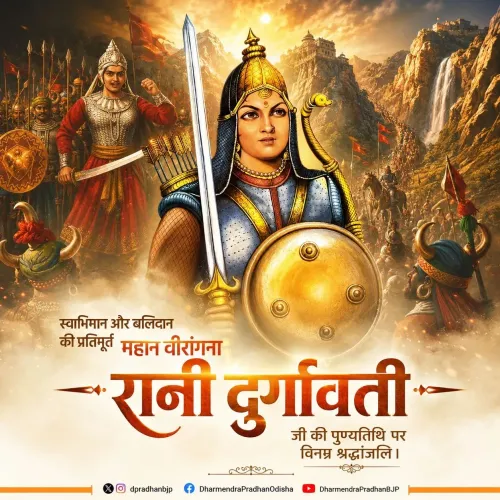
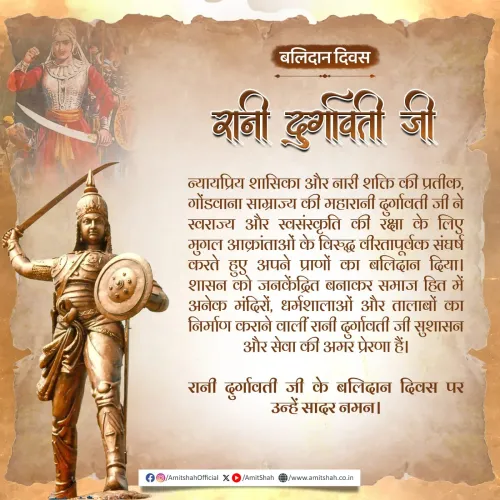
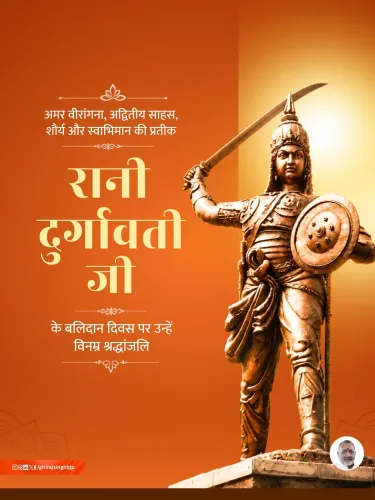
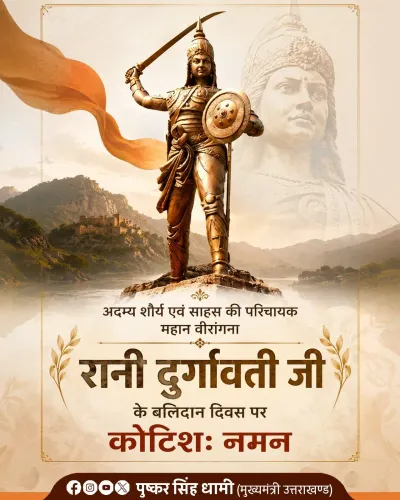
Union Culture and Tourism Minister Gajendra Singh Shekhawat on Wednesday, 24 June 2026, paid tribute to Rani Durgavati, the 16th-century Gond queen, on her death anniversary, honouring her sacrifice in defence of her kingdom and faith.
Shekhawat shared a verse on X that read: 'Chandelo ki beti thi, Gondwane ki rani thi, Chandi thi Ranchandi thi, woh Durgavati Bhavani thi' ('She was the daughter of the Chandels, the queen of Gondwana, a warrior goddess, she was Durgavati Bhavani'). He described her as one who 'offered everything for the protection of her kingdom and faith' and offered his 'respectful salutation' on her punyatithi.
Context
Rani Durgavati was a queen of the Gond kingdom of Garha-Mandla, in present-day Madhya Pradesh. Born into the Chandel Rajput dynasty of Bundelkhand, she married Gond ruler Dalpat Shah and, after his death, served as regent and military commander for her young son.
She led her forces against the Mughal army under Emperor Akbar and died in battle in 1564, choosing death over surrender. Her resistance has made her a celebrated figure in central Indian history, particularly among Gond tribal communities.
Policy Backdrop
Ministers holding the Culture and Tourism portfolio have increasingly used official platforms to mark the anniversaries of pre-colonial rulers and tribal warriors, as part of a broader effort to integrate regional and tribal histories into national cultural narratives.
This pattern has run alongside government initiatives to develop heritage tourism circuits and memorials at sites linked to such figures. Key sites associated with Rani Durgavati include memorials and a museum in Jabalpur and the Mandla district of Madhya Pradesh, areas that fall within the ambit of heritage and tribal tourism planning.
Stakeholders and Impact
Gond tribal communities across Madhya Pradesh, Chhattisgarh, and neighbouring states regard Rani Durgavati as a symbol of sovereignty and resistance. Commemorations by central ministers carry symbolic weight for these communities and can amplify calls for greater recognition of tribal heritage in national curricula and tourism infrastructure.
The heritage tourism sector in the Gondwana region also stands to benefit from sustained political attention to such figures, as ministerial visibility can accelerate funding decisions for museum upgrades, connectivity, and tourism promotion.
What's Next
State and central government events at Durgavati memorials in Jabalpur and Mandla are customarily held around her death anniversary, and Shekhawat's post may signal continued central attention to these sites. Any announcements regarding heritage tourism projects or memorial development in the Gondwana belt would follow the pattern of linking such commemorations to policy action.
As the Culture and Tourism Ministry continues to build tourism circuits around warrior queens and tribal rulers, Rani Durgavati's legacy is likely to feature prominently in upcoming promotional campaigns for central Indian heritage destinations.
Point of View
Regional, and tribal figures in national memory. By invoking her Chandel lineage and Gond identity together, the post signals an inclusive framing of warrior heritage that resonates with tribal electorates in central India. The commemoration also keeps political attention on the Gondwana heritage belt at a time when tourism infrastructure in Madhya Pradesh is an active policy priority. Whether the tribute translates into concrete announcements for Durgavati memorial sites will be the practical measure of its policy significance.
NationPress
24 Jun 2026
Frequently Asked Questions
Who was Rani Durgavati?
Rani Durgavati was a 16th-century queen of the Gond kingdom of Garha-Mandla in present-day Madhya Pradesh. Born into the Chandel Rajput dynasty, she led military resistance against Mughal Emperor Akbar's forces and died in battle in 1564 rather than surrender.
When is Rani Durgavati's punyatithi observed?
Rani Durgavati's punyatithi marks the anniversary of her death in battle in 1564. Union Minister Gajendra Singh Shekhawat posted his tribute on 24 June 2026.
Why did Gajendra Singh Shekhawat pay tribute to Rani Durgavati?
As Union Culture and Tourism Minister, Shekhawat posted a tribute on X on her death anniversary, saluting her sacrifice in defending her kingdom and faith against Mughal forces.
Where are the memorials of Rani Durgavati located?
Key memorials and a museum dedicated to Rani Durgavati are located in Jabalpur and Mandla districts of Madhya Pradesh, the region historically associated with the Gond kingdom she ruled.
What is the significance of Rani Durgavati for Gond communities?
Rani Durgavati is regarded as a symbol of sovereignty and resistance by Gond tribal communities across Madhya Pradesh, Chhattisgarh, and neighbouring states, making tributes to her politically and culturally significant for these communities.