Akhilesh questions SIT probe, demands border closure amid temple donation thefts
Synopsis
Samajwadi Party president Akhilesh Yadav on 24 June slammed the Uttar Pradesh government's SIT into temple donation thefts as a 'bow without an arrow' for lacking an FIR, flagged the disappearance of a donated idol, and demanded the Nepal border be sealed to prevent accused persons from fleeing.
Key Takeaways
Akhilesh Yadav posted on 24 June 2026 attacking the UP government's SIT probing temple donation thefts as procedurally invalid without a prior FIR.
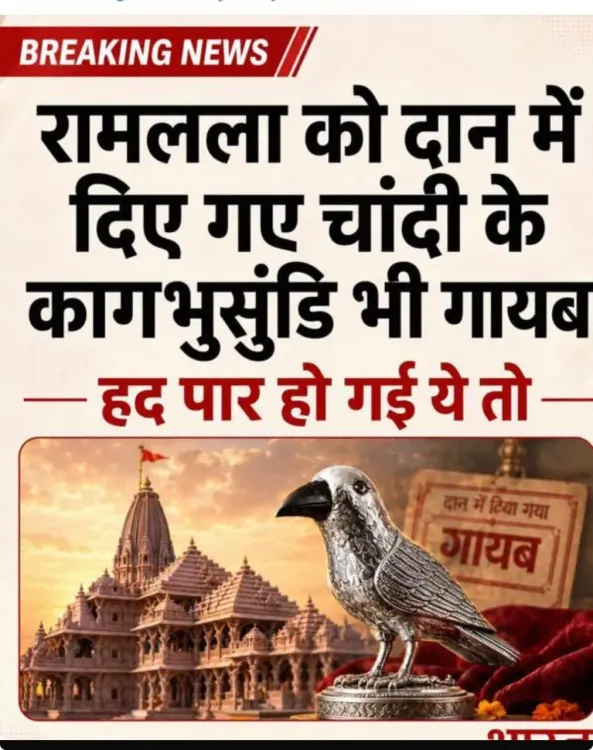
He alleged a donated idol referred to as 'Kagbhusundi' has gone missing, describing the development as 'condemnable.' Yadav accused the SIT of being formed to 'cover up' or 'divide' proceeds rather than genuinely investigate, using the hashtag #SIT_without_FIR .
He demanded closure of the Nepal border to prevent accused persons from absconding, noting that the border is traditionally open.
The Samajwadi Party framed the issue as a direct affront to Sanatani devotees, whose anger it said was growing with every new disclosure.
Border management remains a central government subject, making Yadav's demand a political pressure tactic directed at both state and union administrations.
Samajwadi Party president Akhilesh Yadav on Wednesday, 24 June 2026, sharply attacked the state government over the constitution of a Special Investigation Team (SIT) in a temple donation theft case, calling it procedurally hollow without a prior FIR and demanding closure of the Nepal border to prevent accused persons from fleeing.
Context
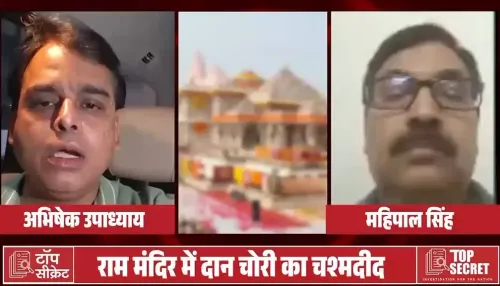
Yadav's post, written in Hindi, centred on two charges: first, that an SIT formed without a First Information Report is 'bina teer ki kamaan' ('a bow without an arrow') — a toothless instrument; and second, that a donated idol referred to as 'Kagbhusundi' has reportedly gone missing, adding to a string of alleged thefts of temple offerings. 'Every day a new expose of chadhava-chanda-daan (offerings, donations, and gifts) theft is happening and the anger of Sanatani devotees keeps rising,' he wrote.
He further alleged that the SIT was constituted not to investigate but to 'cover up' or 'divide the spoils' — using the Hindi phrases 'dhaank' (to conceal) and 'baant' (to distribute) — and punctuated the post with the hashtag #SIT_without_FIR.
Policy Backdrop
Uttar Pradesh governments have periodically set up SITs for temple-related or donation misappropriation cases without an accompanying FIR, a practice opposition parties argue violates standard criminal procedure. Under the Code of Criminal Procedure, an SIT derives its investigative powers from a registered FIR; absent one, critics contend, its findings carry limited legal weight.
The broader pattern of alleged theft of temple offerings — chadhava — has been a recurring political flashpoint in Uttar Pradesh, with opposition parties using such cases to question both the administration of religious institutions and the impartiality of state-appointed probe bodies.
Stakeholders and Impact
Hindu devotees who make offerings at major temples are the most directly affected constituency, and Yadav's framing explicitly invokes their sentiment. His call to seal the Nepal border — which shares a long, traditionally open frontier with Uttar Pradesh and Bihar — is aimed at preventing any accused from absconding, though border management is a central government subject.
The Uttar Pradesh Police and the state government face political pressure to either register an FIR that gives the SIT a formal legal footing or to explain the procedural basis on which the team was constituted. Religious trusts and temple management committees overseeing large donation inflows are also likely to face heightened public and legislative scrutiny.
What's Next
Political observers will watch for the Uttar Pradesh government's formal response on whether an FIR will be registered, and whether the SIT's terms of reference will be expanded or clarified. Parliamentary and state assembly questions on temple donation audits are likely to follow. Yadav's framing — connecting a local religious-institution scandal to national border security — signals that the Samajwadi Party intends to sustain pressure on this issue ahead of any upcoming legislative session.
Point of View
Making it harder for the government to dismiss as partisan. The demand to seal the Nepal border escalates the rhetoric from state-level accountability to national security, a register that carries far greater public resonance. Sustaining this line of attack through legislative questions and social media could force the government into a reactive posture as temple-donation transparency becomes an electoral subtext.
NationPress
24 Jun 2026
Frequently Asked Questions
Why is Akhilesh Yadav saying the SIT is invalid without an FIR?
Under standard criminal procedure, an SIT derives its authority to investigate from a registered First Information Report; without one, its findings have limited legal standing and cannot directly lead to arrests or a charge sheet, which is why Yadav called it 'a bow without an arrow.'
What is the Kagbhusundi idol that went missing?
Akhilesh Yadav's post refers to an idol described as 'Kagbhusundi' that was reportedly donated to a temple and has since gone missing; specific details of the incident are still emerging and have not been officially confirmed by the Uttar Pradesh government.
Why did Akhilesh Yadav demand the Nepal border be closed?
Yadav argued that with new disclosures of temple donation thefts surfacing daily, the open Nepal-India border could allow accused persons to flee; he called for its temporary closure to ensure suspects remain within reach of investigators.
What is chadhava theft and why is it politically sensitive in UP?
Chadhava refers to offerings — cash, gold, and valuables — made by devotees at temples; alleged thefts of such offerings are politically sensitive in Uttar Pradesh because they directly affect the religious sentiments of a large Hindu devotee base and raise questions about state oversight of major religious institutions.
What action can the UP government take after Akhilesh Yadav's criticism?
The Uttar Pradesh government could register a formal FIR to give the SIT a proper legal mandate, clarify the procedural basis for the team's constitution, or announce an independent audit of temple donation accounts — each of which would directly address the opposition's stated objections.