Jal Shakti Minister Paatil Engages IIT, IIM Students on Water Security
Synopsis
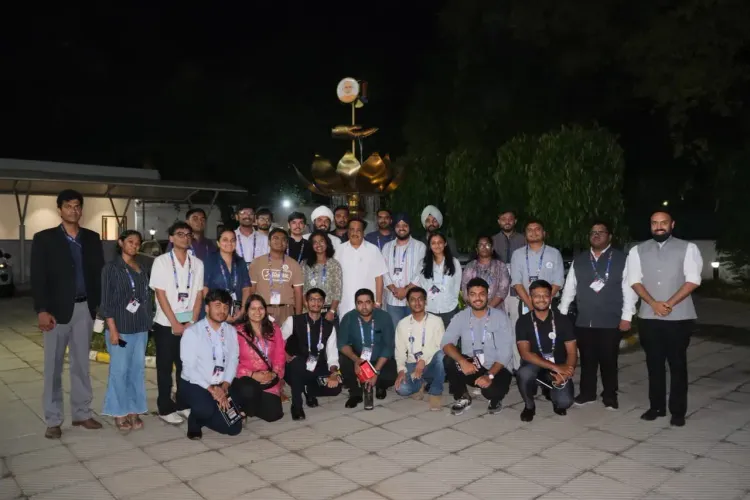
Union Jal Shakti Minister C. R. Paatil engaged student delegates from IITs, IIMs, NLUs and private universities on 24 June 2026, discussing water security, river conservation, sustainable management, and the role of youth in building India's long-term water self-reliance.
Key Takeaways
Union Jal Shakti Minister C.
Paatil met student representatives from IITs, IIMs, NLUs and private universities on 24 June 2026 .
The dialogue was held under the Chhatr Sansad and Internation's India Leadership Residency programme.
Key topics included water security, sustainable water management, river conservation , and India's long-term water self-reliance.
Innovation in the water sector, effective public policy, and strengthening public participation were also discussed.
The ministry's flagship schemes — Jal Jeevan Mission, Namami Gange , and Atal Bhujal Yojana — form the policy backdrop for such engagements.
Paatil expressed confidence that youth will provide 'new energy and direction' to India's water-related nation-building efforts.
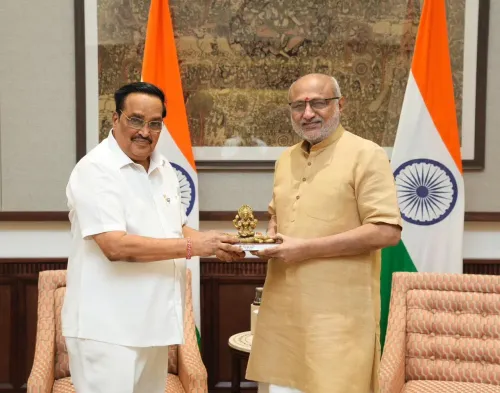
Union Jal Shakti Minister C. R. Paatil on Wednesday, 24 June 2026, held a wide-ranging dialogue with a student delegation drawn from premier institutions including IITs, IIMs, NLUs, and leading private universities, under the Chhatr Sansad (Student Parliament) and Internation's India Leadership Residency programme. The discussion centred on water security, sustainable water management, river conservation, and India's long-term water self-reliance, with students also exchanging ideas on innovation and public participation in the water sector.
Context
Posting on X in Hindi, Minister Paatil described the engagement as a broad conversation — 'jal suraksha, satatjal prabandhan, nadi sanrakshan tatha Bharat ki dirghakalik jal atmanirbharta' (water security, sustainable water management, river conservation, and India's long-term water self-reliance). He added that ideas on innovation in the water sector, effective public policy, and strengthening people's participation were also exchanged. Paatil expressed confidence that 'this very youth power will provide new energy and a new direction to the nation-building journey in the times to come.'
The event brought together student representatives from across India's top academic institutions, positioning the dialogue as a multi-disciplinary exercise spanning engineering, management, and legal perspectives on water governance.
Policy Backdrop
The Jal Shakti Ministry oversees several flagship programmes that form the backbone of India's water policy architecture. The Jal Jeevan Mission, launched in 2019, aims to provide functional household tap-water connections in every rural home. The Namami Gange programme, initiated in 2014, is an integrated mission for the conservation and rejuvenation of the River Ganga.
The Atal Bhujal Yojana, approved in 2018-19, targets improved groundwater management through community participation in identified water-stressed blocks. Together, these schemes represent a multi-pronged approach to the challenge of water scarcity and river degradation that successive governments have treated as a core infrastructure priority.
Stakeholders and Impact
Student participants from IITs, IIMs, and NLUs represent a cross-section of India's next generation of engineers, policy practitioners, and legal professionals — precisely the cohort expected to design and implement water solutions in the coming decades. Youth-focused dialogues under parliamentary simulation formats have been used periodically by the government to build awareness and solicit ground-level ideas on public schemes.
The inclusion of private university representatives alongside premier public institutions signals an intent to cast a wider net for ideas, particularly around innovation and public-private collaboration in the water sector. Civil society and community groups, whose participation is central to schemes like Atal Bhujal Yojana, stand to benefit if student-generated proposals translate into policy refinements.
What's Next
The ministry has not announced a formal mechanism for incorporating student inputs into policy documents, though such consultations have historically fed into state-level water action plans and ministry annual reports. Observers will watch whether any proposals from this cohort surface in the next Union Budget or the Jal Shakti Ministry's annual report as part of its innovation or community-engagement frameworks.
Minister Paatil's sustained outreach to academic institutions suggests the ministry views youth engagement not as a one-off event but as a recurring pillar of its communication and policy-development strategy on water self-reliance.
Point of View
IIMs, and NLUs simultaneously, the ministry signals that water self-reliance is being framed as a cross-disciplinary challenge requiring inputs from engineering, management, and legal expertise. Such consultations also serve a political communication function — visibly demonstrating that the Jal Shakti agenda is being stress-tested by India's sharpest young minds. Whether student ideas translate into measurable policy changes, or remain largely symbolic, will be the real test of this engagement model.
NationPress
24 Jun 2026
Frequently Asked Questions
What did C. R. Paatil discuss with IIT and IIM students?
Minister Paatil discussed water security, sustainable water management, river conservation, and India's long-term water self-reliance, along with innovation in the water sector and strengthening public participation in water policy.
What is the India Leadership Residency programme?
The India Leadership Residency is a programme run under the Internation organisation, in conjunction with the Chhatr Sansad (Student Parliament) initiative, that brings together student representatives from premier institutions for policy dialogues with senior government officials.
What are the main water schemes under the Jal Shakti Ministry?
The Jal Shakti Ministry oversees the Jal Jeevan Mission (launched 2019, for rural tap-water connections), the Namami Gange programme (launched 2014, for Ganga conservation), and the Atal Bhujal Yojana (approved 2018-19, for groundwater management through community participation).
Why are students from IITs, IIMs and NLUs being consulted on water policy?
The government has periodically used youth-focused dialogues to build awareness and gather ideas from India's next generation of engineers, managers, and legal professionals, who are expected to design and implement water solutions in the coming decades.
What is India's Jal Jeevan Mission?
The Jal Jeevan Mission, launched in 2019, is a central government programme aimed at providing a functional household tap-water connection to every rural home in India, and is one of the flagship schemes administered by the Jal Shakti Ministry.