Shekhawat tells Iran cultural chief: 'Persian is not a foreign language for us'
Synopsis
India's Culture Minister Gajendra Singh Shekhawat told Iran's top cultural official that 'Persian is not a foreign language for us' — and backed a joint Cultural Week proposal — at the first SCO Civilisational Dialogue Forum in New Delhi. The exchange signals that India-Iran ties, despite regional turbulence, retain a deep cultural and diplomatic thread that both sides are actively looking to institutionalise.
Key Takeaways
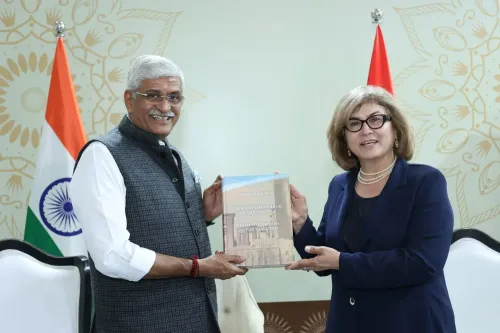
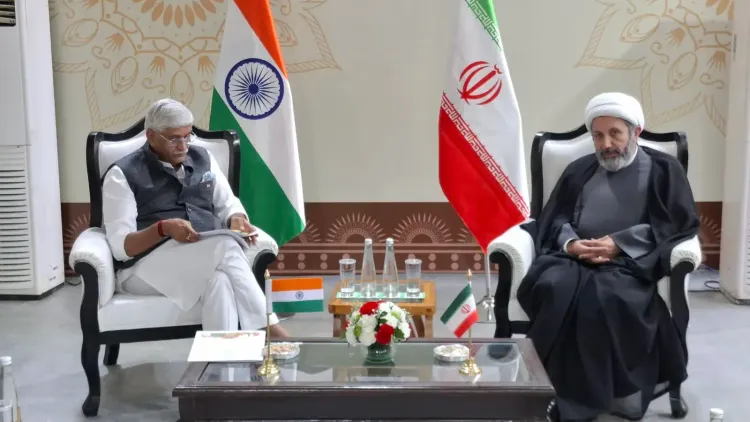
Gajendra Singh Shekhawat met Mohammad Mahdi Imanipour of Iran's Islamic Culture and Relations Organisation on 21 November 2026 in New Delhi .
Shekhawat stated 'Persian is not considered a foreign language for us' and noted its inclusion under NEP 2020 as a classical language of India.
Both sides backed a proposed joint Iranian and Indian Cultural Week ; Shekhawat also expressed interest in collaborating on manuscripts and cinema .
Imanipour thanked India for facilitating medicine transfers to Iran and for support during a 'recent war.' The meeting was held on the sidelines of the first SCO Civilisational Dialogue Forum , inaugurated by PM Modi on 20 November .
Iran's Islamic Culture and Relations Organisation runs 65 cultural missions globally and signalled readiness to expand India engagement.
Culture and Tourism Minister Gajendra Singh Shekhawat on Saturday, 21 November 2026, met Mohammad Mahdi Imanipour, President of Iran's Islamic Culture and Relations Organisation, on the sidelines of the inaugural Shanghai Cooperation Organisation (SCO) Civilisational Dialogue Forum in New Delhi. At the meeting, Shekhawat underscored the deep historical and cultural roots of the Persian language in India and signalled readiness to deepen bilateral cultural ties.
Persian Language and India's NEP 2020
Shekhawat's central message was unambiguous: Persian occupies a distinctive place in India's linguistic heritage. According to the Iranian Embassy in India, which posted details of the meeting on X, the minister stated, 'Persian is not considered a foreign language for us.' He further noted that under India's National Education Policy 2020 (NEP 2020), Persian has been accorded recognition alongside other classical languages of India — a policy acknowledgement of its centuries-long presence on the subcontinent.
The remark carries significance beyond ceremony. Persian served as the language of Mughal-era administration, literature, and diplomacy for several centuries, shaping vast swathes of Indian literature, music, architecture, and law. Its formal inclusion under NEP 2020's classical languages framework is a relatively recent institutional acknowledgement of that legacy.
Cultural Cooperation: Films, Manuscripts and a Joint Cultural Week
The two sides explored concrete avenues for expanding cultural and artistic engagement. Shekhawat appreciated the Embassy of the Islamic Republic of Iran's existing cultural outreach in India — including film festivals and other events — and expressed interest in collaborating with Iranian cultural institutions in the field of manuscripts, a domain where both countries hold significant shared archival wealth.
Imanipour, for his part, proposed organising a joint Iranian and Indian Cultural Week, inviting Indian artists to visit Iran and participate in a large-scale bilateral cultural showcase. According to the Iranian Embassy's account, Shekhawat welcomed the proposal and affirmed India's readiness to cooperate. Imanipour also highlighted the potential for deeper collaboration in film and cinema, noting that his organisation operates 65 cultural missions worldwide and is positioned to expand engagement with India across multiple fields.
Iran Thanks India for Medicine Transfer and Wartime Support
Beyond culture, Imanipour conveyed appreciation for India's cooperation in facilitating the transfer of medicines to Iran and acknowledged India's support during what was described as a 'recent war,' according to the Iranian Embassy. The reference underlines the continuing diplomatic and humanitarian dimension of the India-Iran relationship, even as regional geopolitics remain complex.
SCO Forum Backdrop: Modi on Shared Civilisational Values
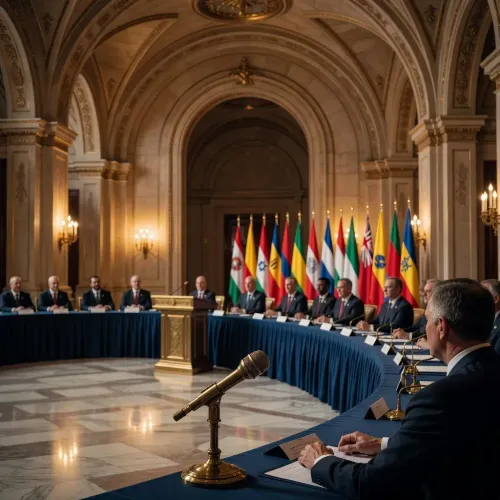
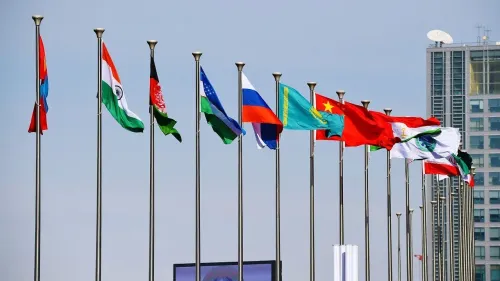
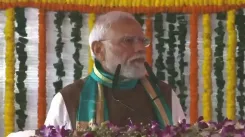
The bilateral meeting took place against the backdrop of the first SCO Civilisational Dialogue Forum, which Prime Minister Narendra Modi inaugurated on Friday, 20 November. Addressing the forum, Modi emphasised mutual trust and shared civilisational values as the foundation of stronger regional cooperation. 'When we adopt this liberal vision, our diversity itself becomes the foundation of our unity,' Modi said. The forum brings together SCO member states for structured cultural and civilisational exchange — making Shekhawat's discussions with Imanipour a natural extension of that larger agenda.
What Comes Next
No formal timeline was announced for the proposed Cultural Week or the manuscripts collaboration. However, the meeting's outcomes — particularly the manuscript and cinema cooperation proposals — are expected to feed into the broader diplomatic framework being shaped at the SCO forum. With Iran's Islamic Culture and Relations Organisation operating a global network of 65 cultural missions, any formalised India-Iran cultural programme would have considerable institutional backing on the Iranian side.
Point of View
But the absence of a formal timeline or funding commitment means the joint Cultural Week remains aspirational for now. India's willingness to absorb Iranian thanks for 'wartime support' in a public readout also signals that New Delhi is comfortable signalling independent diplomatic continuity with Tehran, even as Western sanctions pressure persists.
NationPress
21 Nov 2026
Frequently Asked Questions
What did Culture Minister Shekhawat discuss with Iran's cultural chief at the SCO forum?
Shekhawat met Mohammad Mahdi Imanipour of Iran's Islamic Culture and Relations Organisation on 21 November 2026 in New Delhi, where they discussed expanding bilateral cultural and artistic cooperation. Key topics included the Persian language's place in India, manuscript collaboration, film cooperation, and a proposed joint Iranian and Indian Cultural Week.
Why did Shekhawat say Persian is 'not a foreign language' for India?
Shekhawat was underscoring Persian's centuries-long role in Indian literature, administration, and culture, particularly during the Mughal era. He also pointed out that under India's National Education Policy 2020 (NEP 2020), Persian has been formally recognised alongside other classical languages of India.
What is the joint Iranian and Indian Cultural Week proposal?
Mohammad Mahdi Imanipour proposed organising a joint cultural week featuring Indian artists performing in Iran, with both countries developing shared cultural programmes. Shekhawat welcomed the proposal and expressed India's readiness to participate, though no formal timeline has been set.
What is the SCO Civilisational Dialogue Forum and why was it significant?
The SCO Civilisational Dialogue Forum is a first-of-its-kind platform bringing together Shanghai Cooperation Organisation member states for structured cultural and civilisational exchange. It was inaugurated by Prime Minister Narendra Modi in New Delhi on 20 November, with Modi emphasising shared civilisational values as the foundation of regional cooperation.
Why did Iran's cultural chief thank India at the meeting?
According to the Iranian Embassy, Imanipour expressed appreciation for India's cooperation in facilitating the transfer of medicines to Iran and for India's 'valuable cooperation during the recent war.' The remark highlights the humanitarian and diplomatic dimensions of the India-Iran relationship beyond cultural ties.