Shekhawat pays tribute to Lokmanya Tilak on death anniversary
Synopsis
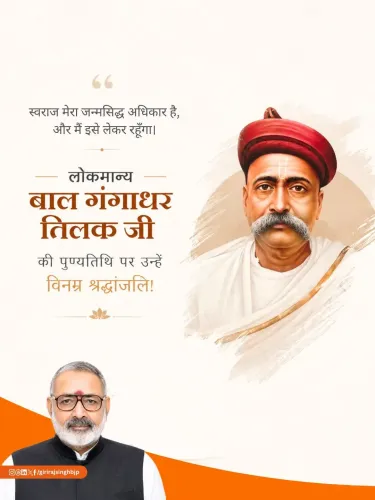
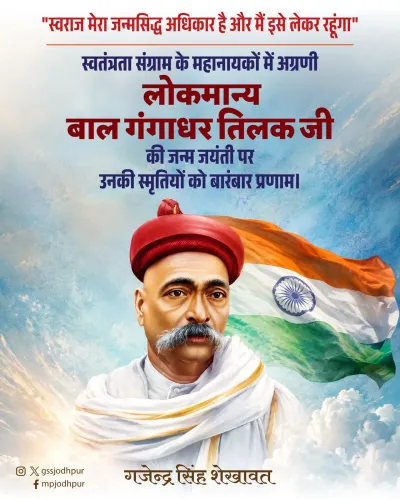
Union Culture Minister Gajendra Singh Shekhawat marked Lokmanya Bal Gangadhar Tilak's death anniversary on 1 August by quoting his iconic Swaraj declaration, honouring the nationalist leader as the architect of India's demand for complete independence and a pioneering social reformer.
Key Takeaways
Gajendra Singh Shekhawat , Union Minister of Culture and Tourism, paid tribute to Lokmanya Bal Gangadhar Tilak on his death anniversary, 1 August .
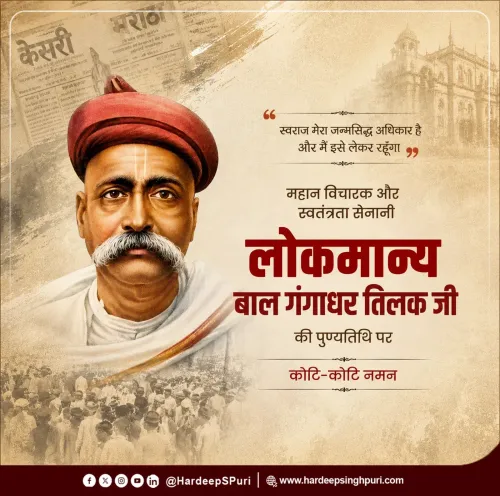
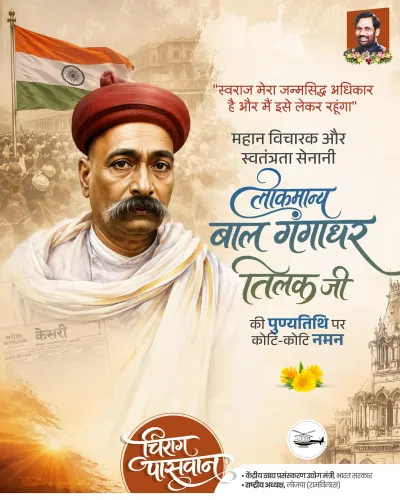
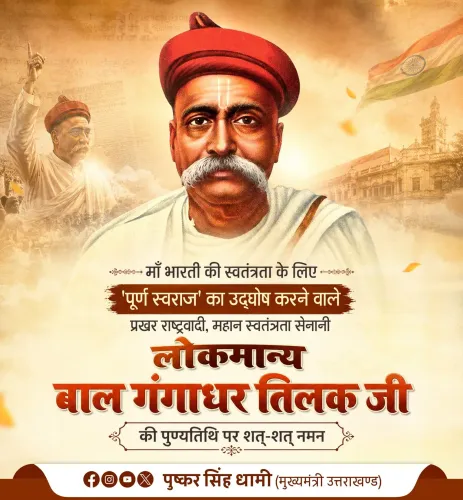
He quoted Tilak's iconic slogan: 'Swaraj is my birthright and I shall have it.' Bal Gangadhar Tilak died on 1 August 1920 and was a founder of the All India Home Rule Movement .
Tilak is credited with demanding complete independence ( Purna Swaraj ) decades before it became the Indian National Congress's official position.
The tribute comes as India approaches Independence Day on 15 August , the peak of the nation's annual freedom-struggle commemorations.
On the anniversary of the day India fell silent in 1920, Union Culture and Tourism Minister Gajendra Singh Shekhawat invoked the thunder of Bal Gangadhar Tilak's most enduring declaration — a reminder that the demand for self-rule was never a petition, but a proclamation.
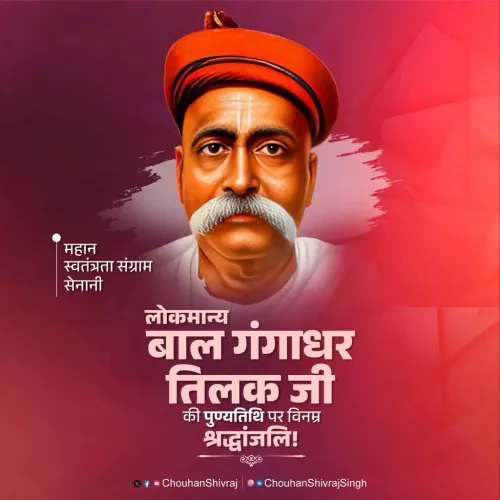
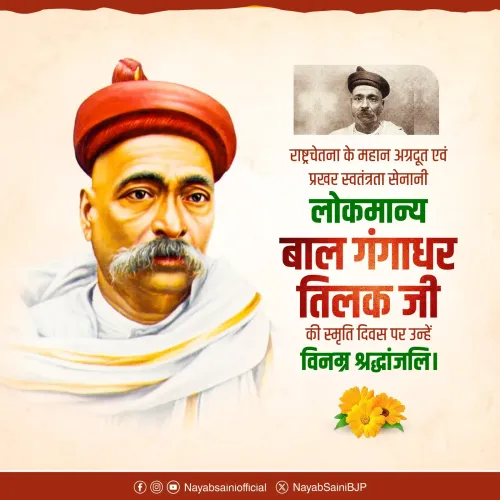
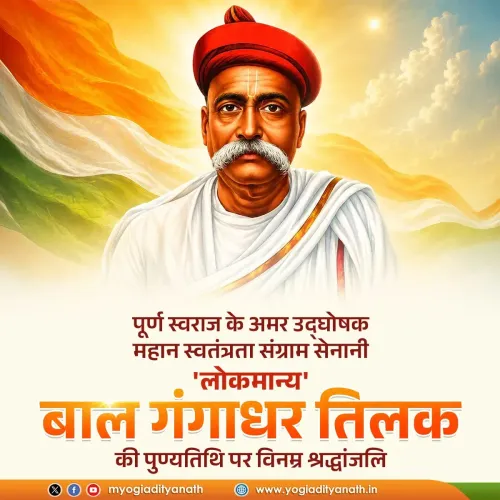
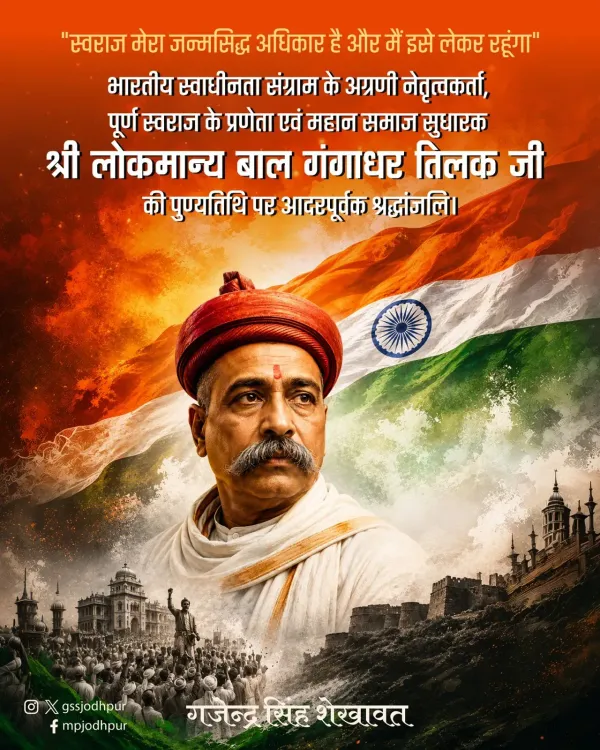
Shekhawat quoted Tilak's legendary words — 'Swaraj mera janmasiddh adhikar hai aur main ise lekar rahunga' ('Swaraj is my birthright and I shall have it') — in a post marking Tilak's death anniversary on 1 August, honouring him as a pioneering leader of India's freedom struggle, the architect of the demand for complete independence, and a towering social reformer.
The man behind the slogan that shook an empire
Bal Gangadhar Tilak, widely revered by the honorific Lokmanya — meaning 'accepted by the people as their leader' — was among the most formidable voices in India's independence movement in the late nineteenth and early twentieth centuries. He rejected the moderate politics of petition and prayer, insisting that self-rule was not a favour to be granted but a right to be seized. He founded the All India Home Rule Movement and used mass festivals — most notably the public celebration of Ganesh Chaturthi — as tools to galvanise ordinary Indians across caste and class. He died on 1 August 1920, leaving behind a movement that would carry India to independence within three decades.A ritual of remembrance with political resonance
Each 1 August, Indian political leaders across parties pay public tribute to Tilak, but the gesture carries particular weight when it comes from the Union Minister for Culture. Shekhawat's post is not merely ceremonial — it is part of a deliberate effort by the government to anchor contemporary national identity in the legacy of leaders who demanded nothing less than full self-rule. For a BJP leader, invoking Tilak also connects to a lineage of assertive, unapologetic nationalism that the party has long sought to claim as its own inheritance. Tilak's slogan, more than a century old, retains a visceral charge. It was not written in a committee room — it was a battle cry. That a sitting Culture Minister chose to open with it, verbatim, rather than a bureaucratic tribute, says something about how India's political class still reaches for Tilak when it wants to project conviction. As Independence Day on 15 August approaches, tributes to freedom-struggle icons will intensify — Tilak's death anniversary is, in that sense, the unofficial opening note of India's annual season of national remembrance.Point of View
Mass-mobilising nationalists like Tilak — figures who demanded self-rule on their own terms, not through colonial goodwill. By leading with the Swaraj slogan rather than a generic tribute, the Culture Minister signals a deliberate choice of register: pride, not nostalgia. With Independence Day a fortnight away, such posts are also part of a broader government communications strategy that frames the ruling party as the natural custodian of India's freedom-struggle inheritance. The gesture is ceremonial in form but political in function.
NationPress
15 Sept 2026
Frequently Asked Questions
When did Lokmanya Bal Gangadhar Tilak die?
Bal Gangadhar Tilak died on 1 August 1920 . His death anniversary is observed each year on 1 August.
What is the famous slogan of Bal Gangadhar Tilak?
Tilak's most famous declaration is 'Swaraj is my birthright and I shall have it' ( Swaraj mera janmasiddh adhikar hai aur main ise lekar rahunga ), which became a rallying cry of India's independence movement.
Who is Lokmanya Tilak and why is he important?
Lokmanya Bal Gangadhar Tilak was a prominent Indian nationalist leader and social reformer who advocated complete independence from British rule. He founded the All India Home Rule Movement and used public festivals like Ganesh Chaturthi to mobilise mass support for the freedom struggle.
Why did Gajendra Singh Shekhawat pay tribute to Tilak?
Gajendra Singh Shekhawat , Union Minister of Culture and Tourism, posted a tribute on 1 August to mark Tilak's death anniversary, honouring him as a pioneering leader of India's freedom struggle and a social reformer.
What is Purna Swaraj and who demanded it?
Purna Swaraj means complete self-rule or full independence. Bal Gangadhar Tilak was among the earliest Indian leaders to demand it, well before the Indian National Congress formally adopted the goal of complete independence.