Shekhawat: Udaigiri Caves added to UNESCO Tentative List
Synopsis
Union Culture Minister Gajendra Singh Shekhawat announced on 29 September 2026 that Udaigiri Caves in Madhya Pradesh — home to a monumental Gupta-era Varaha relief and royal inscriptions — have been added to India's UNESCO Tentative List, the first step toward World Heritage nomination.
Key Takeaways
Udaigiri Caves, Madhya Pradesh have been formally added to India's UNESCO Tentative List , as announced by Union Culture Minister Gajendra Singh Shekhawat on 29 September 2026 .
The site dates to the Gupta period (c.
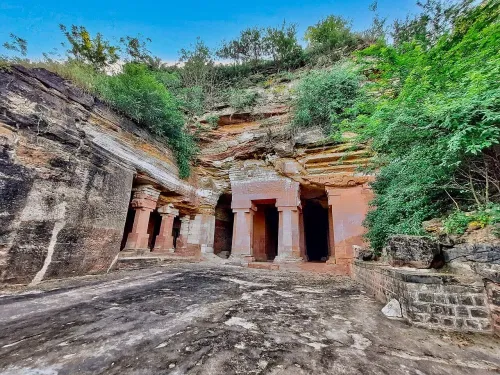
320–550 CE) and contains rock-cut caves, a monumental Varaha relief , royal inscriptions, and a broader sacred landscape.
Listing on the Tentative List is the mandatory first step before a formal World Heritage nomination dossier can be submitted to the UNESCO World Heritage Committee.
The Archaeological Survey of India (ASI) must now prepare a full nomination dossier and secure an ICOMOS evaluation before any World Heritage Committee review.
Madhya Pradesh already hosts the inscribed World Heritage Sites of Sanchi and Khajuraho , lending experience to future conservation and nomination efforts.
The move fits India's broader push to secure global recognition for pre-medieval, Gupta-era monuments alongside its more widely known medieval heritage sites.
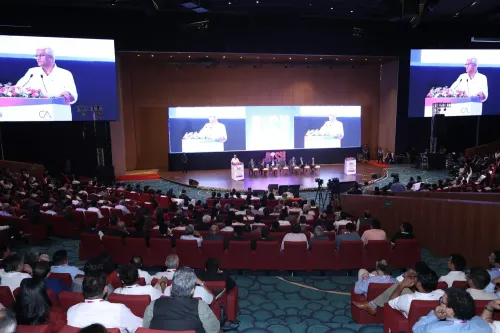
A 1,600-year-old sacred landscape carved into a sandstone ridge in Madhya Pradesh has just taken its first formal step toward the world's most prestigious heritage designation. Union Culture and Tourism Minister Gajendra Singh Shekhawat announced on Tuesday, 29 September 2026, that the Udaigiri Caves have been added to India's UNESCO Tentative List — the mandatory gateway to a full World Heritage nomination.
What makes Udaigiri irreplaceable
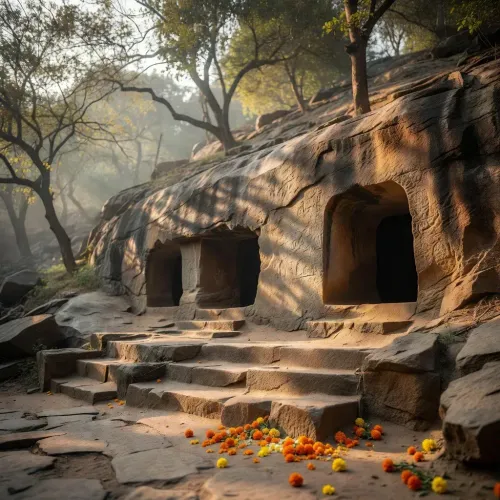
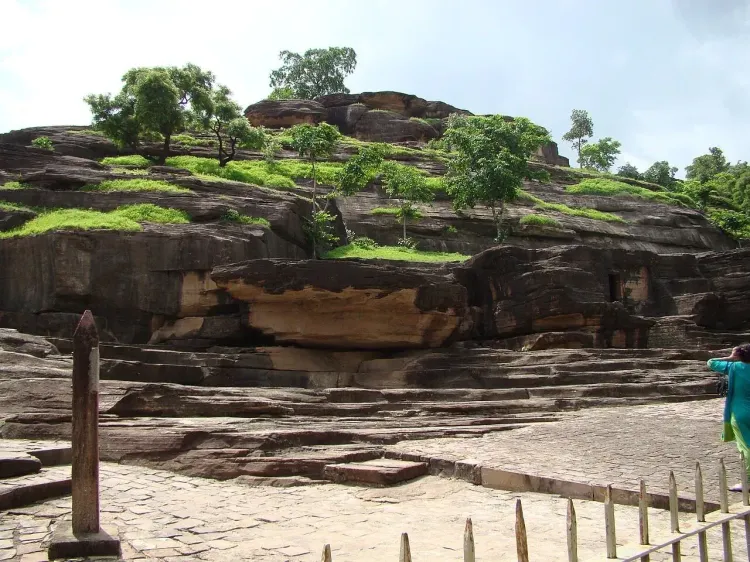
The Udaigiri Caves complex, located in Vidisha district, Madhya Pradesh, is among the finest surviving ensembles of Gupta-period rock-cut art and inscription. Dating broadly to c. 320–550 CE, the Gupta dynasty is widely regarded as a high-water mark in Indian temple architecture, sculpture and religious iconography — a moment when Hindu and Jain visual traditions crystallised into enduring forms.
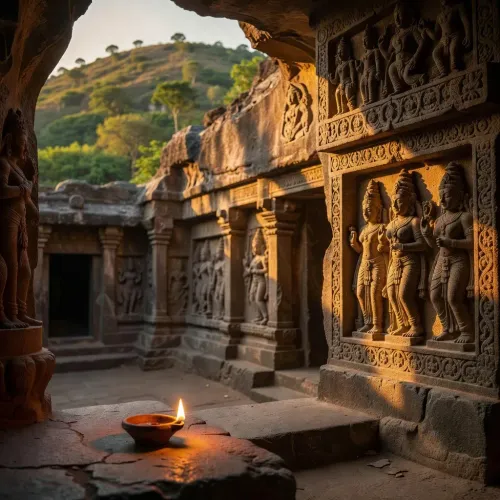
The site's centrepiece is its monumental Varaha relief — a colossal carving of the boar avatar of Vishnu rescuing the earth goddess — considered one of the greatest surviving examples of early Indian narrative sculpture. Alongside it, rock-cut caves, royal inscriptions and the surrounding sacred topography together form what Shekhawat described as 'testimony to a formative period in the evolution of Indian art, architecture and religious traditions.'
The UNESCO pathway and what comes next
India ratified the UNESCO World Heritage Convention in 1977, establishing a two-stage process: a site must first appear on the national Tentative List before any formal nomination dossier can be submitted to the World Heritage Committee. Placement on the list is not a guarantee of inscription — it is the starting gun.
From here, the Archaeological Survey of India (ASI) must prepare a full nomination dossier, commission an ICOMOS (International Council on Monuments and Sites) evaluation, and secure a slot on the World Heritage Committee's review calendar. That process typically spans several years. Madhya Pradesh already hosts inscribed World Heritage Sites at Sanchi and Khajuraho, giving the state's conservation infrastructure a proven track record that could accelerate Udaigiri's candidacy.
India's broader Gupta-era heritage push
Udaigiri's addition fits a wider, deliberate effort to win international recognition for monuments from India's pre-medieval periods — phases of history that are sometimes overshadowed by the more tourism-visible Mughal and Rajput sites. Gupta and post-Gupta monuments represent the deep grammar of Indian artistic tradition: the proportions, iconographies and sacred geometries that later temple-builders inherited and elaborated.
Shekhawat framed the moment in exactly those terms, writing that 'India's heritage is a continuum, and Udaigiri is one of its remarkable early chapters.' Placing that continuum on an internationally recognised list makes the case — in the language institutions understand — that early Hindu sacred landscapes deserve the same global attention as later architectural monuments.
If the nomination dossier clears UNESCO scrutiny, Udaigiri would join a shortlist of sites worldwide where a single landscape can be read simultaneously as art history, religious geography and political chronicle — a place where an empire literally inscribed its identity into stone. That story, now formally queued for the world's attention, is only just beginning to be told.
Point of View
Less globally familiar sacred landscapes. Placing a Gupta-period site in the formal international pipeline is also a soft-power gesture: it asserts the antiquity and artistic sophistication of Hindu civilisation on a stage where institutional validation carries diplomatic weight. For Shekhawat personally, the announcement reinforces his ministry's cultural-heritage activism ahead of a nomination cycle. Whether ASI can translate the listing momentum into a submission-ready dossier within a competitive window remains the real test.
NationPress
29 Sept 2026
Frequently Asked Questions
What are the Udaigiri Caves and where are they located?
The Udaigiri Caves are a complex of rock-cut monuments in Vidisha district, Madhya Pradesh, dating to the Gupta period (c. 320–550 CE). They feature Hindu and Jain shrines, a colossal Varaha relief, and royal inscriptions, making them one of the most important surviving sacred landscapes of early Indian art.
What does it mean for Udaigiri to be on India's UNESCO Tentative List?
Being placed on India's UNESCO Tentative List is the mandatory first step before a formal World Heritage nomination can be submitted. It does not guarantee inscription but allows the Archaeological Survey of India to prepare a full dossier for evaluation by the World Heritage Committee.
Who announced the addition of Udaigiri Caves to the UNESCO Tentative List?
Union Culture and Tourism Minister Gajendra Singh Shekhawat made the announcement on 29 September 2026 via a post on X, describing the site as 'testimony to a formative period in the evolution of Indian art, architecture and religious traditions.'
What is the famous Varaha relief at Udaigiri Caves?
The Varaha relief is a monumental rock-cut carving depicting Vishnu in his boar avatar rescuing the earth goddess. Carved during the Gupta period, it is considered one of the greatest surviving examples of early Indian narrative sculpture.
Does Madhya Pradesh already have UNESCO World Heritage Sites?
Yes. Madhya Pradesh is already home to two UNESCO World Heritage Sites — the Buddhist monuments at Sanchi and the temple complex at Khajuraho — giving the state an established heritage-conservation infrastructure relevant to Udaigiri's future nomination process.