Shekhawat calls India global environment leader on World Environment Day
Synopsis
On World Environment Day 2026, Union Minister Gajendra Singh Shekhawat called India a global leader in environmental conservation under PM Modi, urging citizens to join Mission LiFE and the 'Ek Ped Maa Ke Naam' tree plantation campaign as a moral duty to future generations.
Key Takeaways
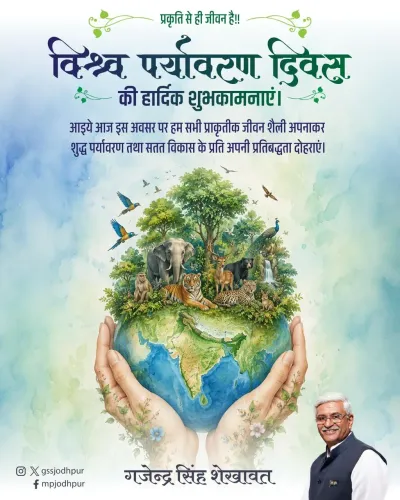
Union Culture and Tourism Minister Gajendra Singh Shekhawat marked World Environment Day, 5 June 2026 , with a call to action on social media.
He urged citizens to join Mission LiFE (Lifestyle for Environment) and the 'Ek Ped Maa Ke Naam' tree plantation campaign.
Mission LiFE was launched by PM Modi at COP26 in Glasgow in 2021 , promoting sustainable individual behaviours.
India committed to achieving net-zero emissions by 2070 alongside the Mission LiFE announcement at COP26.
Shekhawat described environmental stewardship as a 'moral duty towards future generations.' The post used the hashtag #NowForClimate , aligning with the global World Environment Day campaign.
Union Culture and Tourism Minister Gajendra Singh Shekhawat on Friday, 5 June 2026 — World Environment Day — called on citizens to join Mission LiFE and the 'Ek Ped Maa Ke Naam' campaign, asserting that under Prime Minister Narendra Modi's leadership, India is giving the world a new direction in environmental conservation.
Context
Posting in Hindi on the occasion of World Environment Day, Shekhawat wrote: 'संवेदनशील प्रधानमंत्री श्री नरेंद्र मोदी जी के नेतृत्व में भारत आज पर्यावरण संरक्षण के क्षेत्र में विश्व को नई दिशा दे रहा है' — 'Under the leadership of the compassionate Prime Minister Narendra Modi, India today is giving the world a new direction in the field of environmental conservation.' He urged citizens to take a pledge for nature conservation by connecting with campaigns such as Mission LiFE and 'Ek Ped Maa Ke Naam'. The minister added that strengthening the environment is 'our moral duty towards future generations.'
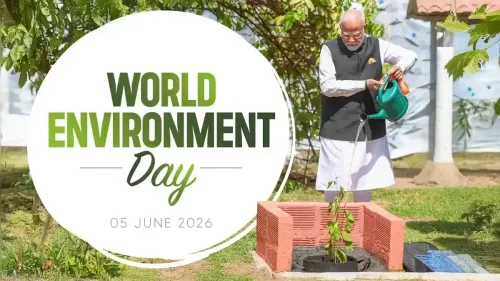
World Environment Day, observed every year on 5 June, is the United Nations' principal platform for raising global environmental awareness. This year's messaging from the minister carried the hashtag #NowForClimate, aligning his appeal with the broader international campaign tone for the day.
Policy Backdrop
Mission LiFE — Lifestyle for Environment — was announced by Prime Minister Modi at the COP26 climate summit in Glasgow in 2021. The programme promotes sustainable individual behaviours as a complement to national-level climate policy, encouraging citizens to make everyday choices that reduce environmental impact. At the same summit, India committed to achieving net-zero emissions by 2070.
'Ek Ped Maa Ke Naam' — meaning 'One Tree in Mother's Name' — is a nationwide tree plantation drive that invites citizens to dedicate a sapling to their mothers, combining emotional resonance with a measurable conservation goal. Both campaigns are designed as mass-participation vehicles that link cultural sentiment with India's formal international climate commitments made since 2015.
Stakeholders and Impact
The primary audience for these campaigns is the general public, with the government framing environmental action as a civic and moral responsibility rather than a purely regulatory one. By invoking 'future generations' as the ultimate stakeholders, the messaging seeks to build intergenerational ownership of conservation goals.
India's approach of pairing large-scale cultural drives with global climate commitments has been a recurring feature of its environmental diplomacy. Campaigns like Mission LiFE and 'Ek Ped Maa Ke Naam' are intended to demonstrate that a developing economy can pursue both growth and sustainability through citizen-level action, reinforcing India's positioning in multilateral climate forums.
What's Next
Progress metrics for Mission LiFE targets and cumulative tree plantation numbers under 'Ek Ped Maa Ke Naam' are expected to come under review ahead of upcoming international climate negotiations and parliamentary committee assessments. The government's ability to show quantifiable outcomes from these mass-participation drives will be central to sustaining their credibility both domestically and on the global stage.
As climate commitments intensify globally, India's model of citizen-led environmental campaigns may draw greater scrutiny — and interest — from other developing nations looking to balance economic aspirations with net-zero pathways.
Point of View
PM-centric narrative, reinforcing both domestic mobilisation and India's international climate image simultaneously. The invocation of 'moral duty to future generations' is a deliberate rhetorical move to depoliticise climate action and broaden its appeal beyond the party's core base. With COP-related scrutiny on India's net-zero roadmap intensifying, such ministerial messaging serves a dual purpose: sustaining public engagement with voluntary conservation drives while signalling continued political commitment to the 2070 net-zero pledge. The cultural framing — planting a tree for one's mother — is also consistent with the government's broader pattern of embedding policy goals within emotional and familial idioms to maximise grassroots uptake.
NationPress
20 Oct 2026
Frequently Asked Questions
What is Mission LiFE and who launched it?
Mission LiFE, or Lifestyle for Environment, is a programme promoting sustainable individual behaviours to combat climate change. It was announced by Prime Minister Narendra Modi at the COP26 summit in Glasgow in 2021.
What is the 'Ek Ped Maa Ke Naam' campaign?
'Ek Ped Maa Ke Naam' means 'One Tree in Mother's Name.' It is a nationwide tree plantation drive that asks citizens to plant a sapling and dedicate it to their mothers, combining an emotional appeal with a conservation goal.
What did Gajendra Singh Shekhawat say on World Environment Day 2026?
Minister Shekhawat called on citizens to join Mission LiFE and 'Ek Ped Maa Ke Naam,' stating that India is giving the world a new direction in environmental conservation under PM Modi's leadership, and described protecting the environment as a moral duty to future generations.
When is World Environment Day observed?
World Environment Day is observed every year on 5 June. It is the United Nations' principal platform for raising global environmental awareness.
What is India's net-zero emissions target?
India committed to achieving net-zero emissions by 2070, a pledge made alongside the Mission LiFE announcement at the COP26 climate summit in Glasgow in 2021.