Shivraj Singh Chouhan Briefs VP on Kapas Kranti Cotton Mission
Synopsis
Union Agriculture Minister Shivraj Singh Chouhan met the Vice President in New Delhi on 7 July 2026 with senior Agriculture and Textiles Ministry officials to brief him on Kapas Kranti, a Cotton Productivity Mission targeting higher yields, better fibre quality, lower costs, and fair prices for cotton farmers.
Key Takeaways
Shivraj Singh Chouhan briefed the Vice President of India on the Kapas Kranti Cotton Productivity Mission in New Delhi on 7 July 2026 .
The mission has four stated goals: raising cotton productivity, improving fibre quality, reducing cultivation costs, and securing remunerative prices for farmers.
Senior officials from both the Ministry of Agriculture and Farmers Welfare and the Ministry of Textiles attended the briefing, underlining the inter-ministerial nature of the mission.
India's cotton productivity has historically trailed global benchmarks, making yield improvement a strategic priority for both the farm sector and the textile industry.
The initiative builds on the Technology Mission on Cotton launched in 2000 and aligns with Atmanirbhar Bharat goals of linking agricultural output to manufacturing competitiveness.
Mission guidelines, state-level implementation plans, and initial productivity data are expected to be released in forthcoming Ministry reports.
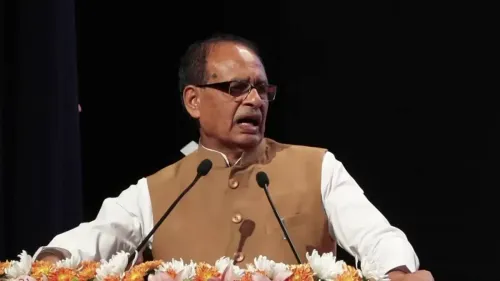
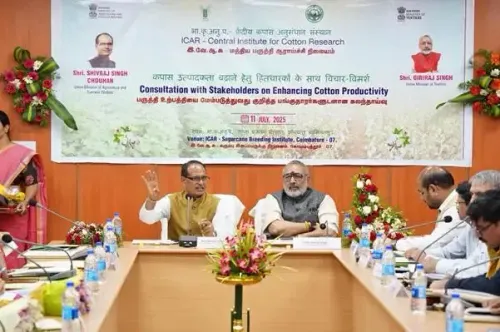
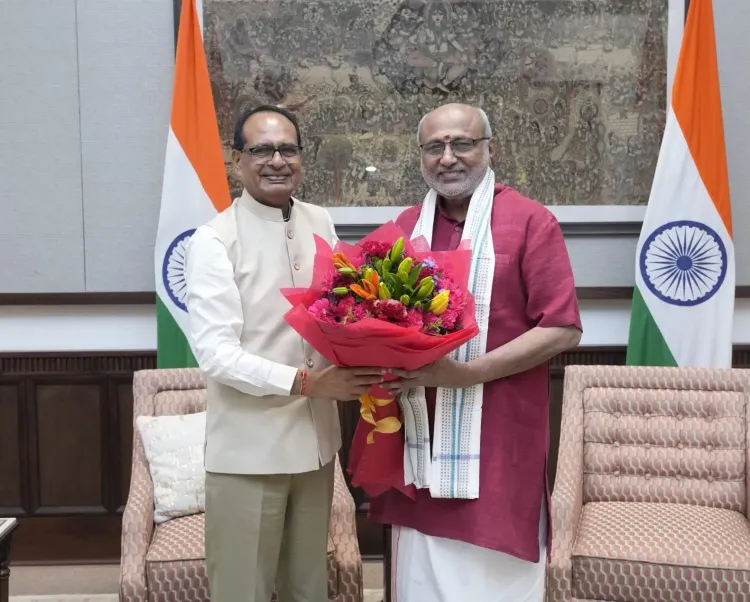
Union Agriculture Minister Shivraj Singh Chouhan met the Vice President of India in New Delhi on Tuesday, 7 July 2026, alongside senior officials of the Ministries of Agriculture and Textiles, to brief the constitutional office holder on Kapas Kranti — the government's Cotton Productivity Mission aimed at transforming India's cotton sector.
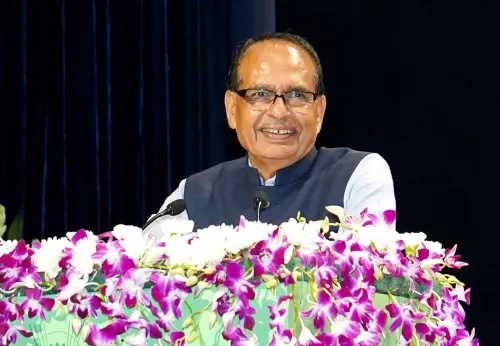
Chouhan shared details of the mission's four-pronged objectives: raising cotton productivity, improving fibre quality, reducing cultivation costs, and ensuring remunerative prices for growers. Posting on X, he said the mission is 'महती भूमिका निभा रहा है' ('playing a pivotal role') in advancing these goals, and that the Vice President's guidance had strengthened his confidence that Kapas Kranti would 'pave the way for new energy and new prosperity in the cotton sector.'
Context
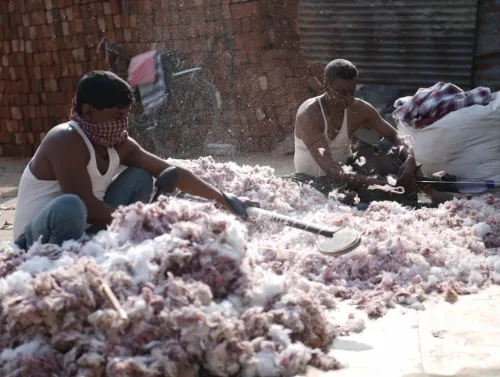
Cotton is one of India's most economically significant cash crops, cultivated predominantly in rain-fed belts across Maharashtra, Gujarat, Telangana, Andhra Pradesh, and Madhya Pradesh. Millions of smallholder farmers depend on it for their livelihoods, yet India's cotton yields have historically lagged behind global benchmarks, leaving the textile industry vulnerable to supply volatility and quality inconsistencies.
The briefing to the Vice President signals that Kapas Kranti is being positioned as a high-priority, cross-sectoral initiative requiring broad institutional support — not merely a departmental scheme.
Policy Backdrop
India's engagement with cotton productivity is not new. A Technology Mission on Cotton was launched as far back as 2000, targeting research, extension support, and quality improvement. Kapas Kranti represents the current administration's effort to build on that lineage with renewed inter-ministerial coordination between the Ministry of Agriculture and Farmers Welfare and the Ministry of Textiles.
This dual-ministry approach reflects the broader logic of Atmanirbhar Bharat, which seeks to link farm-gate productivity gains directly to downstream textile manufacturing competitiveness. Closing the yield gap in cotton is seen as essential to reducing India's dependence on imported fibre and stabilising input costs for its vast garment and spinning industries.
Stakeholders and Impact
The mission's primary beneficiaries are cotton farmers, who stand to gain from lower input costs and better price discovery if the mission's objectives are met. The textile industry — India's second-largest employer after agriculture — has an equally direct stake, as higher domestic cotton output of consistent quality would reduce procurement costs and supply-chain risks.
Inter-ministerial coordination of this kind also matters for state governments in cotton-growing regions, which are responsible for on-ground extension services, seed distribution, and procurement infrastructure. A high-level endorsement from the Vice President's office can accelerate state-level buy-in and resource allocation.
What's Next
Observers will watch for the formal release of Kapas Kranti mission guidelines, state-level implementation memoranda, and the first round of productivity benchmarking data expected to appear in the Ministry's annual reports or the next Economic Survey. The involvement of the Textiles Ministry suggests that downstream linkages — including market access and value-addition support — may form a distinct component of the mission's rollout.
If the mission delivers measurable yield improvements, it could set a template for similar inter-ministerial productivity drives for other rain-fed cash crops, reinforcing the government's broader ambition to double farm incomes and strengthen India's position as a global textile powerhouse.
Point of View
Designed to elevate Kapas Kranti beyond a routine departmental scheme and give it constitutional-level visibility. For a minister who built his political identity in Madhya Pradesh, a major cotton-growing state, championing farmer-centric productivity missions also reinforces his core constituency appeal at the national level. The inter-ministerial architecture linking Agriculture and Textiles is consistent with the government's broader Atmanirbhar Bharat framework, which treats farm productivity as an industrial input rather than a welfare issue alone. Whether the mission translates into measurable yield gains will ultimately determine its legacy — and Chouhan's credibility on the farm-to-factory narrative.
NationPress
6 Oct 2026
Frequently Asked Questions
What is Kapas Kranti mission?
Kapas Kranti is India's Cotton Productivity Mission, led jointly by the Ministries of Agriculture and Textiles, aimed at raising cotton yields, improving fibre quality, reducing cultivation costs, and ensuring fair prices for cotton farmers.
Why did Shivraj Singh Chouhan meet the Vice President?
Union Agriculture Minister Shivraj Singh Chouhan met the Vice President on 7 July 2026 in New Delhi to brief him on the Kapas Kranti cotton mission and seek his guidance to strengthen the initiative's reach and impact.
Which ministries are involved in the Kapas Kranti cotton mission?
The Ministry of Agriculture and Farmers Welfare and the Ministry of Textiles are jointly coordinating the Kapas Kranti mission, reflecting its dual focus on farm productivity and downstream textile industry competitiveness.
How does Kapas Kranti help cotton farmers in India?
The mission targets four outcomes for cotton farmers: higher productivity per hectare, better-quality fibre, lower input and cultivation costs, and access to remunerative market prices for their harvest.
What is India's history with cotton productivity missions?
India launched a Technology Mission on Cotton in 2000 to improve yields and quality through research and extension support. Kapas Kranti is the current government's renewed push on similar lines, with added inter-ministerial coordination and Atmanirbhar Bharat linkages.