Shivraj hails India's first hydrogen train launch by PM Modi

Synopsis
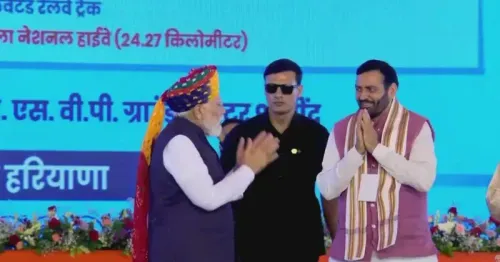
Union Agriculture Minister Shivraj Singh Chouhan hailed Prime Minister Modi's flag-off of India's first hydrogen train on 17 July 2026, calling it a milestone for clean energy, indigenous technology, and a green future for coming generations.
Key Takeaways
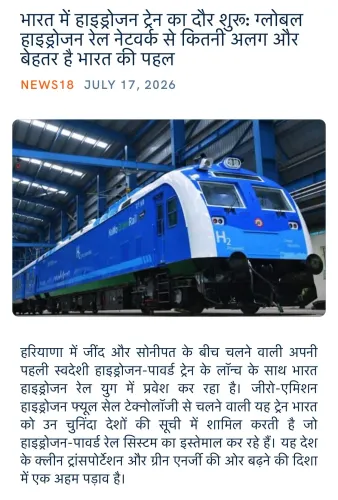
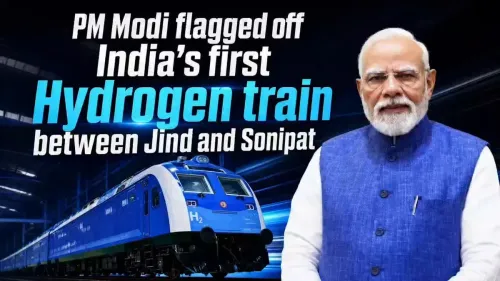
Prime Minister Narendra Modi flagged off India's first hydrogen-powered train on 17 July 2026 .
Union Agriculture Minister Shivraj Singh Chouhan celebrated the launch on X, linking it to 'new thinking, new strength, and a new India.' The launch aligns with the National Green Hydrogen Mission approved in January 2023 to develop hydrogen ecosystems including transport.
Indian Railways has been pursuing hydrogen train pilots since the 2021-22 budget cycle as part of its net-zero operations goal.
The development supports India's 2070 net-zero pledge made at COP26 and the Atmanirbhar Bharat push for indigenous rail technology.
Further rollout will depend on route selection, production scale-up, and future Railway Budget provisions.
Union Agriculture Minister Shivraj Singh Chouhan on Friday, 17 July 2026, took to X to celebrate the flagging off of India's first hydrogen-powered train by Prime Minister Narendra Modi, calling it a convergence of clean energy, cutting-edge technology, and the Atmanirbhar Bharat vision.
In his post, Chouhan wrote: 'नई सोच, नई शक्ति और नया भारत' ('New thinking, new strength, and a new India'), adding that the milestone would 'prepare a strong path of a green, modern, and capable India for generations to come.'
Context
Prime Minister Narendra Modi flagged off the country's first hydrogen train, marking a significant step in Indian Railways' long-term push to replace diesel traction with zero-emission alternatives. The event drew widespread acknowledgement from senior government figures, with Chouhan framing it as emblematic of a broader national transformation.
Hydrogen trains run on fuel cells that combine hydrogen and oxygen to generate electricity, emitting only water vapour. For a rail network as large as India's, even a partial shift to such technology carries significant implications for carbon reduction and energy security.
Policy Backdrop
The launch is rooted in a series of deliberate policy moves. The National Green Hydrogen Mission, approved in January 2023, laid out a framework to scale green hydrogen production and its application across sectors including mobility. Indian Railways had signalled its intent to pilot hydrogen trains as far back as the 2021-22 budget cycle, positioning the network for net-zero rail operations.
India's broader decarbonisation agenda traces to its 2070 net-zero pledge made at COP26, which set in motion domestic targets for green fuels across transport, industry, and power. The hydrogen train fits squarely within that arc, while also serving the Atmanirbhar Bharat goal of developing and deploying indigenous technology in critical infrastructure.
Stakeholders and Impact
Railway passengers stand to benefit from quieter, cleaner journeys on routes where hydrogen rolling stock is deployed. For the renewable energy sector, the launch signals a concrete, high-visibility demand anchor for green hydrogen, which has so far struggled to find large-scale domestic off-takers.
The move also carries diplomatic weight: India has positioned itself as a future green hydrogen exporter, and a domestically operating hydrogen train fleet strengthens that narrative in multilateral forums. Senior ministers amplifying the launch — as Chouhan has done — reflects the government's intent to build political momentum around clean-energy milestones ahead of upcoming legislative and budgetary cycles.
What's Next
Attention will now turn to the rollout plan: which routes will receive hydrogen trains first, what the phased induction schedule looks like, and whether dedicated allocations appear in upcoming Railway Budgets or NITI Aayog review documents. The pace of scaling domestic green hydrogen production — a prerequisite for economical train operations — will be equally closely watched by industry and climate-policy observers alike.
If the pilot demonstrates operational reliability and cost trajectories improve as anticipated, India's first hydrogen train could mark the beginning of a structural shift in how the world's largest rail network is powered.
Point of View
Positioning the hydrogen train launch as proof of ideological delivery on the Atmanirbhar Bharat and clean-energy promises. For the BJP, a visible, futuristic infrastructure milestone ahead of electoral cycles is valuable political currency. The launch also signals that India's green hydrogen policy is moving from paper to track, a transition that will be tested by the pace of domestic production scale-up. Whether this becomes a transformative programme or a symbolic pilot depends almost entirely on the budget commitments and route-rollout decisions that follow.
NationPress
17 Jul 2026
Frequently Asked Questions
What is India's first hydrogen train and who launched it?
India's first hydrogen-powered train was flagged off by Prime Minister Narendra Modi on 17 July 2026. The train runs on hydrogen fuel cells that generate electricity by combining hydrogen and oxygen, emitting only water vapour.
What is the National Green Hydrogen Mission?
The National Green Hydrogen Mission is a central government scheme approved in January 2023 to scale up green hydrogen production and its use across sectors including transport, with Indian Railways identified as a key application area.
Why did Shivraj Singh Chouhan post about the hydrogen train?
As a senior BJP leader and Union Minister, Chouhan posted on X to celebrate the launch, framing it as a symbol of India's clean-energy ambitions, indigenous technology, and the Atmanirbhar Bharat vision under PM Modi.
How does the hydrogen train fit India's climate goals?
India pledged to reach net-zero emissions by 2070 at COP26. Hydrogen trains help Indian Railways reduce its dependence on diesel traction, directly contributing to that national decarbonisation target.
Which routes will get hydrogen trains in India?
Specific routes have not been officially confirmed in available information. The government is expected to announce phased rollout details through Railway Budget provisions and NITI Aayog reviews following the inaugural launch.