Shivraj recalls Narmada water flowing through once-dry Sabarmati
Synopsis
Union Agriculture Minister Shivraj Singh Chouhan credited PM Modi's leadership for transforming the Sabarmati — once dry enough for cricket — into a perennially flowing river through Narmada water transfers, linking the milestone to the BJP's #ApnapanBook initiative.
Key Takeaways
Union Agriculture Minister Shivraj Singh Chouhan posted on 26 May 2026 highlighting the Narmada-Sabarmati water transfer as a governance achievement.
The Sabarmati river in Ahmedabad historically ran dry seasonally, leaving a sandy bed used informally by children for cricket.
Waters from the Narmada were routed northward via the Sardar Sarovar Project and the Narmada Main Canal , expanded during Modi's tenure as Gujarat CM (2001–2014) .
The Sardar Sarovar Dam was dedicated to the nation in 2017 after reaching its full designed height, boosting inter-basin transfer capacity.
The post is tagged #ApnapanBook , linking it to a BJP communications initiative whose full details remain publicly unconfirmed.
The Gujarat model is cited as a template for pending national river-link projects including Ken-Betwa and Damanganga-Pinjal .
Union Agriculture Minister Shivraj Singh Chouhan on Tuesday, 26 May 2026, invoked the transformation of the Sabarmati river in Ahmedabad, Gujarat, recalling how a riverbed once so dry that children played cricket on it now flows with waters drawn from the Narmada — a feat he attributed to the leadership of Prime Minister Narendra Modi.
Context
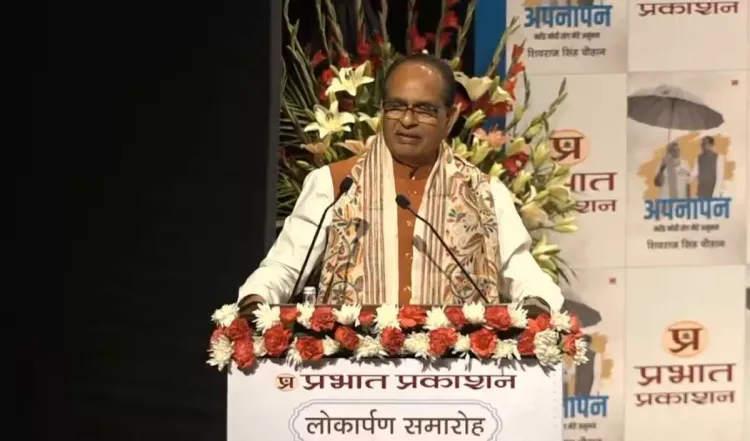
Chouhan posted the message in Hindi on X (formerly Twitter), writing: 'Jis Sabarmati mein bachche cricket khelte the, wahan Modi ji ke netritva mein Narmada ji ka jal kal-kal, chhal-chhal baha' — 'In the very Sabarmati where children once played cricket, under Modi's leadership, the waters of the Narmada now flow with a gentle murmur.' The post was tagged #ApnapanBook, suggesting it is linked to a publication or compiled volume, though its specific context has not been publicly confirmed. The accompanying video underscores the visual contrast between the river's former arid state and its present flow.
Policy Backdrop
The Sabarmati is a seasonal river that historically ran dry for large parts of the year, leaving a wide sandy bed that became an informal playground for Ahmedabad's residents. The augmentation of its flow is the result of a long-running inter-basin water transfer from the Narmada basin, enabled by the Sardar Sarovar Project and the Narmada Main Canal network. When Modi served as Chief Minister of Gujarat between 2001 and 2014, his government expanded canal distribution networks to carry Narmada waters northward into the Sabarmati basin. The Sardar Sarovar Dam was subsequently dedicated to the nation in 2017 after reaching its full designed height, enabling larger volumes of inter-basin transfer.
The Sabarmati Riverfront Development Project in Ahmedabad further capitalised on the augmented flow, transforming the embankments into a continuous public promenade. The combination of structural water supply and urban development has made the Sabarmati's revival one of the most cited examples of river-basin management in India's policy discourse.
Stakeholders and Impact
Gujarat's farmers and Ahmedabad's urban residents are the primary beneficiaries of the Narmada-Sabarmati transfer. Agricultural communities across Saurashtra and North Gujarat — historically drought-prone — gained access to irrigation water through the canal network. For urban Ahmedabad, the perennial flow transformed the river from a seasonal nuisance and public-health concern into a civic asset. Chouhan's post, by framing the change in terms of children's lived experience — the shift from a cricket pitch to a flowing river — pitches the infrastructure story as a human one, accessible beyond policy circles.
The #ApnapanBook hashtag links the post to a broader BJP communications effort, with the Narmada-Sabarmati story serving as an illustration of governance outcomes attributed to Modi's tenure in Gujarat and subsequently at the Centre.
What's Next
The National Perspective Plan for river interlinking lists several additional links that could replicate the Gujarat model at national scale, including the Ken-Betwa link in central India and the Damanganga-Pinjal link in the west. Gujarat's Narmada-Sabarmati experience is routinely cited by proponents as proof of feasibility. Parliamentary and budget sessions in the coming months will be watched for fresh allocations or timelines on these pending components. Any formal launch or public release associated with #ApnapanBook is also expected to provide fuller context to posts like Chouhan's that reference it.
Point of View
The messaging sidesteps technical policy language and makes a large hydraulic engineering story emotionally immediate. The #ApnapanBook tag signals a coordinated content campaign, suggesting this is not an isolated reminiscence but part of a structured narrative being built ahead of a publication or political event. For the opposition, the challenge remains that the Sabarmati's visible transformation is difficult to contest, making water infrastructure one of the BJP's most durable visual arguments.
NationPress
10 Oct 2026
Frequently Asked Questions
Why did children play cricket in the Sabarmati river?
The Sabarmati was historically a seasonal river that dried up for much of the year, leaving a wide sandy bed in Ahmedabad that residents informally used for activities like cricket. Sustained perennial flow only became possible after Narmada waters were transferred into the basin through canal infrastructure.
How did Narmada water reach the Sabarmati river?
Water from the Narmada is transferred northward through the Sardar Sarovar Project and the Narmada Main Canal network. The Gujarat government expanded these distribution canals significantly between 2001 and 2014 during Modi's tenure as Chief Minister , enabling the inter-basin transfer.
What is the Sardar Sarovar Project?
The Sardar Sarovar Project is a large dam on the Narmada river in Gujarat . It was dedicated to the nation in 2017 after reaching its full designed height, and it is the key infrastructure enabling water transfers that augment rivers including the Sabarmati .
What is #ApnapanBook that Shivraj Singh Chouhan mentioned?
#ApnapanBook appears to be a BJP initiative — likely a publication or compiled volume — to which Chouhan's post is linked. Its specific contents and release details have not been publicly confirmed as of the time of this report.
Is India planning more river-linking projects like Narmada-Sabarmati?
Yes. India's National Perspective Plan includes several pending inter-basin river links, with the Ken-Betwa link in central India and the Damanganga-Pinjal link in western India among the most advanced. Proponents frequently cite the Gujarat Narmada-Sabarmati experience as evidence that such transfers are technically and socially feasible.