Shivraj hands over Rani Durgavati Gond Samaj Dharamshala
Synopsis
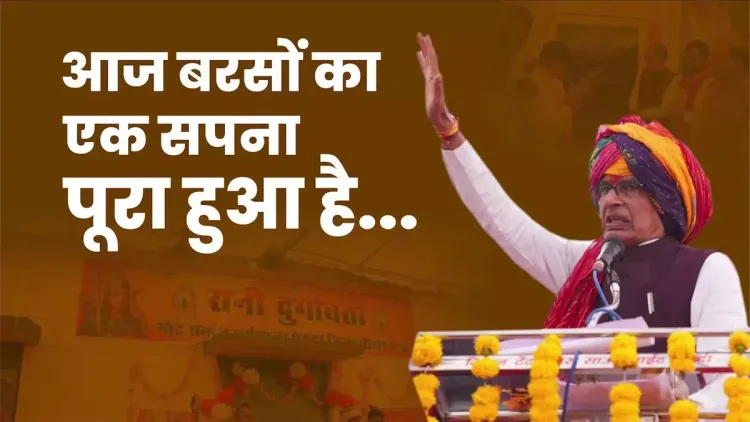
Union Agriculture Minister Shivraj Singh Chouhan inaugurated the Rani Durgavati Gond Samaj Dharamshala on September 27, 2026, completing a project he had sanctioned during his tenure as Chief Minister of Madhya Pradesh — calling it the fulfilment of a years-long dream.
Key Takeaways
Union Agriculture Minister Shivraj Singh Chouhan inaugurated and handed over the Rani Durgavati Gond Samaj Dharamshala on September 27, 2026 .
The dharamshala was originally sanctioned by Chouhan during one of his tenures as Chief Minister of Madhya Pradesh , where he served across four terms from 2005 to 2023 .
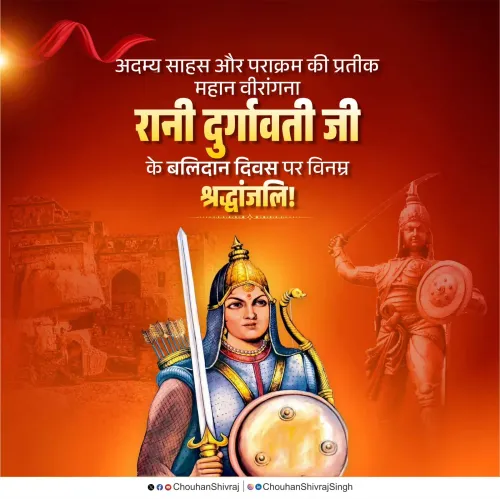
The facility is named after Rani Durgavati , the revered 16th-century Gond queen who resisted Mughal expansion and remains a cultural icon for the Gond community.
The Gond community is one of the largest indigenous tribal groups in Madhya Pradesh and central India.
The inauguration reflects Chouhan's pattern of completing state-level tribal welfare projects even after transitioning to a Union Cabinet role.
A promise made from the Chief Minister's chair, honoured from a Union Cabinet berth — Union Agriculture Minister Shivraj Singh Chouhan on Sunday, September 27, 2026, inaugurated and handed over the Rani Durgavati Gond Samaj Dharamshala, a community rest-house he had sanctioned during one of his tenures as Chief Minister of Madhya Pradesh.
Posting on X, Chouhan wrote: 'Aaj barson ka ek sapna pura hua hai' — 'Today, a dream of many years has been fulfilled. I take satisfaction that this dharamshala was approved when I was Chief Minister, and today I am handing it over to you.' The moment carried a distinctly personal weight: a project he seeded in office, delivered years later by his own hands, even as his address had changed from Bhopal to New Delhi.
Rani Durgavati: the name that carries a movement
The dharamshala is named after Rani Durgavati, the revered 16th-century Gond queen of the Garha-Mandla kingdom in central India. She is celebrated in the region for her fierce resistance against Mughal expansion, and her legacy has long served as a unifying symbol for the Gond community — one of the largest indigenous tribal groups in Madhya Pradesh and the wider central Indian belt. Naming a permanent community facility after her is a pointed signal of cultural recognition.
A CM's sanction, a minister's ribbon-cutting
Chouhan served as Chief Minister of Madhya Pradesh across four terms spanning 2005 to 2023 (with a brief interregnum), making him one of the longest-serving CMs in post-independence India. During those years, he repeatedly championed infrastructure for tribal and rural communities. The dharamshala's arc — approved under his state tenure, completed and inaugurated after his move to the Union Cabinet — reflects a pattern that has come to define his public identity: the follower-through.
For the Gond Samaj, the facility offers a dedicated gathering and rest space, a tangible addition to community infrastructure that tribal organisations in central India have long sought. Dharamshalas serving specific communities function as pilgrimage rest-houses, event venues, and social hubs — their absence often means scattered, underfunded gatherings.
What this signals for tribal welfare in MP
Chouhan's event fits a broader BJP playbook of connecting central leadership to state-level grassroots delivery — particularly ahead of any electoral cycle in tribal-heavy constituencies of Madhya Pradesh. The Gond community's political weight in central India is considerable, and gestures of cultural respect paired with concrete infrastructure tend to register durably. Whether similar facilities sanctioned during his long CM tenure are in the pipeline for delivery will be the next thing to watch.
A dream of years, a ceremony of minutes — but for the Gond Samaj, the stone and mortar will stand long after the speeches fade.
Point of View
Handed over by my own hands' — reinforces the incumbent-delivery narrative the BJP leans on heavily in tribal belts. Analysts will watch whether this triggers a series of similar project completions as the party keeps its tribal outreach calibrated ahead of state political cycles.
NationPress
27 Sept 2026
Frequently Asked Questions
What is the Rani Durgavati Gond Samaj Dharamshala?
It is a community rest-house and gathering facility built for the Gond community, named after the revered 16th-century Gond queen Rani Durgavati. Union Agriculture Minister Shivraj Singh Chouhan inaugurated and handed it over on September 27, 2026.
Who is Rani Durgavati and why is she significant?
Rani Durgavati was a 16th-century Gond queen of the Garha-Mandla kingdom in central India, celebrated for her resistance against Mughal expansion. She is a major cultural and historical symbol for the Gond community across Madhya Pradesh and surrounding states.
When did Shivraj Singh Chouhan serve as Chief Minister of Madhya Pradesh?
Shivraj Singh Chouhan served as Chief Minister of Madhya Pradesh across four terms spanning 2005 to 2023, making him one of the longest-serving chief ministers in the state's history.
Why did Chouhan inaugurate a state-level facility despite being a Union Minister?
The dharamshala was originally sanctioned during Chouhan's tenure as Chief Minister of Madhya Pradesh. As the leader who approved the project, he personally handed it over to the Gond Samaj, reflecting his continued engagement with state-level welfare commitments.
What is the significance of dharamshalas for tribal communities in Madhya Pradesh?
Dharamshalas serve as community rest-houses, pilgrimage stops, and social gathering venues. For tribal groups like the Gond Samaj, a dedicated facility provides an anchor for cultural events and community organisation that was previously unavailable.