Shivraj to Hold Jan Kalyan Shivirs in Ichhawar, Budhni
Synopsis
Union Agriculture Minister Shivraj Singh Chouhan announced back-to-back Jan Kalyan Shivirs in Ichhawar and Budhni on June 21, 2026, to hear public grievances — joined by MP Revenue Minister Karan Singh at the first camp.
Key Takeaways
Union Agriculture Minister Shivraj Singh Chouhan announced two Jan Kalyan Shivirs in Sehore district, Madhya Pradesh on June 21, 2026 .
The first camp was scheduled at Ichhawar at 11:00 AM ; the second at Bhairunda (Budhni constituency) at 3:00 PM .
Madhya Pradesh Revenue Minister Karan Singh was confirmed to attend the Ichhawar camp.
The camps aim to hear citizen complaints and attempt on-the-spot or follow-up resolution of problems.
Chouhan addressed constituents in a familial tone, continuing a style of direct public engagement he established across his four terms as Chief Minister of Madhya Pradesh.
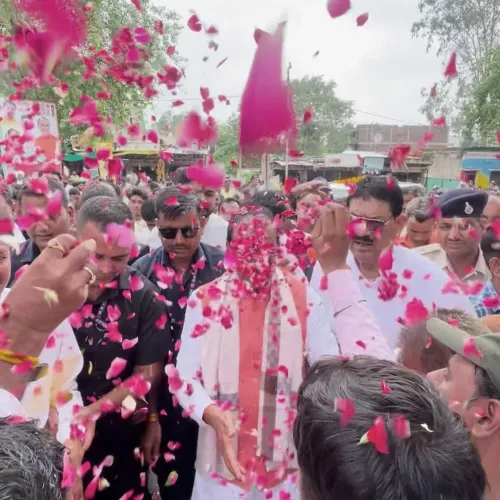
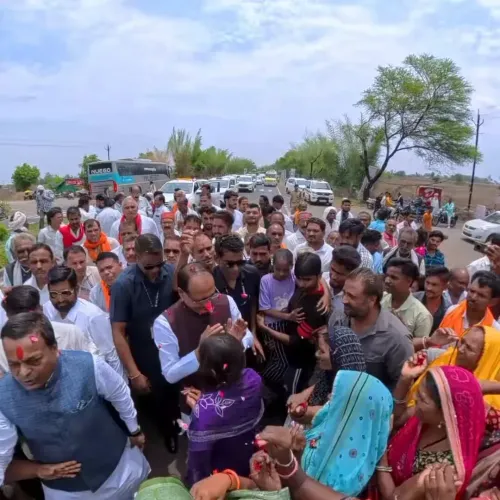
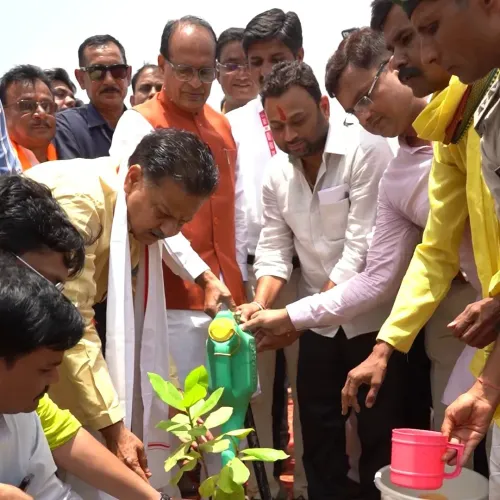
Union Agriculture Minister Shivraj Singh Chouhan announced on Sunday, June 21, 2026, that he would personally attend two public grievance camps — known as Jan Kalyan Shivirs — in his home constituencies of Ichhawar and Budhni in Sehore district, Madhya Pradesh, on the same day, reaching out to local residents to hear and address their problems.
Context
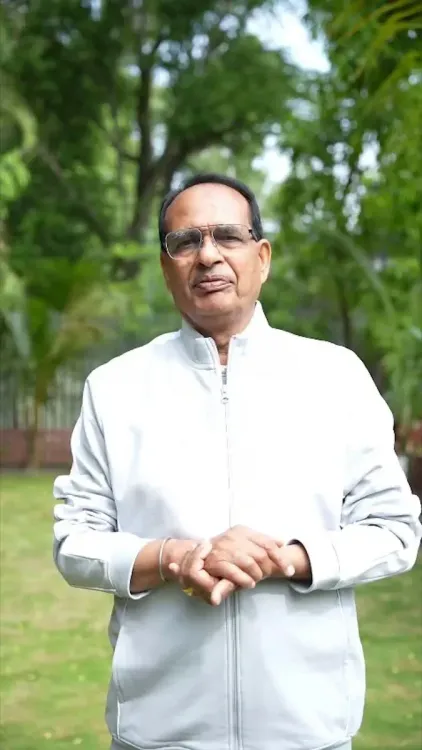
Posting on X shortly after completing his morning yoga session, Chouhan addressed residents of Ichhawar and Budhni assembly constituencies directly — referring to them as 'bhai-behen aur bhaanje-bhaanjiyaan' (brothers, sisters, nephews, and nieces) — a familial tone he has long cultivated with voters in the region. He announced he would arrive at Ichhawar at 11:00 AM for the first camp, followed by a visit to Bhairunda at 3:00 PM for the second event in the Budhni segment.
Madhya Pradesh Revenue Minister Karan Singh was also confirmed to be present at the Ichhawar camp, lending an administrative dimension to what is both a political and governance exercise.
Policy Backdrop
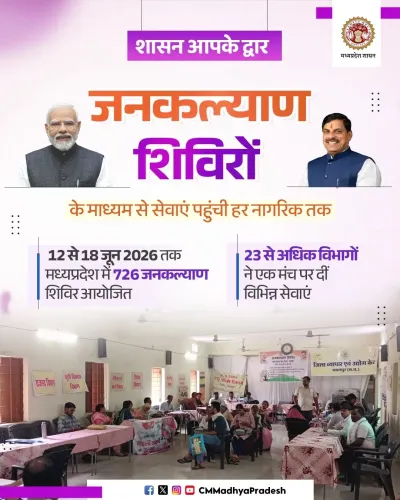
Jan Kalyan Shivirs — public welfare and grievance redressal camps — have been a signature feature of Chouhan's political style since his tenure as Chief Minister of Madhya Pradesh, a post he held across four terms between 2005 and 2023. During those years, he institutionalised constituency-level hearings where citizens could bring complaints directly to officials and seek on-the-spot resolution.
The practice reflected a broader state-level emphasis on accessible governance in Madhya Pradesh, where such camps were used to bridge the gap between rural populations and the administrative machinery. Chouhan's ability to draw large turnouts at these events became a defining element of his political brand in the state.
Stakeholders and Impact
The immediate beneficiaries are residents of Ichhawar and Budhni constituencies in Sehore district — predominantly rural voters who may use the camps to raise issues related to land records, agriculture, welfare scheme access, and local infrastructure. The presence of Revenue Minister Karan Singh at the Ichhawar camp signals that complaints requiring state-level administrative action could receive direct attention.
For the BJP, such events serve a dual purpose: they maintain grassroots visibility for a senior Union minister who no longer holds executive authority at the state level, and they reinforce the party's outreach between electoral cycles. Chouhan's continued engagement with Budhni — a constituency he has represented for decades — underscores the importance the party places on sustained local presence.
What's Next
The outcomes of complaints registered at both camps — and any follow-up orders or scheme linkages directed at Sehore district by the state government — will be the measure of the events' administrative impact. Chouhan's continued holding of such camps as a Union minister, rather than a state executive, also signals a model that other BJP leaders in similar positions may be expected to replicate. Residents and political observers in Madhya Pradesh will watch whether the grievances logged translate into tangible administrative action in the weeks ahead.
Point of View
Familial post-yoga message — reflects a deliberate effort to sustain the 'Mama' persona that defined his long run as Chief Minister, now transplanted into his role as a Union minister without state executive power. The inclusion of Revenue Minister Karan Singh signals coordination with the current Madhya Pradesh government, ensuring the camps carry real administrative weight rather than functioning purely as political theatre. This model of a senior central minister maintaining deep local roots in a home constituency is increasingly visible within the BJP, and Sehore's camps may serve as a template for similar outreach by other Union ministers in their home states. The broader arc points to a party strategy of keeping high-profile leaders electorally relevant at the grassroots even between assembly cycles.
NationPress
20 Sept 2026
Frequently Asked Questions
What is a Jan Kalyan Shivir?
A Jan Kalyan Shivir is a public welfare and grievance redressal camp where citizens can directly present their problems to elected representatives and officials, who then attempt to resolve them on the spot or through follow-up administrative action.
Where did Shivraj Singh Chouhan hold Jan Kalyan Shivirs on June 21, 2026?
Shivraj Singh Chouhan held Jan Kalyan Shivirs at Ichhawar at 11:00 AM and at Bhairunda in the Budhni assembly constituency at 3:00 PM on June 21, 2026, both in Sehore district, Madhya Pradesh.
Who is Shivraj Singh Chouhan?
Shivraj Singh Chouhan is the Union Minister of Agriculture and Farmers Welfare and Rural Development in the Government of India, and a senior BJP leader who served as Chief Minister of Madhya Pradesh across four terms between 2005 and 2023.
Who is Karan Singh in Madhya Pradesh politics?
Karan Singh is the Revenue Minister of Madhya Pradesh and was confirmed to be present at the Jan Kalyan Shivir held in Ichhawar on June 21, 2026.
What is Budhni constituency known for?
Budhni is an assembly constituency in Sehore district, Madhya Pradesh, long associated with Shivraj Singh Chouhan, who has represented it for several terms and used it as his primary political base.