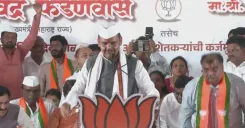
Shivraj launches CBDC-based DBT for ration aid in Chandigarh

Synopsis
Union Agriculture Minister Shivraj Singh Chouhan launched India's first CBDC-based DBT system for PMGKAY ration aid in Chandigarh on 14 August 2026. The digital-rupee transfer is programmed to be spent only on food, closing a longstanding loophole in India's welfare delivery chain.
Key Takeaways
Shivraj Singh Chouhan launched a CBDC-based DBT system for PMGKAY ration assistance in Chandigarh on 14 August 2026 .
The digital transfer is purpose-bound — funds can only be used to purchase ration and essential food items.
Punjab Governor Gulab Kataria , Union Minister Pralhad Joshi , and Union Minister Nimu Bambhaniya attended the launch.
PMGKAY was originally launched in March 2020 to provide free food grains during the COVID-19 pandemic and has since become a permanent food security scheme.
The RBI began its e-rupee CBDC pilot in 2022 ; this Chandigarh launch marks its first major deployment in a mass food welfare programme.
Chandigarh serves as the pilot territory, with a potential national rollout being watched for leakage-reduction outcomes.
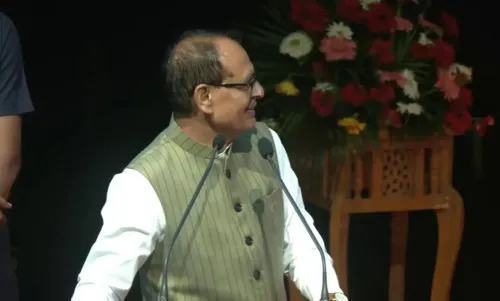
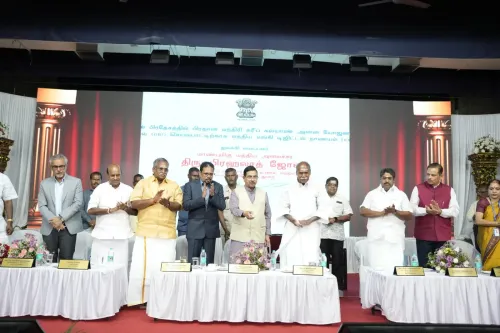
A welfare first in India quietly took shape in Chandigarh on Friday, 14 August 2026 — and it may rewrite how the country's poorest families receive food support. Union Agriculture Minister Shivraj Singh Chouhan launched a Central Bank Digital Currency (CBDC)-based Direct Benefit Transfer (DBT) system for ration assistance under the Pradhan Mantri Garib Kalyan Anna Yojana (PMGKAY), marking the first time India's digital rupee has been formally harnessed to deliver a major food welfare programme.
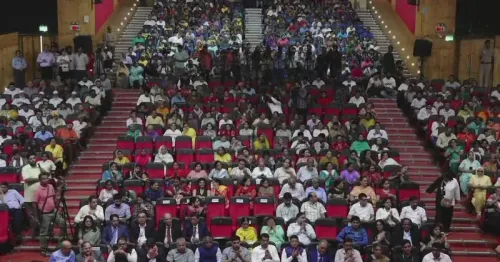
Chouhan framed the launch as a fulfilment of Prime Minister Narendra Modi's governing philosophy — that a government must be visible not in files but in lives ('sirf file mein nahin, balki life mein dikhai de'). The ceremony was attended by Punjab Governor Gulab Kataria, Union Minister Pralhad Joshi (Consumer Affairs, Food and Public Distribution), and Union Minister Nimu Bambhaniya, alongside other dignitaries and citizens.
What CBDC-linked rations actually mean for poor families
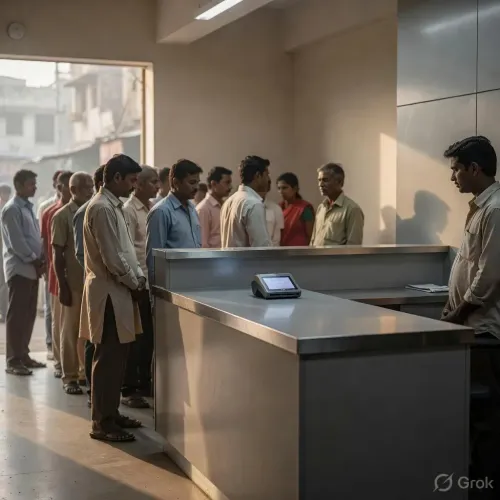
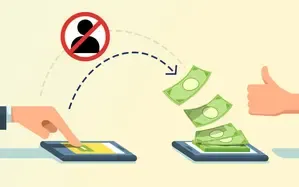
The critical innovation here is programmability. Under the new system, the subsidy transferred to a beneficiary's digital wallet is purpose-bound — it can only be spent on ration and essential food items, not diverted elsewhere. This is the defining feature that separates CBDC-based DBT from conventional cash transfers.
India's DBT architecture, institutionalised in 2013, has long aimed to cut leakage by bypassing middlemen. Aadhaar-linked transfers tightened identity verification. CBDC integration goes one step further: it embeds the spending condition into the currency itself. The Reserve Bank of India launched its e-rupee pilot in 2022; Wednesday's Chandigarh launch represents its first significant deployment in a mass food welfare context.
PMGKAY's long journey from pandemic relief to permanent architecture
PMGKAY was born in March 2020 as an emergency measure — free food grains for vulnerable families as the COVID-19 pandemic shut down livelihoods. It has since evolved into a cornerstone of India's food security architecture, covering ration card holders across the country. The scheme's longevity made it a natural candidate for technology upgrades.
Chouhan's portfolio spans agriculture and rural development — two domains directly connected to food production and consumption at the grassroots. His presence at the launch, alongside Joshi whose ministry directly oversees public distribution, signals coordinated ownership of the CBDC-DBT rollout at the Cabinet level.
What the Chandigarh pilot could unlock nationally
Chandigarh, a Union Territory with a compact and administratively manageable population, is a logical proving ground before a wider national rollout. The key question now: can the system scale, and will independent evaluations confirm reduced leakage? Every percentage point of subsidy that reaches an actual plate — rather than a ghost beneficiary or a parallel market — translates into real fiscal savings and real nutrition for families who have waited decades for the state to show up in their lives.
India has spent years building the pipes. Today, for the first time, the currency flowing through those pipes is programmed to arrive exactly where it was always meant to go.
Point of View
Moving from Aadhaar-based identity verification to programmable money that enforces end-use conditions. For the BJP government, it offers a tangible, auditable demonstration that anti-leakage reform has moved beyond rhetoric. The Chandigarh pilot's success or failure will be closely watched: if independent data shows measurable leakage reduction, it hands the Centre a powerful template to roll out nationally ahead of the election cycle. The coordination between Chouhan's agriculture ministry and Joshi's food ministry at the launch also signals that CBDC-DBT is being positioned as a whole-of-government initiative, not a siloed experiment.
NationPress
14 Aug 2026
Frequently Asked Questions
What is CBDC-based DBT for rations in India?
It is a system where ration subsidies under PMGKAY are transferred to beneficiaries as digital rupees (CBDC) that are programmatically restricted to purchasing only food and essential ration items, preventing diversion to other uses.
What is Pradhan Mantri Garib Kalyan Anna Yojana (PMGKAY)?
PMGKAY is a central government scheme launched in March 2020 during the COVID-19 pandemic to provide free food grains to poor and vulnerable families across India. It has since been extended as a permanent food security measure.
Where was the CBDC-DBT ration system launched?
The system was launched in Chandigarh on 14 August 2026 by Union Agriculture Minister Shivraj Singh Chouhan , with Chandigarh serving as the pilot Union Territory.
What is India's digital rupee or e-rupee?
The e-rupee is India's Central Bank Digital Currency (CBDC) issued by the Reserve Bank of India , whose retail and wholesale pilot was launched in 2022 . It is a digital form of legal tender that can be programmed with spending conditions.
How does CBDC-based DBT reduce welfare leakage?
Unlike cash transfers, CBDC transfers are 'purpose-bound' — the digital wallet only allows spending on designated goods such as ration and food items. This prevents ghost beneficiaries and diversion of subsidies, a persistent problem in India's public distribution system.