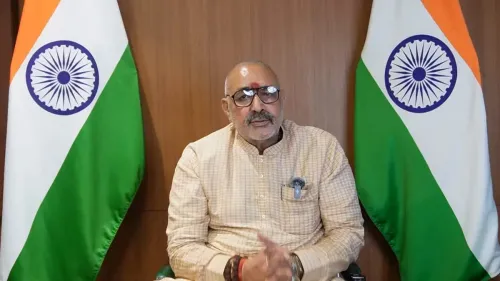
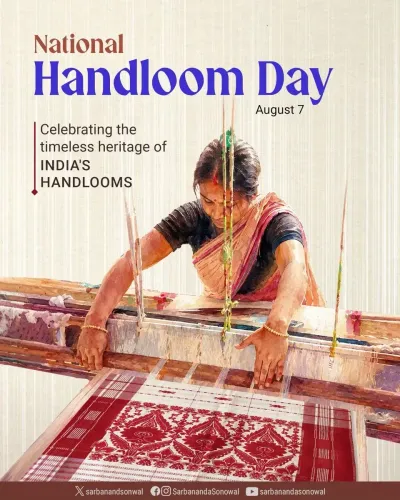
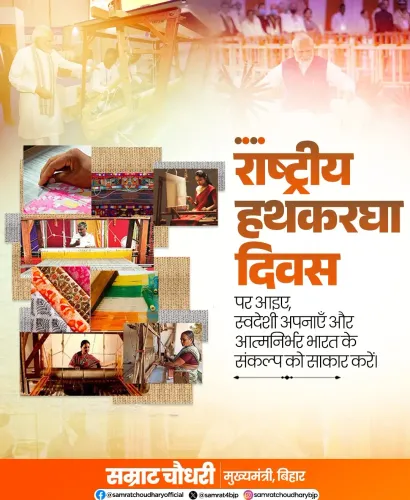
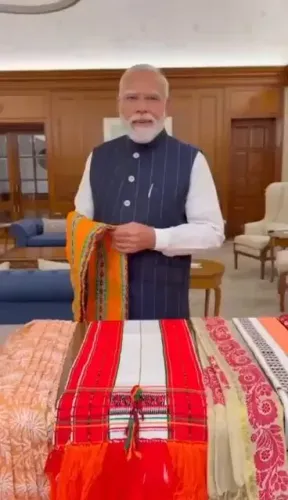
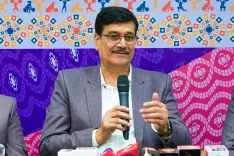
Shivraj Singh Chouhan marks National Handloom Day, links 1905 Swadeshi pledge to Atmanirbhar Bharat
Synopsis
On National Handloom Day, 7 August 2026, Union Agriculture Minister Shivraj Singh Chouhan drew a direct historical line from the 1905 Swadeshi movement's Kolkata Town Hall resolution to India's present-day Atmanirbhar Bharat and Vocal for Local campaigns, urging citizens to adopt handloom products as an act of national self-reliance.
Key Takeaways
National Handloom Day is observed every 7 August to commemorate the 1905 Swadeshi movement pledge made at Kolkata's Town Hall .
The day was formally instituted by the Ministry of Textiles in 2015 , exactly 110 years after the original resolution.
Union Agriculture Minister Shivraj Singh Chouhan called for citizens to adopt handloom products and make Vocal for Local a lived practice, not a slogan.
The Atmanirbhar Bharat package ( May 2020 ) included dedicated provisions for micro-enterprises and traditional crafts such as handlooms.
Chouhan framed self-reliance — atmanirbharta — as the connecting thread between the 1905 freedom struggle and the current Viksit Bharat vision.
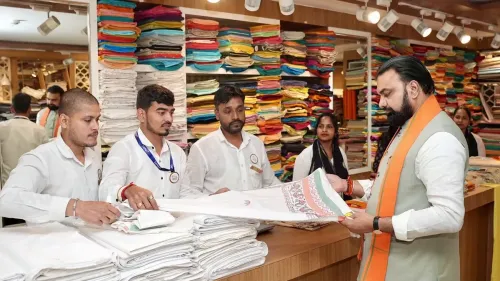
One hundred and twenty-one years ago, a resolution passed inside Kolkata's Town Hall ignited a movement that would reshape India's freedom struggle. On National Handloom Day, 7 August 2026, Union Agriculture Minister Shivraj Singh Chouhan invoked that founding moment — and drew a direct line from the 1905 Swadeshi movement to the present-day mission of a self-reliant India.
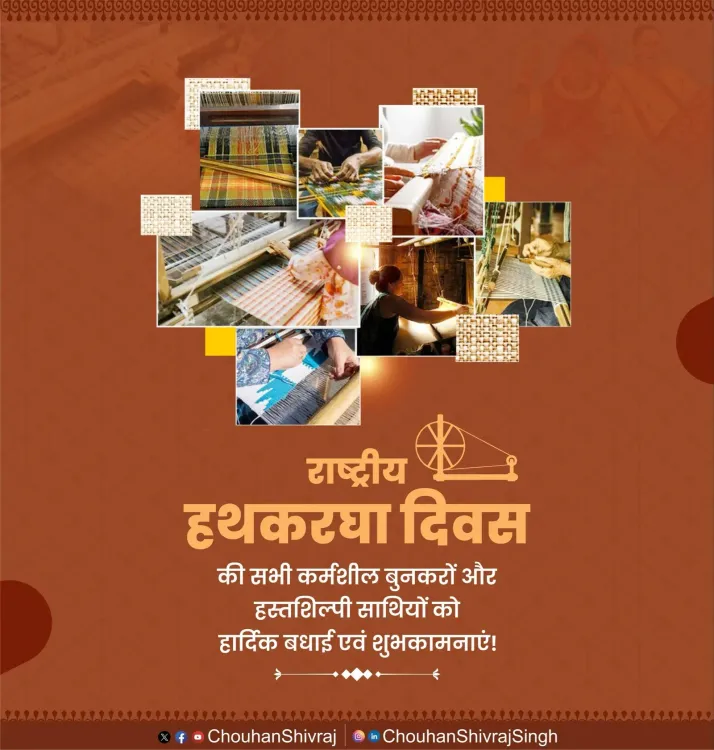
Posting in Hindi on the occasion, Chouhan wrote: '7 अगस्त 1905 को कोलकाता के टाउन हॉल से उठा स्वदेशी का संकल्प धीरे-धीरे पूरे देश का स्वर बन गया' — 'The Swadeshi pledge that rose from Kolkata's Town Hall on 7 August 1905 gradually became the voice of the entire nation.' He called on citizens to adopt handloom products, champion the Vocal for Local ethos, and turn the Atmanirbhar Bharat resolve into a mass movement.
From a Town Hall boycott to a national day
The Swadeshi Movement was born in direct response to the partition of Bengal in 1905, with the 7 August Kolkata meeting serving as its formal launchpad. Protesters pledged to boycott British-manufactured goods and elevate indigenous products — a act of economic defiance that fused commerce with patriotism. Exactly 110 years later, in 2015, the Ministry of Textiles institutionalised the anniversary as National Handloom Day, anchoring a living industry to a historic act of resistance. Handloom is not a relic. It is one of India's largest rural employment sectors, sustaining millions of weavers and artisans, particularly women in semi-urban and rural households. Every August, the day serves as both a commemoration and a commercial nudge — urging consumers to reach past machine-made fabric and choose the hand-woven.Swadeshi's echo inside Atmanirbhar Bharat
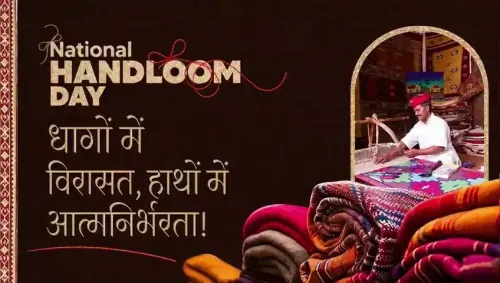
Chouhan's post is carefully constructed. By opening with the 1905 date and closing with the hashtag #NationalHandloomDay, he stitches together two moments separated by over a century but united by the same economic logic: that choosing local production is an act of nation-building, not mere consumer preference. The Atmanirbhar Bharat package, announced in May 2020, explicitly extended this logic to micro-enterprises and traditional crafts, including handlooms. The Vocal for Local campaign embedded within it asked citizens to do what the 1905 boycotters did — make a deliberate, values-driven purchasing choice. Chouhan's framing on Thursday makes that historical continuity explicit: 'आत्मनिर्भरता को राष्ट्रशक्ति का मंत्र' — 'self-reliance as the mantra of national strength.' When a country's weavers thrive, its foreign-exchange outflow on textile imports shrinks, rural wages rise, and a craft tradition survives. The argument is economic and cultural at once. That is precisely why successive governments — well before 2020 — have returned to the handloom sector in budget cycles, funding cluster development and marketing schemes timed to the August anniversary. The kicker: as Viksit Bharat — Developed India — becomes the government's organising ambition, the handloom loom sits at an unlikely intersection of history, handicraft, and high policy. The shuttle moving across the warp is, in that sense, still political.Point of View
He elevates a consumer-behaviour campaign into a patriotic obligation, a framing that has proven durable across both UPA and NDA governments. The handloom sector's political utility lies in its geographic spread: it touches rural constituencies in states like West Bengal, Uttar Pradesh, Odisha, and Tamil Nadu where weaver communities represent meaningful vote banks. Whether the rhetorical renewal translates into fresh budgetary support for handloom clusters or marketing schemes will be the real test of the anniversary's policy weight.
NationPress
21 Sept 2026
Frequently Asked Questions
Why is National Handloom Day celebrated on 7 August?
National Handloom Day is observed on 7 August every year to mark the anniversary of the Swadeshi Movement , which was formally launched at a mass meeting in Kolkata's Town Hall on 7 August 1905 in protest against the partition of Bengal. The Ministry of Textiles instituted the day in 2015 to honour that legacy and promote India's handloom sector.
What is the Swadeshi Movement and why does it matter today?
The Swadeshi Movement began in 1905 as a form of economic resistance against British rule, urging Indians to boycott foreign goods and use indigenous products. Today it is invoked as the historical precedent for campaigns like Vocal for Local and Atmanirbhar Bharat , which similarly ask citizens to prioritise domestically made goods.
What is Atmanirbhar Bharat and how does it relate to handlooms?
Atmanirbhar Bharat — 'Self-Reliant India' — is a policy framework announced in May 2020 that emphasises local manufacturing and reduced import dependence. It includes dedicated provisions for micro-enterprises and traditional crafts such as handlooms, framing weaver support as both economic stimulus and cultural preservation.
What did Shivraj Singh Chouhan say on National Handloom Day 2026?
Union Agriculture Minister Shivraj Singh Chouhan posted on 7 August 2026 invoking the 1905 Swadeshi pledge and calling on citizens to adopt handloom products, practise Vocal for Local , and make Atmanirbhar Bharat a people's movement as India advances toward its Viksit Bharat vision.
How does the handloom sector contribute to India's economy?
Handloom is one of India's largest rural employment sectors, sustaining millions of weavers and artisans — a significant share of them women — across states including West Bengal , Uttar Pradesh , Odisha , and Tamil Nadu . Supporting it reduces textile-import dependence, boosts rural incomes, and preserves a centuries-old craft tradition.