Shivraj pitches Japan for affordable farm tech at UP Investment Meet
Synopsis
At the UP Japan Investment Meet, Union Agriculture Minister Shivraj Singh Chouhan urged Japan to co-develop farm mechanization technology that is affordable, accessible, and tailored to India's small and marginal farmers — linking bilateral investment outreach directly to the national goal of doubling farmer incomes.
Key Takeaways
Union Agriculture Minister Shivraj Singh Chouhan spoke at the UP Japan Investment Meet on 19 August 2026 .
He called on Japan to collaborate on farm mechanization technology specifically designed to be affordable and accessible for small farmers.
His six-point technology framework targets affordability, accessibility, productivity, water savings, cost reduction, and lower post-harvest losses.
India's Sub-Mission on Agricultural Mechanization , launched in 2014-15 , underpins the policy push through subsidies and custom hiring centres.
The Doubling Farmers' Income initiative (2016) identified farm mechanization as a key lever — making Japan's precision agri-tech a strategic fit.
Specific technology transfer or joint-venture outcomes from the meet remain to be announced.
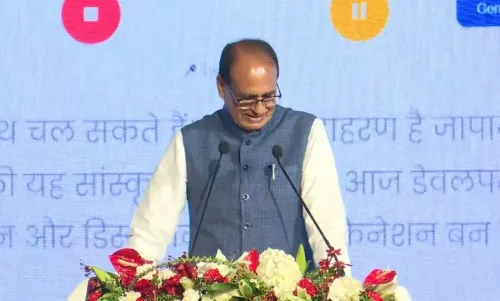
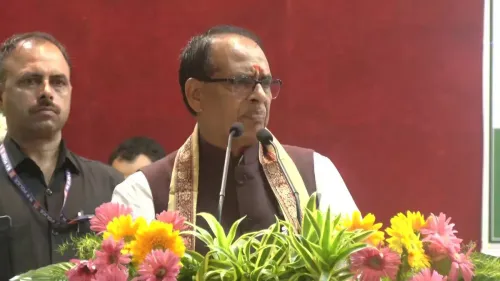
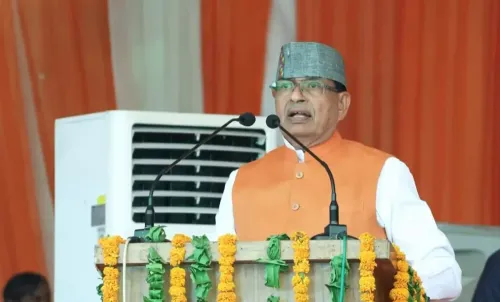
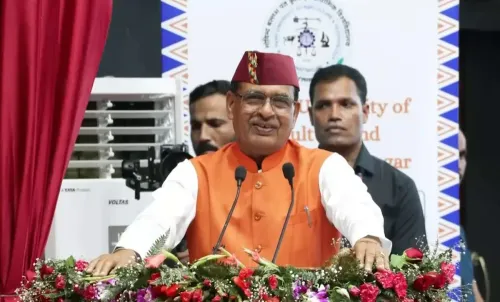
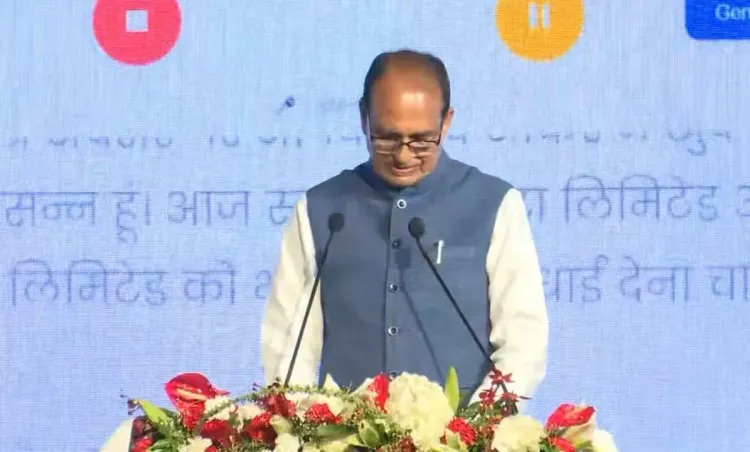
At the UP Japan Investment Meet, Union Agriculture Minister Shivraj Singh Chouhan laid out a pointed ask to one of the world's most advanced agricultural economies: bring your technology, but make it work for India's smallholder. Speaking on Wednesday, 19 August 2026, Chouhan framed farm mechanization not as a luxury for large landowners but as a survival tool for the millions who till tiny plots across the country.
The six-point test for any technology Japan brings
Chouhan's pitch was specific. Any technology that Japan brings to the table, he said, must clear six bars: it must be affordable for small farmers, easily accessible, productivity-enhancing, water-saving, cost-cutting, and capable of reducing post-harvest losses — all in service of one ultimate goal, 'kisan ki income badhaye' (raise the farmer's income). That checklist is not rhetorical; it maps almost exactly onto the pain points that have kept Indian smallholders from benefiting from mechanization waves that transformed agriculture elsewhere.
'We are continuously working towards farm mechanization and the face of farming in India is also changing rapidly,' Chouhan said. 'We need Japan's cooperation in this.' The directness of the ask — at an investment meet designed precisely to attract Japanese capital and know-how into Uttar Pradesh — signals that agriculture is being positioned as a serious vertical in the state's bilateral economic pitch, not an afterthought to manufacturing and infrastructure.
Why small and marginal farmers are the real target
India's farm mechanization story has a structural problem: the majority of its cultivators hold less than two hectares, making individual machinery ownership economically irrational. The Centre's Sub-Mission on Agricultural Mechanization, launched in 2014-15, tried to bridge this through subsidies and custom hiring centres — essentially machinery libraries where farmers rent equipment by the hour or day. The scheme expanded access, but the technology pipeline has remained heavily tilted toward large-scale, imported machinery that does not translate well to fragmented, rain-fed smallholdings.
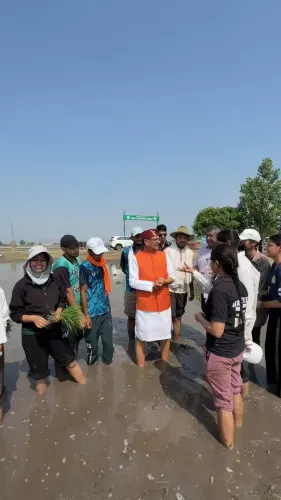
Japan, with its own history of precision agriculture developed for small paddy plots, is a logical partner. Japanese agri-tech — from transplanting machines calibrated for small fields to sensor-driven irrigation — evolved under land constraints not entirely unlike India's. Chouhan's ask is essentially: adapt what you built for your small farmers, and co-develop it for ours.
UP Japan Investment Meet as the policy stage
The #UPJapanInvestmentMeet hashtag anchoring the post places this statement squarely within Uttar Pradesh's push to attract Japanese investment across sectors. Hosting such a meet in India's most populous state — home to a vast agricultural workforce — gives the Centre an opportunity to link state-level investment promotion with the national Doubling Farmers' Income initiative, which since 2016 has identified farm mechanization and technology adoption as primary levers for raising rural incomes.
The specific technology transfer agreements or joint-venture announcements, if any, to emerge from this meet will be the real measure of whether Chouhan's six-point framework translates from a platform speech into a procurement pipeline.
India is asking Japan to solve a problem that has resisted domestic solutions for decades. Whether Tokyo's agri-tech firms see a market — or a mission — in India's smallholder belt may well define the next chapter of farm mechanization policy.
Point of View
The Centre is signalling that rural income growth — a politically sensitive metric ahead of any electoral cycle — needs an external technology injection that domestic R&D has not yet delivered. The emphasis on small-farmer affordability also pre-empts criticism that mechanization benefits only large commercial farms, a charge that has dogged the Sub-Mission on Agricultural Mechanization since its launch. Whether this translates into binding agreements or remains aspirational platform rhetoric will define the political legacy of the meet.
NationPress
19 Aug 2026
Frequently Asked Questions
What did Shivraj Singh Chouhan say at the UP Japan Investment Meet about farming?
He called on Japan to help develop farm mechanization technology that is affordable, accessible, and suited to India's small farmers, with the goal of raising farmer incomes while cutting water use, costs, and post-harvest losses.
What is the UP Japan Investment Meet?
It is a bilateral platform designed to promote Japanese investment and technology collaboration in Uttar Pradesh, covering sectors including agriculture.
What is India's Sub-Mission on Agricultural Mechanization?
It is a central government scheme launched in 2014-15 that promotes farm machinery access for small and marginal farmers through subsidies and custom hiring centres.
Why is Japan seen as a useful partner for India's farm mechanization?
Japan developed precision agricultural technology for its own small paddy plots under land constraints broadly similar to India's, making it a logical source of adaptable, small-farm-friendly machinery and techniques.
What is India's Doubling Farmers' Income initiative?
Announced in 2016, it is a national policy goal that identified farm mechanization and technology adoption as primary levers for doubling agricultural incomes, providing the policy anchor for outreach like the UP Japan Investment Meet.