Shivraj Plants Bilva Sapling on Wife Sadhana's Birthday
Synopsis
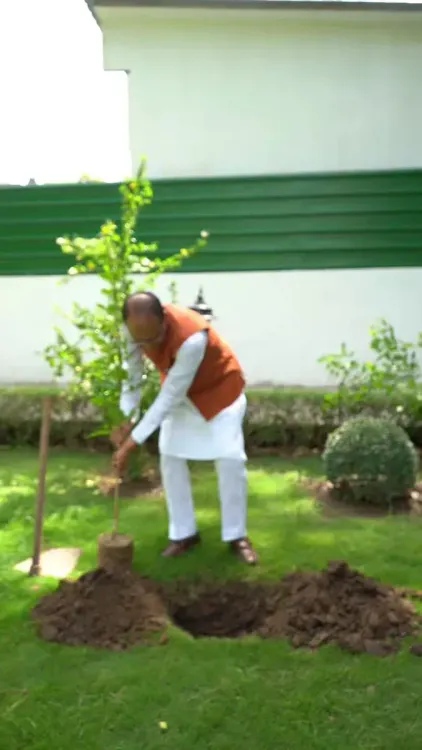
Union Agriculture Minister Shivraj Singh Chouhan planted a Bilva sapling in Delhi on his wife Sadhana's birthday, connecting her via video call from Bhopal. He urged all Indians to plant trees on birthdays, anniversaries, and auspicious occasions, invoking the Bilva plant's sacred association with Lord Shiva to blend personal celebration with environmental action.
Key Takeaways
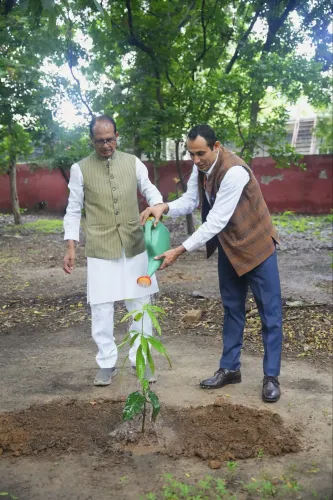
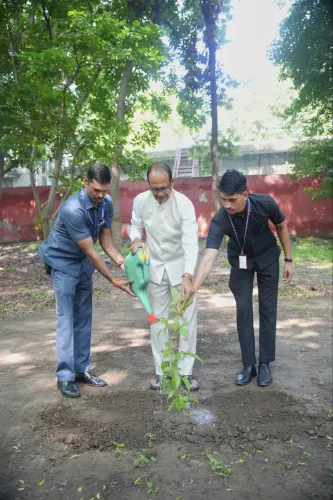
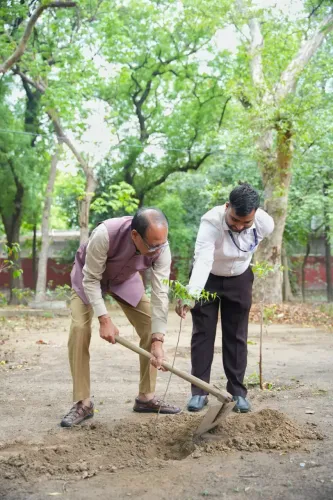
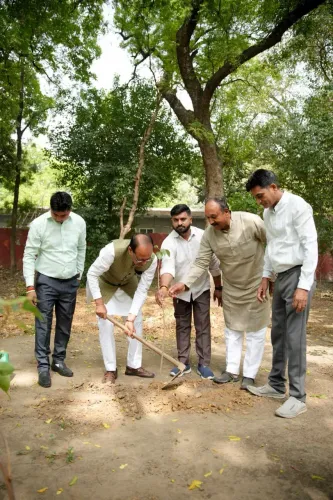
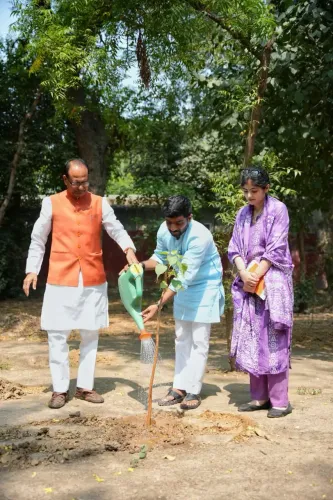
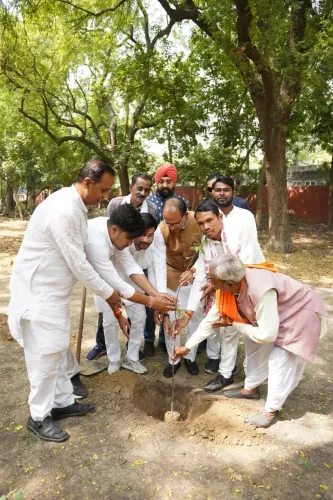
Union Agriculture Minister Shivraj Singh Chouhan planted a Bilva sapling in New Delhi on 10 June 2026 to mark his wife Sadhana's birthday.
Sadhana Chouhan was in Bhopal ; the minister included her via video call during the planting.
The Bilva (Bael) plant was chosen for its sacred significance to Lord Shiva in Hindu tradition.
Chouhan described Sadhana as 'an ideal mother, ideal wife, and dedicated social worker' in his post.
He publicly urged citizens to plant trees on birthdays, wedding anniversaries, and other auspicious occasions to promote afforestation.
The appeal aligns with India's long-standing Van Mahotsav afforestation tradition dating to 1950 .
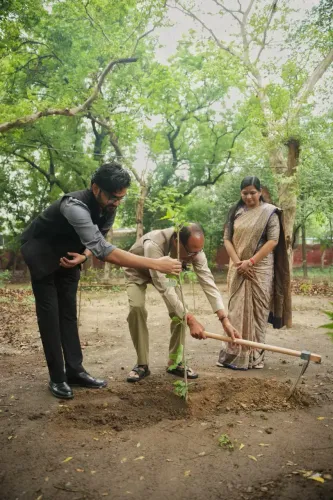
Union Agriculture Minister Shivraj Singh Chouhan marked his wife Sadhana Chouhan's birthday on Wednesday, 10 June 2026 by planting a Bilva sapling in New Delhi, connecting her to the occasion over a video call from Bhopal where she was present. The gesture, shared on his official X account, doubled as a public call to citizens to adopt tree-planting as a tradition at every personal milestone.
What the Minister Said
Chouhan wrote in Hindi: 'आज मेरी जीवन संगिनी श्रीमती साधना जी का जन्मदिन है' ('Today is the birthday of my life partner, Smt. Sadhana ji'). He noted that official commitments kept him in Delhi while Sadhana remained in Bhopal, so he included her via video call as he planted the sapling. He chose the Bilva (Bael) plant deliberately, explaining that it is sacred to Lord Shiva and therefore especially meaningful.
The minister described Sadhana Chouhan as 'an ideal mother, ideal wife, and a dedicated social worker,' crediting her with instilling strong values in their children and standing by him in every circumstance. He expressed wishes for her good health and long life, and urged her to continue her service to society.
Context: Blending Personal Milestones with Environmental Action
The post is a deliberate fusion of a personal family occasion with an environmental message — a communication pattern increasingly common among senior Indian political leaders on social media. Chouhan explicitly appealed to all followers: 'अपने जन्मदिन, विवाह की वर्षगांठ, माता-पिता की पुण्य स्मृति या किसी अन्य मांगलिक अवसरों पर पौधरोपण कर इस धरा को हरा-भरा बनाइये' — urging citizens to plant trees on birthdays, wedding anniversaries, the memory of parents, or any auspicious occasion to 'make this earth green and prosperous.'
The appeal draws on cultural resonance: the Bilva or Bael tree (Aegle marmelos) holds deep significance in Hindu tradition as an offering to Lord Shiva, making its planting both a devotional and ecological act. Such symbolism is widely used in Indian environmental campaigns to encourage community participation beyond policy mandates.
Policy Backdrop
India's tradition of institutionalised tree-planting dates to Van Mahotsav, launched in 1950 as an annual afforestation festival to build a 'forest festival' culture across the country. Successive governments have built on this foundation through large-scale plantation drives under agriculture and environment ministries. As Union Minister for Agriculture and Rural Development, Chouhan oversees programmes that intersect with land use, soil health, and rural green cover — making community tree-planting a natural extension of his ministerial brief.
Indian leaders frequently leverage personal social media posts to normalise environmental behaviour at the household level, complementing top-down policy with bottom-up cultural nudges. Chouhan's post fits squarely within this broader pattern.
Stakeholders and Impact
The primary audience is the general public, particularly followers who engage with Chouhan's personal and political messaging. By framing tree-planting as a family ritual rather than a civic duty, the appeal potentially reaches citizens who may not respond to formal government campaigns. The use of a religiously significant plant — the Bilva — broadens the cultural touchpoint beyond any single community.
Sadhana Chouhan, who has been active in social service initiatives in Madhya Pradesh, is positioned in the post not merely as a spouse but as an independent public figure whose work in community welfare is acknowledged in its own right.
What's Next
The Agriculture Ministry's community tree-planting messaging is likely to intensify around upcoming environment-related observances and the monsoon season, which is traditionally the peak period for plantation drives across India. Chouhan's post may serve as an early signal of a broader campaign encouraging citizens to link personal celebrations to green initiatives — a model that, if formalised, could feed into national targets for expanding tree cover in rural and peri-urban areas.
Point of View
Emotionally resonant moment to maximise organic reach. By choosing the religiously significant Bilva plant and invoking Lord Shiva, he taps into cultural capital that formal government campaigns rarely access. The public tribute to Sadhana Chouhan as an independent social worker, not merely a political spouse, also reflects a deliberate image-building choice. Together, the post advances a green-behaviour norm while reinforcing the minister's identity as a values-driven, family-oriented public figure — a consistent thread in his political communication across decades in Madhya Pradesh and now at the Centre.
NationPress
26 Oct 2026
Frequently Asked Questions
Why did Shivraj Singh Chouhan plant a Bilva tree on his wife's birthday?
Chouhan planted a Bilva sapling in Delhi on 10 June 2026 to mark his wife Sadhana's birthday, choosing the Bilva plant because of its sacred association with Lord Shiva. He also used the occasion to urge the public to adopt tree-planting as a tradition at personal milestones.
What is the significance of the Bilva plant in Hinduism?
The Bilva, or Bael tree (Aegle marmelos), is considered sacred in Hindu tradition and is closely associated with Lord Shiva. Its leaves are commonly offered in Shiva worship, making it a plant of both religious and ecological value.
Who is Sadhana Chouhan?
Sadhana Chouhan is the wife of Union Agriculture Minister Shivraj Singh Chouhan. She has been active in social service initiatives in Madhya Pradesh and was described by the minister as 'an ideal mother, ideal wife, and dedicated social worker.'
What did Shivraj Singh Chouhan urge citizens to do?
He urged all Indians to plant trees on personal occasions such as birthdays, wedding anniversaries, and the memory of parents, framing tree-planting as a way to 'make this earth green and prosperous.'
What is Van Mahotsav and how does this relate to it?
Van Mahotsav is India's annual tree-planting festival, launched in 1950 to promote nationwide afforestation. Chouhan's call to link personal celebrations with tree-planting echoes the spirit of Van Mahotsav by encouraging community-level green action beyond formal government drives.