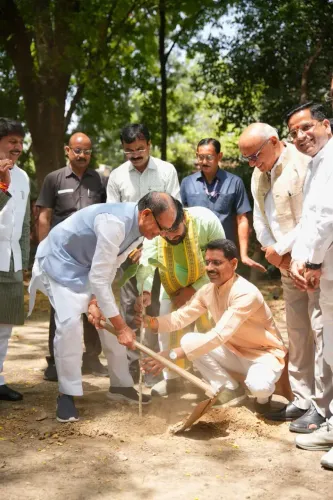
Shivraj Singh Chouhan Calls for Climate Action, Urges Tree Planting
Synopsis
Union Agriculture Minister Shivraj Singh Chouhan on 18 July 2026 expressed concern over rising global temperatures, urging Indians to plant trees, conserve water, and make environmental protection a cultural value — linking climate change directly to farming, water security, and future generations.
Key Takeaways
Union Agriculture Minister Shivraj Singh Chouhan posted on 18 July 2026 expressing concern over rising global temperatures.
He linked climate change to threats facing Indian agriculture, water security, and public health .
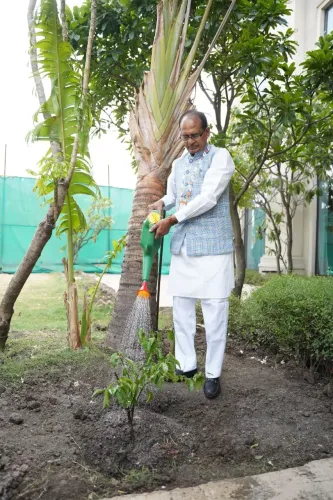
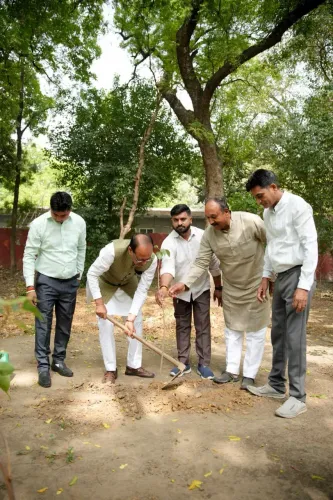
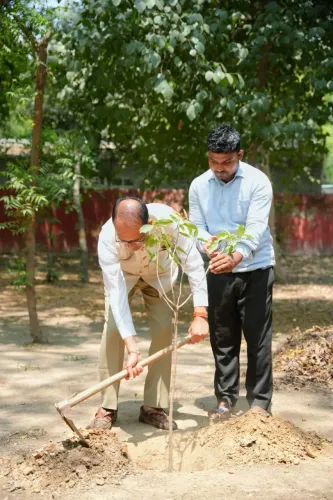
Chouhan called on citizens to plant saplings, conserve water, and adopt nature-friendly lifestyles as the most meaningful individual contributions.
He urged that environmental conservation be treated as 'a value embedded in life' rather than a one-off campaign.
India's climate policy framework includes the National Mission for Sustainable Agriculture (2008) and a net-zero pledge by 2070 announced at COP26.
The minister's post signals continued government emphasis on linking climate action to the welfare of India's 140 million farm households .
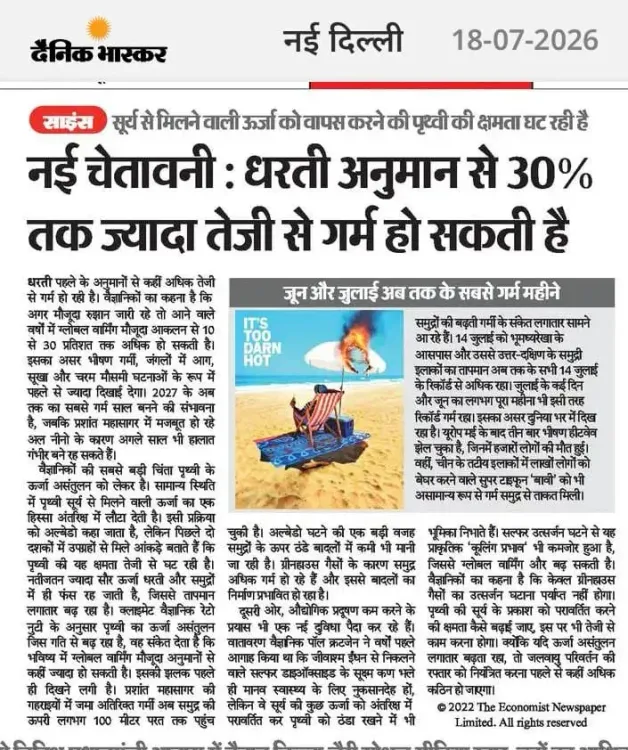
Union Agriculture Minister Shivraj Singh Chouhan on Saturday, 18 July 2026, took to X to express concern over rising global temperatures, urging citizens to adopt nature-friendly lifestyles and treat environmental conservation not as a campaign but as a way of life. The post, written in Hindi, linked climate change directly to threats facing Indian agriculture, water security, and the welfare of future generations.
Context
Chouhan opened his post by saying he had read a news item that left him genuinely worried — 'मन सचमुच चिंतित हो गया' ('my mind became truly anxious'). Without naming the specific report, he framed the Earth as a shared inheritance: 'धरती हमारी धरोहर है' ('the Earth is our heritage'). He warned that continuously rising temperatures would affect not just weather patterns but also farming, water availability, public health, and the lives of generations to come.
The minister called the solution straightforward: aligning human lifestyles with nature. He listed concrete individual actions — planting a sapling, nurturing it to maturity, conserving water, and cultivating sensitivity toward the natural world — as the most meaningful contributions any citizen could make.
Policy Backdrop
India has embedded climate resilience within its agricultural and environmental policy architecture for over a decade. The National Action Plan on Climate Change, launched in 2008, established eight national missions, among them the National Mission for Sustainable Agriculture, which targets climate-adaptive farming practices across the country. At COP26 in 2021, India announced its Panchamrit strategy and a net-zero emissions pledge by 2070, placing afforestation and renewable energy at the centre of its long-term climate commitments.
Chouhan's portfolio directly bridges these two domains. As the minister overseeing both agriculture and rural development, he has consistently drawn attention to the vulnerability of India's farming communities — who depend on predictable monsoons and stable water tables — to climate variability. His post reinforces a pattern among senior ministers of articulating climate risk in terms that resonate with rural constituencies rather than in technical or diplomatic language.
Stakeholders and Impact
India's approximately 140 million farm households are among the most exposed to climate-related disruptions, including erratic rainfall, soil degradation, and groundwater depletion. Rural communities that depend on rain-fed agriculture face compounding risks when temperatures rise and precipitation patterns shift. Chouhan's framing — linking a personal reading of a news item to a call for mass behavioural change — is aimed squarely at this constituency as well as at urban citizens who may feel disconnected from environmental consequences.
The minister's appeal to plant trees and conserve water also aligns with ongoing government missions on afforestation and the Jal Jeevan Mission, which targets universal household water access. By invoking 'जीवन का संस्कार' ('a value embedded in life'), Chouhan sought to elevate environmental action from a policy obligation to a cultural norm.
What's Next
Observers will watch whether Chouhan's public messaging translates into specific policy announcements in the upcoming parliamentary session or the next Union Budget, particularly around expanded funding for climate-resilient agriculture, tree plantation targets, and water conservation under existing national missions. Senior ministers using social media to prime public opinion on climate themes have, in recent years, often preceded formal scheme launches or budgetary allocations in related areas.
Chouhan closed his post with a line that doubles as a policy principle: 'क्योंकि प्रकृति बचेगी, तभी भविष्य बचेगा' — 'because only if nature survives will the future survive.' That framing, connecting ecological preservation to civilisational continuity, signals that climate and agriculture are likely to remain tightly coupled themes in the government's public communication in the months ahead.
Point of View
Water, and the welfare of one's children. By anchoring his concern in a news item he personally read, he projects accessibility rather than technocracy, a communication style that has served him well across four terms as Chief Minister of Madhya Pradesh. The appeal fits a broader arc in which the ruling establishment seeks to own the climate narrative domestically, pre-empting criticism that agricultural policy has lagged behind environmental commitments. Whether the rhetoric is followed by measurable policy steps — expanded plantation targets, climate-adaptive crop insurance, or rural water conservation funding — will determine how the message lands beyond social media.
NationPress
18 Jul 2026
Frequently Asked Questions
What did Shivraj Singh Chouhan say about climate change?
On 18 July 2026, Chouhan posted on X warning that rising global temperatures threaten Indian farming, water availability, health, and future generations, and urged citizens to plant trees, conserve water, and make environmental protection a cultural value.
Why is climate change important for Indian farmers?
India's approximately 140 million farm households depend heavily on predictable monsoons and stable water tables. Rising temperatures and erratic rainfall caused by climate change directly affect crop yields, water access, and rural livelihoods.
What is India's climate policy for agriculture?
India's National Mission for Sustainable Agriculture, part of the National Action Plan on Climate Change launched in 2008, promotes climate-adaptive farming. India also pledged net-zero emissions by 2070 and announced its Panchamrit climate strategy at COP26 in 2021.
What individual actions did Chouhan recommend for the environment?
Chouhan recommended planting a sapling and nurturing it to maturity, conserving water, and developing sensitivity toward nature as the most meaningful individual contributions to environmental protection.
What does 'Panchamrit' mean in India's climate context?
Panchamrit refers to India's five-point climate action commitment announced at COP26 in 2021, covering renewable energy capacity, reducing carbon intensity, increasing forest cover, and achieving net-zero emissions by 2070.