Shivraj Singh Chouhan champions agrivoltaics for farmers
Synopsis
Union Agriculture Minister Shivraj Singh Chouhan has backed agrivoltaics — technology that generates solar electricity above active farmland — calling it a source of 'new hope' for Indian farmers. The endorsement builds on the PM-KUSUM scheme's solar-agriculture linkage and signals possible policy mainstreaming of dual land-use solar systems.
Key Takeaways
Union Agriculture Minister Shivraj Singh Chouhan publicly endorsed agrivoltaics on 21 October 2026 , calling it a source of 'new hope and confidence' for farmers.
Agrivoltaics allows the same plot of land to produce both food crops and solar electricity simultaneously, addressing India's land-scarcity challenge.
The PM-KUSUM scheme , launched in 2019 , laid the policy foundation for solar-agriculture integration that agrivoltaics now extends.
India's National Solar Mission requires large new solar capacity; agrivoltaics offers a path that does not compete with arable land.
Chouhan's dual portfolio — Agriculture & Farmers Welfare and Rural Development — positions him to integrate agrivoltaics into central or state-level schemes.
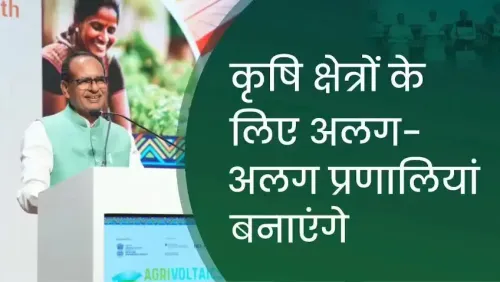
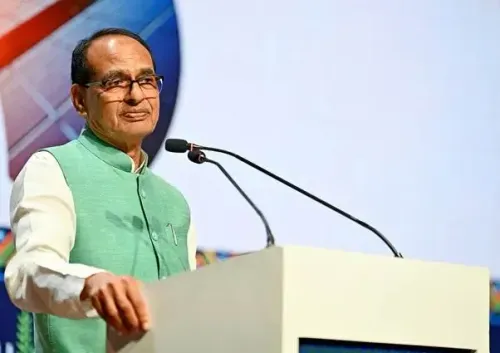
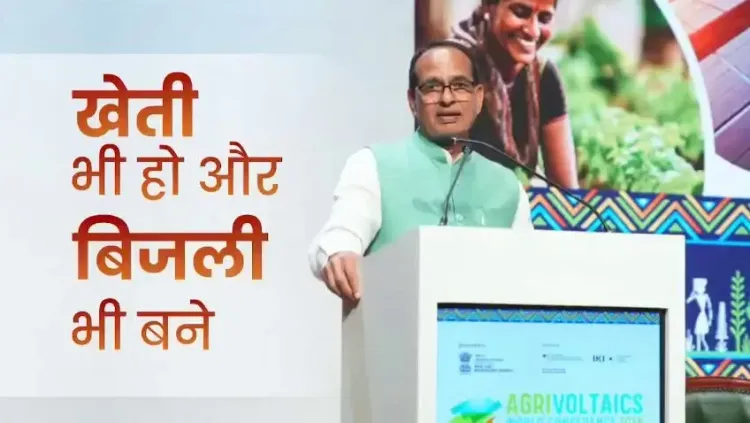
Farm fields that generate electricity while growing crops — that is the promise Union Agriculture Minister Shivraj Singh Chouhan put at the centre of India's renewable-energy conversation on Wednesday, 21 October 2026, when he posted on X championing agrivoltaics as a new horizon for the country's farmers.
Chouhan's post, written in Hindi, declared: 'खेती भी हो और बिजली भी बने, एग्रीवोल्टाइक्स इस दिशा में नई आशा और विश्वास पैदा कर रहा है।' — 'Let farming happen and electricity be generated too; agrivoltaics is creating new hope and confidence in this direction.' The message is brief, but the policy ambition behind it is not.
What agrivoltaics actually means for Indian fields
Agrivoltaics — sometimes called agri-solar — places solar panels above or alongside active cropland, allowing the same plot of earth to produce food and clean electricity simultaneously. Panels can be tilted or elevated to let sunlight reach crops beneath, and in some configurations the partial shade actually reduces water evaporation, easing irrigation demand. For a country where arable land is fiercely competed over, the dual-use logic is compelling.
India has been quietly building the groundwork for exactly this model. The PM-KUSUM scheme, launched in 2019, was designed to solarise agricultural pumps and embed renewable energy generation within the farming sector — making cultivators producers of power, not just consumers of it. Agrivoltaics is the next technical leap on that same arc, extending solar integration from pump sheds and canal banks directly onto cropped land itself.
Chouhan's push and the land-use challenge it answers
India's National Solar Mission demands massive new solar capacity, but utility-scale parks consume land — land that farming communities and food-security planners can ill afford to lose. Agrivoltaics dissolves that tension. By stacking energy generation on top of agriculture rather than replacing it, the model lets India chase its renewable targets without shrinking its cultivated footprint.
Chouhan, as a minister who holds the twin portfolios of Agriculture & Farmers Welfare and Rural Development, sits at precisely the intersection where this idea must be institutionalised. His signal today suggests the concept is moving from experimental pilots toward mainstream policy attention. Possible next steps include integration of agrivoltaics guidelines into existing central schemes or state-level pilot expansions — both of which fall squarely within his ministerial remit.
India's farmers are being asked to feed a nation of 1.4 billion people while the climate bearing down on their fields grows less predictable every season. A technology that simultaneously cuts their electricity bills, earns them power-sale income, and reduces irrigation stress is not a technocrat's footnote — it is a lifeline. Chouhan's endorsement may be the nudge that moves agrivoltaics from the research station to the paddy field.
Point of View
Formal agrivoltaics guidelines would be a natural next chapter, not a leap. The minister's dual hold over agriculture and rural development means he can push both the demand side (farmers) and the infrastructure side (rural energy grids) simultaneously. If this translates into scheme-level guidelines, it could reframe India's renewable expansion debate from a land-versus-food binary into a both-and equation.
NationPress
21 Oct 2026
Frequently Asked Questions
What is agrivoltaics and how does it work in farming?
Agrivoltaics involves installing solar panels above or alongside active cropland so that both food and electricity are produced on the same plot. Panels are elevated or tilted to allow sufficient sunlight to reach crops, and the partial shade can also reduce soil moisture loss.
What did Shivraj Singh Chouhan say about agrivoltaics?
Chouhan posted on X that 'farming can happen and electricity can be generated too,' describing agrivoltaics as creating 'new hope and confidence' for India's agricultural community.
How does PM-KUSUM relate to agrivoltaics?
PM-KUSUM, launched in 2019, solarised agricultural pumps and encouraged solar power generation within the farm sector. Agrivoltaics is an advanced extension of that approach, placing generation directly on cropped land rather than on pump sheds or fallow areas.
Why is agrivoltaics important for India's solar energy goals?
India's National Solar Mission demands large-scale capacity additions, but utility solar parks consume land needed for food production. Agrivoltaics stacks energy generation on top of farming, expanding solar capacity without reducing cultivated area.
Will agrivoltaics be added to government schemes in India?
No formal announcement has been made, but Chouhan's public endorsement and his ministerial authority over both agriculture and rural development suggest integration of agrivoltaics guidelines into existing central or state schemes is a plausible near-term step.