Shivraj Singh Chouhan Leads Tree-Planting Pledge at Pusa
Synopsis
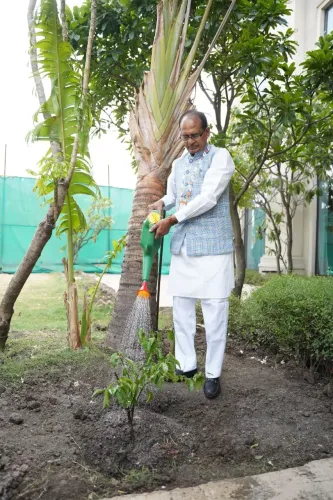
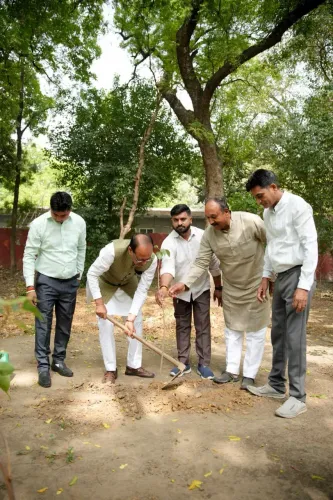
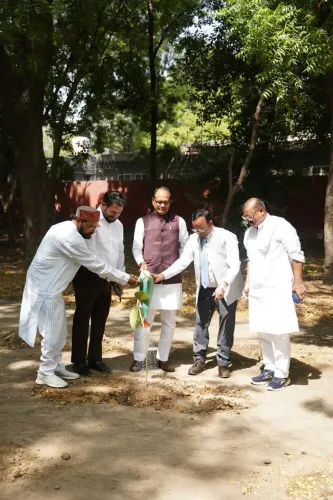
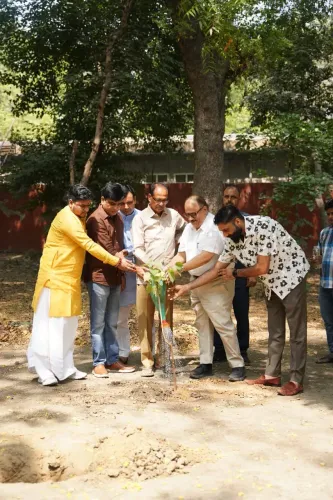
Union Agriculture Minister Shivraj Singh Chouhan joined an environmental conservation pledge at Pusa, New Delhi on 12 July 2026, calling for collective tree plantation to secure a better tomorrow — linking agricultural policy with India's afforestation and climate-resilience goals.
Key Takeaways
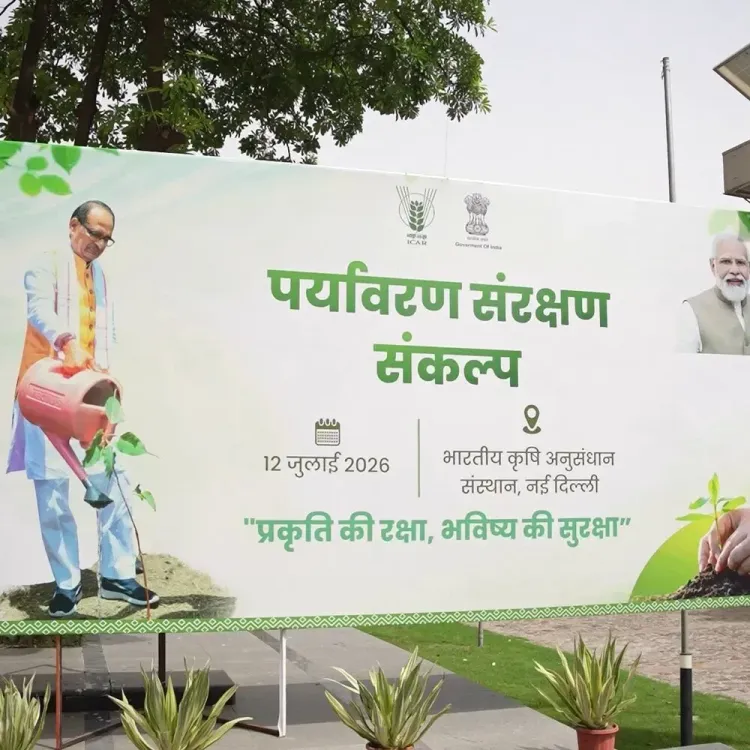
Union Agriculture Minister Shivraj Singh Chouhan participated in an environmental conservation pledge at Pusa, New Delhi on 12 July 2026 .
His message — 'When hands come together and trees are planted, tomorrow will be beautiful and safe' — tied collective action to environmental security.
The event was held at IARI Pusa , the flagship campus of the Indian Council of Agricultural Research (ICAR) , lending a research and policy dimension to the occasion.
The timing aligns with Van Mahotsav , India's annual afforestation festival initiated in 1950 , and the onset of the monsoon planting season.
India's National Mission for a Green India (approved 2014 ) and international commitments to restore 26 million hectares by 2030 form the policy backdrop.
Integration of agroforestry into schemes such as PM-KISAN and MGNREGA during the monsoon season will be a key indicator of follow-through.
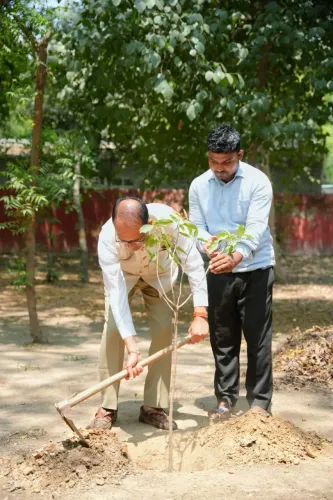
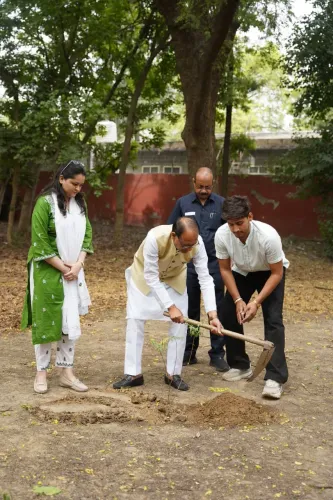
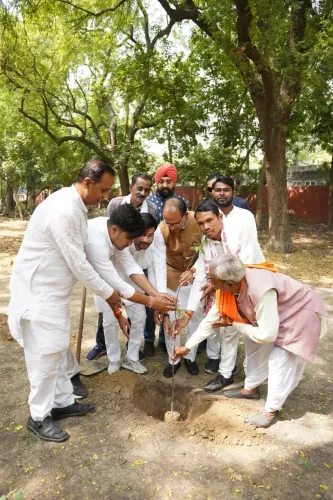
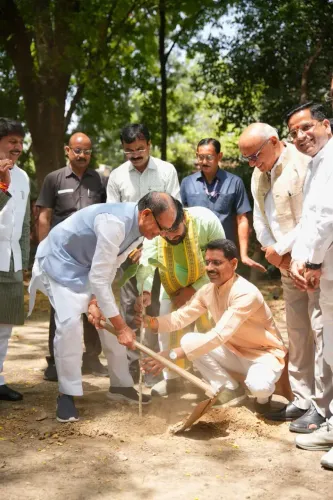
Union Agriculture Minister Shivraj Singh Chouhan on Sunday, 12 July 2026, participated in an environmental conservation pledge event at Pusa, New Delhi, calling for collective action on tree plantation as a foundation for a secure and beautiful future. The minister shared the occasion on X, underscoring the government's commitment to linking agricultural policy with environmental stewardship.
Chouhan's post, written in Hindi, carried a message of collective resolve: 'Haath milenge, ped ugenge, tabhi aane wala kal sundar aur surakshit hoga' — 'When hands come together and trees are planted, only then will tomorrow be beautiful and safe.' The post was tagged to Pusa, New Delhi, home to the Indian Agricultural Research Institute (IARI), the apex crop-science campus under the Indian Council of Agricultural Research (ICAR).
Context
The event coincides with the onset of the kharif sowing season and the traditional period associated with Van Mahotsav, India's annual tree-planting festival that dates to 1950. Successive governments have used this window to mobilise institutional and public participation in afforestation drives. Holding the pledge at IARI Pusa — a research campus that directly engages with farmers and rural extension workers — gives the occasion a policy dimension beyond ceremonial symbolism.
Policy Backdrop
India's National Mission for a Green India, approved in 2014 under the National Action Plan on Climate Change, targets the expansion of forest and tree cover while improving ecosystem services on agricultural and community lands. The Agriculture Ministry has increasingly framed agroforestry — integrating trees with crops and livestock — as a tool for climate-resilient farming and soil health. Events at research institutes such as IARI serve as platforms to translate these national targets into field-level awareness among the scientific and farming communities.
Chouhan, who served as Chief Minister of Madhya Pradesh for four terms before assuming charge at the Centre, has a track record of positioning environmental initiatives alongside agrarian welfare. His ministry oversees programmes that touch rural development alongside farming, creating institutional scope to bundle tree-planting goals with livelihood schemes.
Stakeholders and Impact
Farmers and rural communities stand at the centre of this convergence between agriculture and environmental policy. Agroforestry components embedded in flagship schemes can provide smallholders with additional income streams from timber and fruit trees while contributing to national green-cover targets. ICAR and its network of Krishi Vigyan Kendras (farm science centres) are positioned to carry such pledges into district-level action through seed distribution, nursery support, and technical guidance.
India has committed internationally to restoring 26 million hectares of degraded land by 2030 under the Bonn Challenge, and domestic tree-planting campaigns at institutional venues help build the momentum needed to meet those targets. The participation of a senior Cabinet minister at a research campus signals intent to align bureaucratic and scientific resources behind the pledge.
What's Next
Observers will watch whether the Pusa pledge translates into concrete agroforestry allocations within schemes such as PM-KISAN or MGNREGA in the upcoming monsoon planting season. Any mention of expanded tree-cover targets in the next Forest Survey of India report or in budget allocations for the National Mission for a Green India will indicate how far this symbolic moment is backed by institutional resources. With the monsoon providing the optimal planting window, the coming weeks will test whether ministry-level resolve at Pusa moves into ground-level implementation across India's rural landscape.
Point of View
Agroforestry offers a rare policy bridge. The Van Mahotsav season gives the government a ready institutional scaffold, but the credibility test lies in whether this pledge finds budgetary expression in the months ahead. Senior BJP leaders have historically used such visible environmental moments to signal alignment with global sustainability discourse while reinforcing a rural-welfare identity at home.
NationPress
12 Jul 2026
Frequently Asked Questions
What did Shivraj Singh Chouhan say at the Pusa tree-planting event?
Chouhan posted a Hindi message translating to 'When hands come together and trees are planted, only then will tomorrow be beautiful and safe,' marking an environmental conservation pledge at Pusa, New Delhi on 12 July 2026.
Where is Pusa in New Delhi and why is it significant for agriculture?
Pusa is a locality in New Delhi that houses the Indian Agricultural Research Institute (IARI), the country's leading crop-science campus under the Indian Council of Agricultural Research (ICAR), making it a key venue for agricultural policy and research events.
What is Van Mahotsav and when is it celebrated?
Van Mahotsav is India's annual tree-planting festival, initiated in 1950, typically observed during the first week of July to coincide with the monsoon season and encourage mass afforestation across the country.
What is India's National Mission for a Green India?
Approved in 2014 under the National Action Plan on Climate Change, the National Mission for a Green India aims to expand forest and tree cover and improve ecosystem services on agricultural and community lands.
How does tree plantation relate to Indian agriculture policy?
The Agriculture Ministry has increasingly promoted agroforestry — integrating trees with crops — as a climate-resilient farming strategy that supports soil health, additional farmer income, and India's international commitment to restore 26 million hectares of degraded land by 2030.