Shivraj Singh Chouhan Meets Rajasthan CM on Rural Development Push
Synopsis
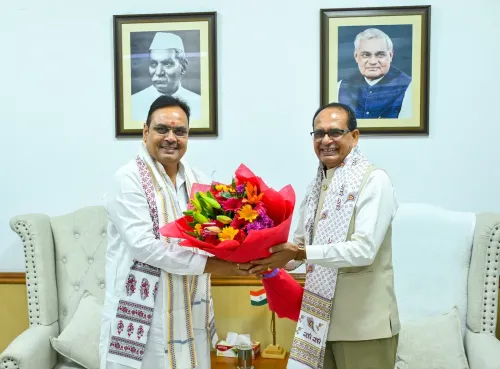
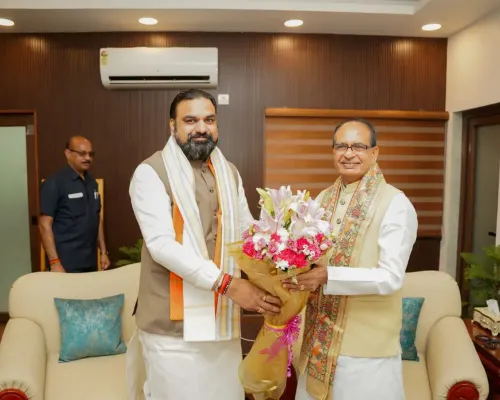
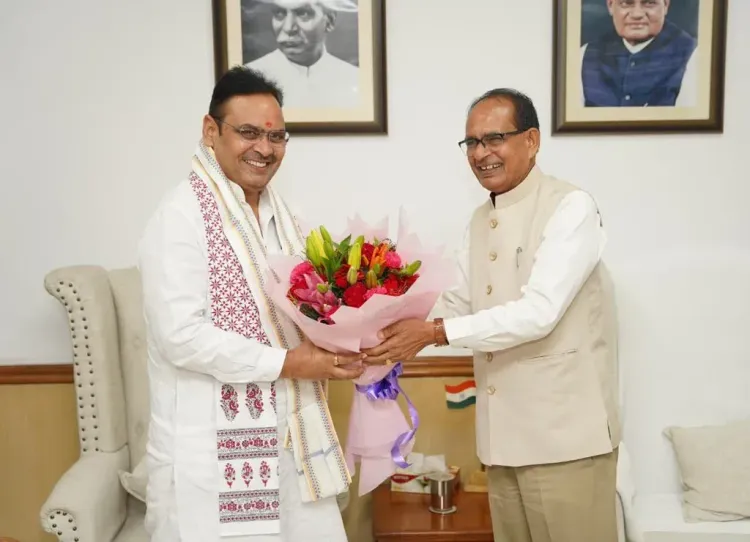
Union Agriculture Minister Shivraj Singh Chouhan met Rajasthan Chief Minister Bhajanlal Sharma at Krishi Bhavan on 7 July 2026. Discussions covered village-level development planning, Gram Chaupal strengthening, rural employment, and the state's implementation of the Pradhan Mantri Krishi Sinchayee Yojana under PM Modi's Viksit Bharat vision.
Key Takeaways
Shivraj Singh Chouhan and Rajasthan CM Bhajanlal Sharma met at Krishi Bhavan, New Delhi on 7 July 2026 .
Discussions focused on planned development of every village in Rajasthan under the Viksit Bharat-G Ram Ji Yojana framework.
Key agenda items included participatory village planning, Gram Chaupal empowerment, rural employment, and infrastructure strengthening.
Rajasthan was acknowledged for its implementation of the Pradhan Mantri Krishi Sinchayee Yojana , the Centre's flagship micro-irrigation scheme launched in 2015 .
Both Centre and state reaffirmed commitment to holistic rural development aligned with PM Narendra Modi 's Viksit Bharat 2047 target.
Union Agriculture Minister Shivraj Singh Chouhan met Rajasthan Chief Minister Bhajanlal Sharma at Krishi Bhavan, New Delhi, on Tuesday, 7 July 2026, for discussions centred on accelerating rural development in Rajasthan under the framework of the Viksit Bharat vision.
Context
Chouhan shared details of the meeting on X, stating that the two leaders held 'sarthak charcha' (meaningful discussions) on planned development of every village, participatory planning, strengthening of Gram Chaupals (village assemblies), and rural employment and infrastructure. The discussions took place under the framework of what Chouhan referred to as the Viksit Bharat-G Ram Ji Yojana, a scheme aimed at giving fresh momentum to rural development in Rajasthan.
Chouhan also noted that the Rajasthan government is implementing the Pradhan Mantri Krishi Sinchayee Yojana (PMKSY) effectively, signalling Centre satisfaction with the state's execution of the flagship micro-irrigation programme.
Policy Backdrop
The Pradhan Mantri Krishi Sinchayee Yojana, launched in 2015, consolidated multiple irrigation programmes with a focus on expanding water-use efficiency and micro-irrigation coverage across India. The scheme operates on the principle of 'Har Khet Ko Pani, More Crop Per Drop' and has been a key instrument for Centre-state coordination on agricultural water management.
The broader Viksit Bharat (Developed India) vision, championed by Prime Minister Narendra Modi, targets transforming India into a developed nation by 2047. The Viksit Bharat Sankalp Yatra, rolled out nationally in 2023, was designed to saturate rural households with awareness of central welfare schemes and to anchor village-level planning to this national goal.
Decentralised village planning has constitutional backing under the 73rd Constitutional Amendment Act of 1992, which mandated Gram Panchayats and Gram Sabhas as the primary units of local self-governance and participatory development.
Stakeholders and Impact
Rajasthan, one of India's largest states by area, has a predominantly rural population and an agrarian economy that faces chronic water scarcity challenges. Effective implementation of micro-irrigation schemes is particularly consequential here, where arid and semi-arid conditions make water efficiency critical for small and marginal farmers.
Gram Panchayats and rural communities stand to benefit from the emphasis on participatory planning and Gram Chaupal empowerment, which, if operationalised, would give village-level bodies a stronger role in shaping local infrastructure and employment priorities. The meeting underscores the alignment between the BJP-led state government in Rajasthan — in office since December 2023 — and the Union government on the rural development agenda.
What's Next
State-level progress on micro-irrigation coverage and village development plans in Rajasthan will be a key metric to watch in the coming months. Chouhan concluded his post by affirming that the central and state governments are jointly committed to the holistic development of rural India in pursuit of Prime Minister Modi's Viksit Bharat resolve — suggesting further Centre-state engagements on implementation timelines are likely.
Any concrete budgetary allocations or scheme-specific targets emerging from this coordination could feature in parliamentary discussions on rural development in the next session.
Point of View
Where Union ministers engage directly with same-party chief ministers to align state delivery with centrally sponsored scheme targets. Chouhan's public endorsement of Rajasthan's PMKSY implementation serves a dual purpose: it signals satisfaction with the new state government's performance and reinforces the political messaging around the Viksit Bharat 2047 brand ahead of possible budget discussions. The emphasis on Gram Chaupal strengthening and participatory planning also reflects the Centre's strategy of anchoring rural outreach to constitutional local-body frameworks, lending administrative legitimacy to what is also a political mobilisation exercise. Whether these discussions translate into measurable on-ground outcomes in Rajasthan's water-stressed districts will be the real test of this coordination.
NationPress
7 Jul 2026
Frequently Asked Questions
What did Shivraj Singh Chouhan and Bhajanlal Sharma discuss at Krishi Bhavan?
They discussed accelerating rural development in Rajasthan, covering planned village development, participatory planning, Gram Chaupal empowerment, rural employment, and infrastructure under the Viksit Bharat framework. The meeting also covered Rajasthan's implementation of the Pradhan Mantri Krishi Sinchayee Yojana.
What is the Pradhan Mantri Krishi Sinchayee Yojana?
The Pradhan Mantri Krishi Sinchayee Yojana (PMKSY) is a central government scheme launched in 2015 to expand irrigation coverage and promote micro-irrigation for better water-use efficiency, operating on the principle of 'Har Khet Ko Pani, More Crop Per Drop'.
What is the Viksit Bharat vision mentioned in Shivraj Singh Chouhan's post?
Viksit Bharat, or 'Developed India', is Prime Minister Narendra Modi's long-term vision to transform India into a developed nation by 2047, the centenary of independence. It serves as the overarching goal for central and state government development programmes.
Who is Bhajanlal Sharma?
Bhajanlal Sharma is a BJP leader who has been serving as Chief Minister of Rajasthan since December 2023, following the BJP's victory in the state assembly elections.
What are Gram Chaupals and why are they significant?
Gram Chaupals are traditional village assembly spaces that function as community forums for local governance and dialogue. Strengthening them is part of the Centre's push for participatory, decentralised village-level planning, backed by the 73rd Constitutional Amendment Act of 1992.