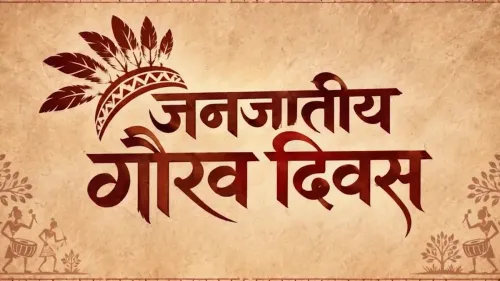
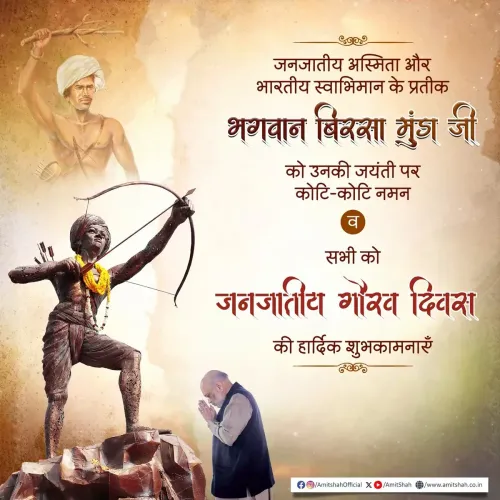
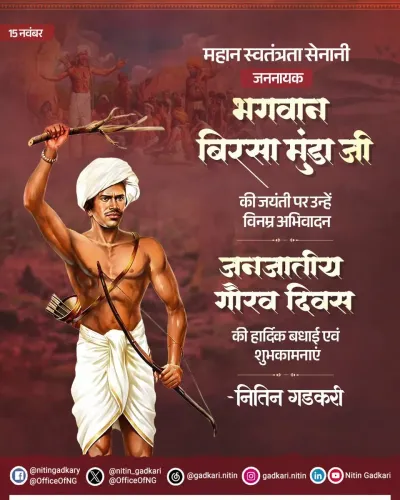
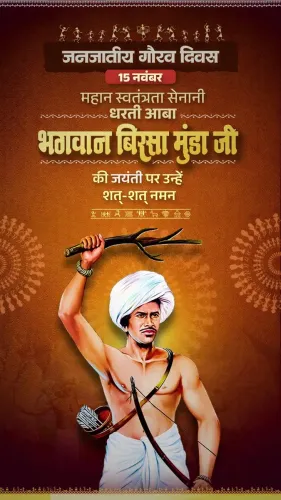
Shivraj Singh Chouhan Pays Tribute to Birsa Munda on Janjatiya Gaurav Diwas
Synopsis
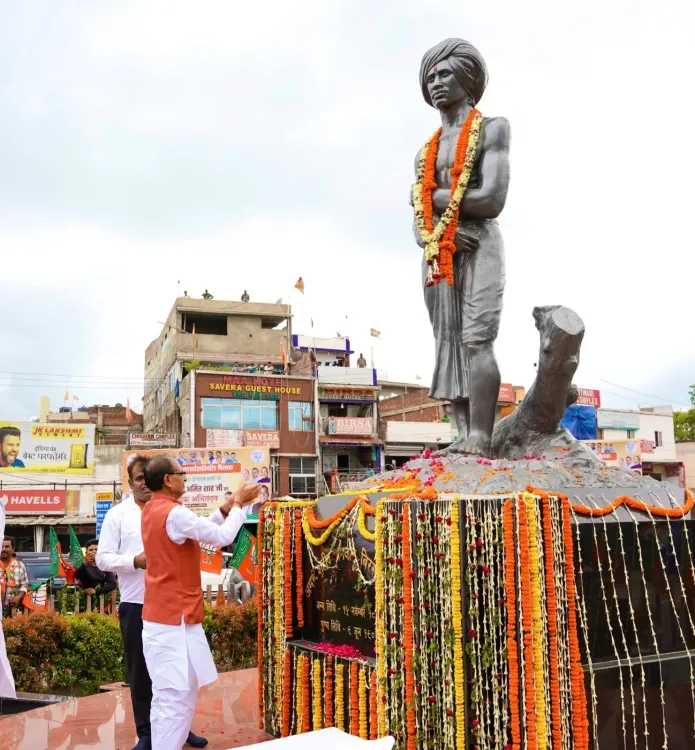
On Janjatiya Gaurav Diwas — 15 November — Union Minister Shivraj Singh Chouhan paid tribute to 'Dharti Aaba' Bhagwan Birsa Munda, honouring the tribal revolutionary who led the Ulgulan uprising against British rule before dying in custody at age 25 in 1900.
Key Takeaways
Union Agriculture Minister Shivraj Singh Chouhan posted a tribute on X marking Janjatiya Gaurav Diwas on 15 November 2026 , Birsa Munda's birth anniversary.
Bhagwan Birsa Munda (1875-1900) led the Ulgulan uprising in present-day Jharkhand against British land seizures, dying in colonial custody at age 25 .
Munda is revered as 'Dharti Aaba' (Father of the Earth) and his movement centred on the rights of tribal communities to jal, jungle, zameen — water, forest, and land.
Janjatiya Gaurav Diwas was formally instituted by the Government of India in 2021 through the Ministry of Tribal Affairs to honour tribal freedom fighters.
The commemoration reflects a broader central-government effort to mainstream tribal figures in the national freedom-struggle narrative, backed by schemes like PM JANMAN for PVTGs.
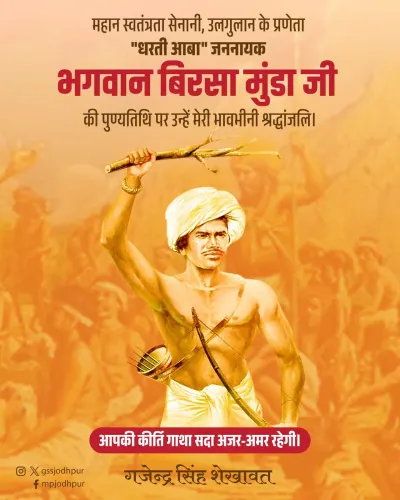
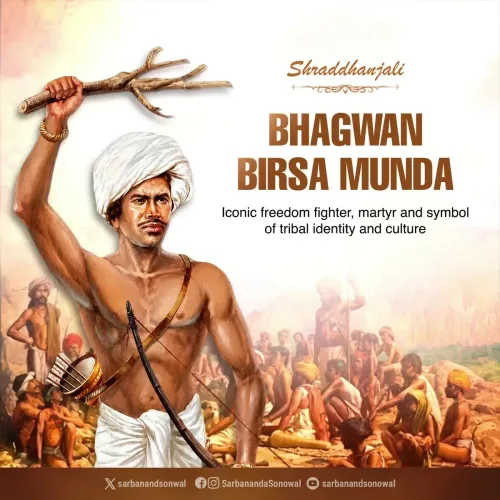
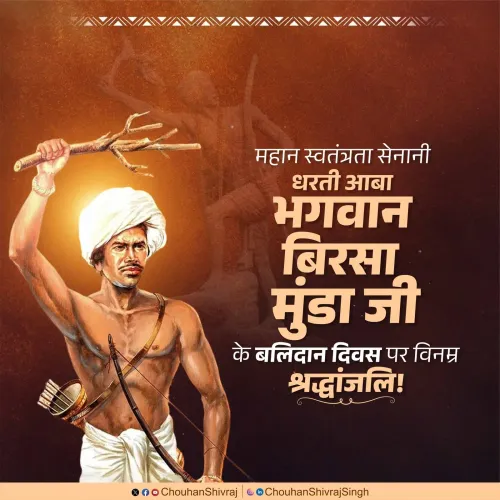
A freedom fighter who died at 25 inside a colonial prison still commands reverence that stretches across generations — and on 15 November 2026, Union Agriculture Minister Shivraj Singh Chouhan added his voice to the national chorus honouring Bhagwan Birsa Munda on the great tribal leader's birth anniversary and Janjatiya Gaurav Diwas.
In a heartfelt post on X, Chouhan saluted Birsa Munda as 'swadheenata sangram ke amar mahanayak, janjaatiya gaurav, mahan krantiveer' — 'the immortal hero of the freedom struggle, tribal pride, the great revolutionary' — and offered 'koti-koti naman', a crore-fold salute, at his feet. He invoked Munda's iconic title 'Dharti Aaba' (Father of the Earth), the name Adivasi communities gave the leader during his lifetime.
Who Was 'Dharti Aaba' and Why His Name Still Echoes
Birsa Munda, born on 15 November 1875 in present-day Jharkhand, led the Ulgulan — meaning 'the great tumult' — a rebellion of the Munda tribal people against British land-seizure policies and predatory moneylenders. His movement was rooted in a simple, radical idea: jal, jungle, zameen — water, forest, land — belonged to those who had lived on them for generations. He was arrested in 1900 and died in custody the same year, aged just 25, before the British could put him on trial.
Chouhan's post captured exactly this spirit, writing that Munda 'sacrificed everything to break the shackles of enslavement from the feet of Mother India' and 'forced the British to chew iron grams' — a vivid Hindi idiom for making an adversary pay dearly. 'His entire life,' the minister wrote, 'is an immortal source of inspiration.'
Janjatiya Gaurav Diwas: From Colonial Resistance to State Commemoration
The observance itself is relatively recent in its formal avatar. In 2021, the Government of India declared 15 November as Janjatiya Gaurav Diwas to honour Birsa Munda and the broader contribution of tribal freedom fighters to India's independence movement. The declaration, routed through the Ministry of Tribal Affairs, was designed to embed tribal narratives more firmly in mainstream national memory — a cause that resonates deeply in states with large Adivasi populations such as Jharkhand, Chhattisgarh, Odisha, and Madhya Pradesh.
Chouhan himself, as a four-term Chief Minister of Madhya Pradesh — a state home to the country's largest Scheduled Tribe population — has long been proximate to tribal welfare policy. The day's commemorations typically fan out across state capitals with cultural programmes, tribal exhibitions, and welfare scheme announcements.
A Deliberate National Reframing
The elevation of Birsa Munda into the first rank of India's freedom-struggle pantheon reflects a deliberate and sustained effort by the central government to widen the canvas of national heroes beyond the more familiar urban, anglophone figures of the independence era. Parallel to such commemorations runs an expanded tribal welfare architecture — schemes like Vanbandhu Kalyan Yojana and the PM JANMAN scheme targeting Particularly Vulnerable Tribal Groups (PVTGs) have framed Adivasi development as a headline political priority.
Chouhan closed his post with a ringing salutation: 'Jan-jan ke nayak, Dharti Aaba Bhagwan Birsa Munda ji ke chararon mein barambar pranam' — 'Repeated salutations at the feet of the hero of every person, Dharti Aaba Bhagwan Birsa Munda.' For a man who lived only 25 years and left no written manifesto, the reach of Birsa Munda's legacy — now enshrined in a national day, in textbooks, in a portrait in the Parliament's Central Hall — is a measure of how thoroughly his rebellion found its mark.
Point of View
But it has since been backed by welfare schemes like PM JANMAN targeting the most vulnerable tribal communities, suggesting the commemorative calendar is meant to accompany, not substitute, policy delivery. For a senior BJP leader with deep roots in Madhya Pradesh — India's most tribally populous state — amplifying Birsa Munda's legacy is simultaneously an expression of political identity and a signal about where the party sees its next social coalition. The question the anniversary raises every year is whether the symbolic weight of Janjatiya Gaurav Diwas is matched by measurable outcomes on land rights, forest access, and livelihood security for Adivasi communities.
NationPress
15 Nov 2026
Frequently Asked Questions
What is Janjatiya Gaurav Diwas and why is it celebrated on 15 November?
Janjatiya Gaurav Diwas is observed on 15 November every year to mark the birth anniversary of tribal freedom fighter Bhagwan Birsa Munda, born on that date in 1875. The Government of India formally instituted the day in 2021 through the Ministry of Tribal Affairs to honour Munda and other tribal contributors to India's independence movement.
Who was Bhagwan Birsa Munda?
Bhagwan Birsa Munda (1875-1900) was a Munda tribal leader from present-day Jharkhand who led the Ulgulan — 'the great tumult' — a rebellion against British land-seizure policies and moneylenders. Revered by Adivasi communities as 'Dharti Aaba' (Father of the Earth), he was arrested in 1900 and died in British custody aged 25.
What does 'Dharti Aaba' mean?
'Dharti Aaba' is a phrase in the Munda tradition meaning 'Father of the Earth.' It is the title given to Bhagwan Birsa Munda by Adivasi communities in recognition of his leadership in defending tribal land, forest, and water rights against colonial dispossession.
What was the Ulgulan uprising led by Birsa Munda?
The Ulgulan, meaning 'the great tumult,' was a rebellion launched by Birsa Munda and the Munda tribal community in the late 1890s against British land policies and predatory moneylenders who were dispossessing tribal communities of their ancestral lands in present-day Jharkhand. The movement's rallying cry centred on jal, jungle, zameen — water, forest, and land.
What tribal welfare schemes has the Indian government linked to Janjatiya Gaurav Diwas?
The commemorative day has run parallel to expanded tribal welfare measures including the Vanbandhu Kalyan Yojana and the PM JANMAN scheme, which specifically targets Particularly Vulnerable Tribal Groups (PVTGs). State governments also typically announce welfare measures around the observance.