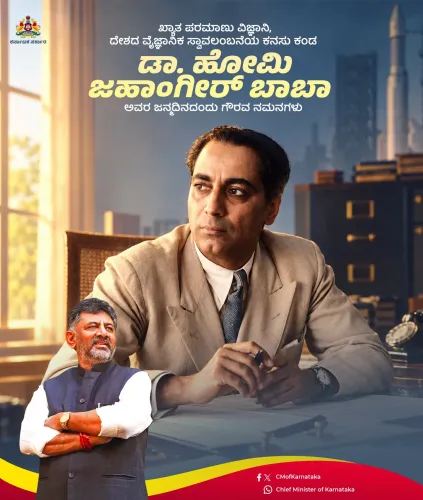
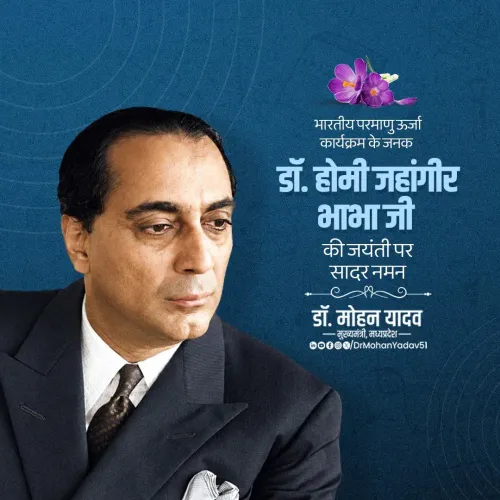
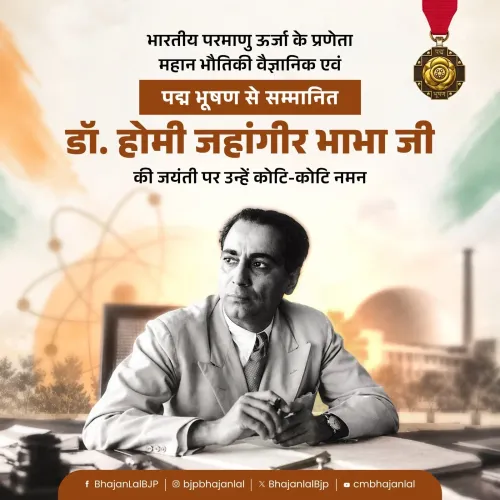
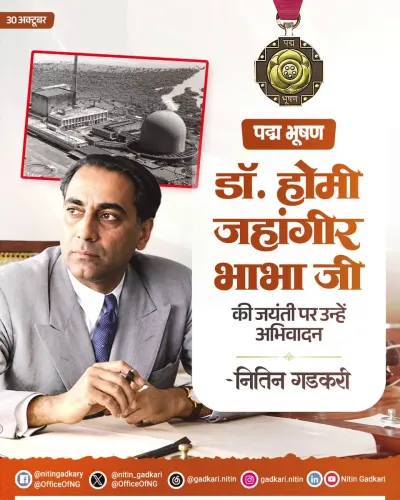
Shivraj Singh Chouhan pays tribute to Dr. Homi J. Bhabha on birth anniversary
Synopsis
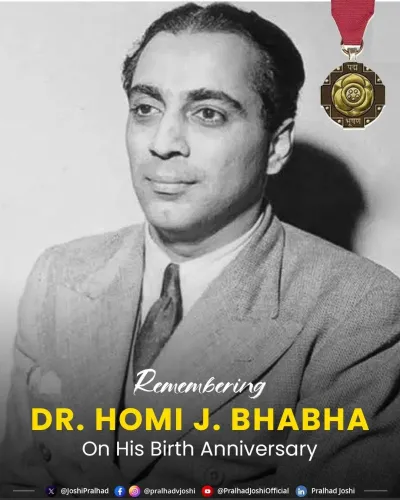
Union Agriculture Minister Shivraj Singh Chouhan paid homage to Dr. Homi J. Bhabha on his birth anniversary, honouring the Padma Bhushan physicist who founded TIFR in 1945 and chaired India's Atomic Energy Commission from 1948 as a beacon for Indian youth.
Key Takeaways
Shivraj Singh Chouhan posted a tribute to Dr.
Bhabha on his birth anniversary on 30 October 2026 .
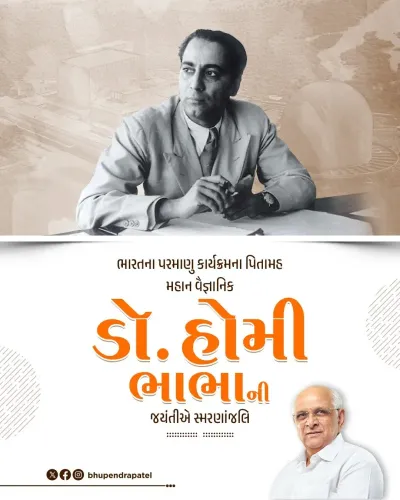
Bhabha is recognised as the father of India's nuclear energy programme and a Padma Bhushan awardee.
He founded the Tata Institute of Fundamental Research (TIFR) in 1945 .
Bhabha chaired the Atomic Energy Commission of India from its establishment in 1948 .
Chouhan called Bhabha a lasting source of inspiration and guidance for India's youth.
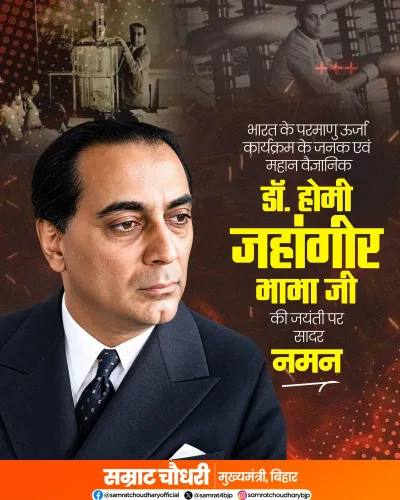
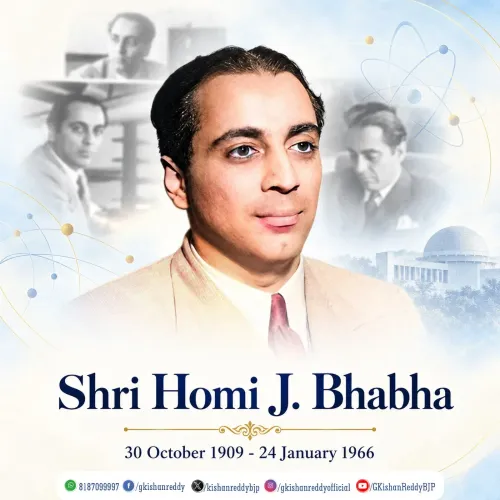
On the birth anniversary of the architect of India's nuclear age, Union Agriculture Minister Shivraj Singh Chouhan offered his respects to Dr. Homi Jehangir Bhabha on Friday, 30 October 2026, hailing the legendary physicist as a timeless inspiration for India's youth.
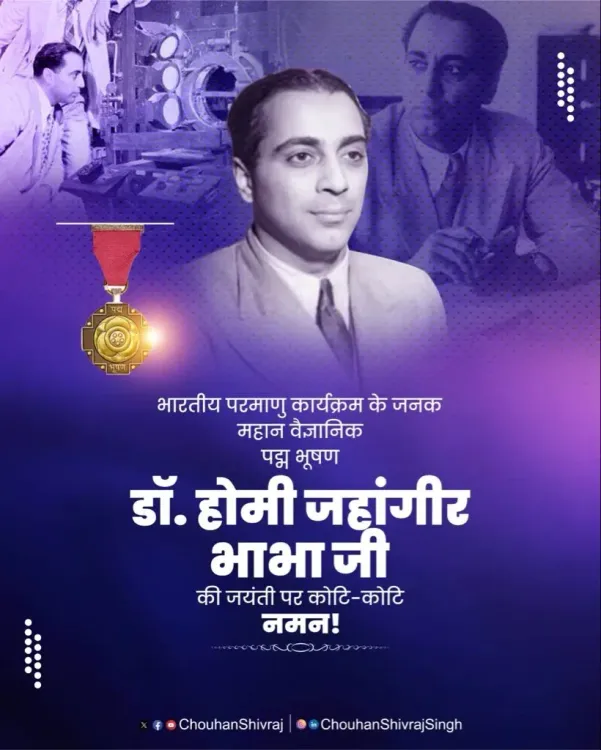
In his post, Chouhan wrote: 'Bharatiya paramaanu oorja karyakram ke janak, mahan vaigyanik, Padma Bhushan Dr. Homi Jehangir Bhabha ji ki jayanti par koti-koti naman karta hoon!' — ('I offer a million salutes on the birth anniversary of the father of India's nuclear energy programme, the great scientist and Padma Bhushan awardee Dr. Homi Jehangir Bhabha!') He added that sons of the nation like Bhabha, who served the country through science, would always remain a source of inspiration and guidance for India's young generations.
The man who built India's nuclear foundation
Dr. Homi J. Bhabha is widely regarded as the founding father of India's atomic energy programme. In 1945, he established the Tata Institute of Fundamental Research (TIFR), creating the country's first world-class centre for scientific research. When India's Atomic Energy Commission was constituted in 1948, Bhabha was appointed its inaugural chairman — placing him at the very helm of the nation's strategic scientific ambitions in the years immediately after independence.
Bhabha's vision was sweeping: he believed nuclear science was not merely a military or geopolitical instrument, but the engine through which a newly independent India could achieve technological self-reliance. The institutions and frameworks he built in those early decades continue to underpin India's civilian nuclear capabilities today.
A pattern of honouring science at the highest level
Chouhan's tribute reflects a consistent practice among senior Indian ministers of marking the birth anniversaries of pioneering scientists — using the occasion to reinforce national pride in homegrown scientific achievement and to signal the government's continued commitment to a culture of scientific temper. The Department of Atomic Energy typically organises commemorative events around 30 October each year to mark Bhabha's legacy.
That a senior Cabinet minister from a non-science portfolio chose to lead with Bhabha's contribution on this date speaks to how deeply the physicist's legacy has been woven into India's national identity — far beyond laboratories and reactors.
Seven decades on, the institutions Bhabha seeded still power the country's nuclear ambitions. The tribute is a reminder that India's scientific self-reliance has roots — and a name.
Point of View
Senior BJP leaders subtly reinforce the government's broader 'Atmanirbhar Bharat' narrative in strategic technology. The homage also reflects a long-running political consensus across parties that positions India's scientific pioneers as nation-builders on par with freedom fighters. Such anniversaries serve as low-cost but high-visibility moments to signal cultural continuity with the founding ambitions of the Republic.
NationPress
30 Oct 2026
Frequently Asked Questions
Who was Dr. Homi J. Bhabha?
Dr. Homi Jehangir Bhabha was an Indian physicist regarded as the father of India's nuclear energy programme. He founded the Tata Institute of Fundamental Research in 1945 and chaired the Atomic Energy Commission of India from 1948. He was awarded the Padma Bhushan for his contributions to science.
When is Homi Bhabha's birth anniversary?
Dr. Homi J. Bhabha was born on 30 October. His birth anniversary is marked each year by commemorative events from the Department of Atomic Energy and tributes from public figures across India.
What did Shivraj Singh Chouhan say about Dr. Bhabha?
Chouhan called Bhabha the father of India's nuclear energy programme and a great scientist. He said that sons of the nation who serve the country through science will always remain a source of inspiration and guidance for India's youth.
What is the Tata Institute of Fundamental Research?
The Tata Institute of Fundamental Research (TIFR), founded by Dr. Homi Bhabha in 1945, was India's first centre for advanced scientific research and became a cornerstone of the country's nuclear and space science capabilities.
What was the Atomic Energy Commission of India?
The Atomic Energy Commission of India was established in 1948 to develop the country's nuclear capabilities. Dr. Homi J. Bhabha served as its founding chairman and shaped India's early atomic energy policy.