Shivraj Singh Chouhan salutes women farmers on Mahila Kisan Diwas
Synopsis
On Mahila Kisan Diwas, Union Agriculture Minister Shivraj Singh Chouhan honoured women farmers as the backbone of Indian agriculture, spotlighting roles like Drone Didi, Krishi Sakhi, and FPO leadership, and linking women's empowerment to the Viksit Bharat 2047 vision.
Key Takeaways
Union Agriculture Minister Shivraj Singh Chouhan posted a tribute on Mahila Kisan Diwas (15 October 2026) , calling women farmers the 'backbone' of India's agricultural system.
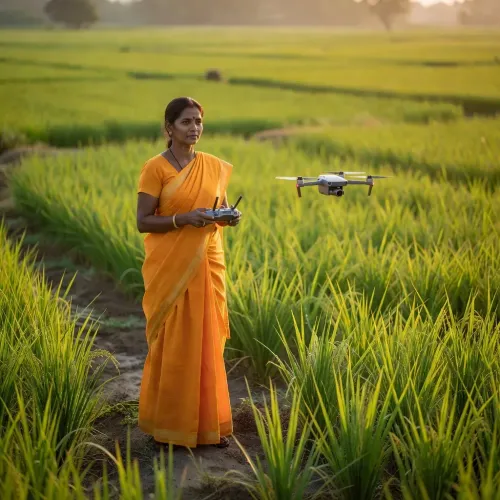
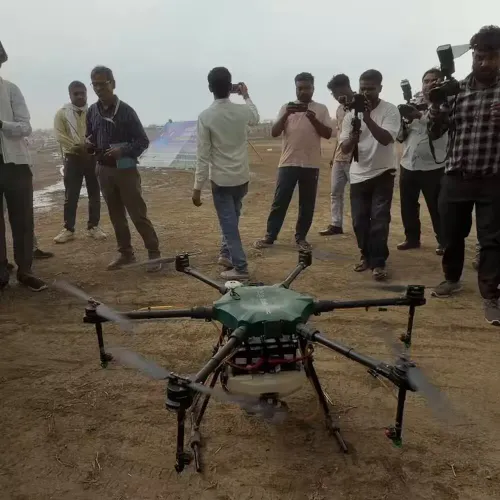
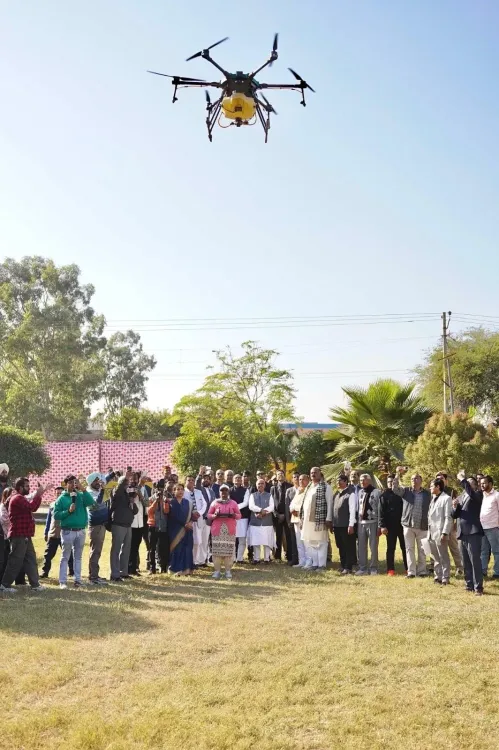
He highlighted new technology-driven roles for rural women: Drone Didis (drone-based spraying), Krishi Sakhis (agricultural training), Bank Sakhis (banking linkages), and Pashu Sakhis (animal husbandry support).
Farmer Producer Organisations (FPOs) were cited as a key mechanism through which women farmers are processing raw produce and reaching markets.
Chouhan linked women's empowerment in agriculture directly to the government's Viksit Bharat @2047 vision of a fully developed India by independence's centenary.
The message connects to an existing policy lineage including the Mahila Kisan Sashaktikaran Pariyojana and DAY-NRLM , which have supported women farmers through self-help groups and skill training since the 2010s.
India's fields have always had women at their centre — and on Mahila Kisan Diwas (Women Farmer's Day), Union Agriculture Minister Shivraj Singh Chouhan made that truth the centrepiece of a passionate appeal, paying tribute to the country's women farmers and calling them the 'backbone of India's agricultural system.'
Women as the spine of Indian farming
Posting on X on Thursday, 15 October 2026, Chouhan opened with a declaration that has the ring of a long-standing reality: 'Bharat gaon ke bina adhoora hai, aur gaon kheti ke bina, aur kheti mahilaon ke bina nahin ho sakti' — 'India is incomplete without its villages, villages are incomplete without farming, and farming cannot exist without women.' It is a statement backed by the demographic reality of Indian agriculture, where women constitute a dominant share of field labour, post-harvest work, and household food security management.
The minister emphasised that women's contribution to farming is not a modern concession — it stretches back to time immemorial. What has changed, he argued, is the sheer breadth and technological depth of that role today.
Drone Didis, Krishi Sakhis and the new rural woman
Chouhan catalogued a striking roll-call of emerging roles: 'Drone Didis' who carry out pesticide and fertiliser spraying using drones; 'Krishi Sakhis' who train farmers in modern agricultural practices; 'Bank Sakhis' who facilitate banking linkages for rural households; and 'Pashu Sakhis' who support animal husbandry and milk production at the village level. Each title is more than ceremonial — these are functional roles embedded in government-backed extension frameworks.
Women are also driving the processing of raw farm produce and connecting it to markets. Chouhan specifically highlighted the role of Farmer Producer Organisations (FPOs) — collectivised bodies promoted by the government to enable marketing, value addition, and processing — as a vehicle through which 'Kisan Didis' are making a decisive difference.
Viksit Bharat 2047 and the women-agriculture link
The message was not merely celebratory. Chouhan framed the empowerment of women farmers as structurally essential to the government's flagship long-horizon goal: Viksit Bharat @2047, the vision of a fully developed India by the centenary of independence. His formulation was direct: 'Empowered women farmers will mean a prosperous agriculture; a prosperous agriculture will mean a developed India.' The equation positions rural women not as beneficiaries of policy but as its primary engine.
This connects to an existing policy lineage — schemes such as the Mahila Kisan Sashaktikaran Pariyojana and the Deendayal Antyodaya Yojana – National Rural Livelihoods Mission (DAY-NRLM) have for over a decade channelled skill-building and financial inclusion support to women farmers through self-help groups. Chouhan's post signals continued political will to deepen and expand that architecture.
His closing pledge was a collective one — an invitation to 'every sister' to resolve, on this day, to advance every dimension of agriculture, their own progress, and the nation's development. On Mahila Kisan Diwas, the minister's message is unambiguous: when Indian agriculture rises, it will be on the shoulders of its women.
Point of View
Krishi Sakhi, Pashu Sakhi — rather than speaking in generalities, the minister is doing political work: anchoring abstract policy intent to visible, on-ground identities that rural voters can recognise. The framing also subtly elevates women from scheme beneficiaries to active agents of 'Aatmanirbhar Krishi,' a positioning that serves both the government's narrative needs and the genuine structural reality of Indian farming. The open question is whether scheme roll-out and FPO participation metrics will catch up to the aspirational rhetoric — that gap will define how this moment is remembered.
NationPress
15 Oct 2026
Frequently Asked Questions
What is Mahila Kisan Diwas and when is it observed?
Mahila Kisan Diwas, or Women Farmer's Day, is observed to honour the contributions of women in Indian agriculture. Union Agriculture Minister Shivraj Singh Chouhan's post on 15 October 2026 marked the occasion with a tribute to women farmers across the country.
Who is Drone Didi in Indian agriculture?
'Drone Didi' refers to rural women trained to operate agricultural drones for pesticide and fertiliser spraying on farmland. The role is part of a broader government push to bring women into technology-driven agricultural extension services.
What is a Krishi Sakhi?
A Krishi Sakhi is a trained rural woman who provides agricultural extension services — teaching farmers about improved farming practices and techniques. The role is part of government-backed livelihood programmes targeting rural women.
How are FPOs connected to women farmers in India?
Farmer Producer Organisations (FPOs) are collective bodies that help farmers process produce and access markets. The government has actively promoted women's participation in FPOs, and Agriculture Minister Chouhan cited 'Kisan Didis' working through FPOs as a key driver of rural value chains.
What is Viksit Bharat 2047 and how does it relate to women farmers?
Viksit Bharat @2047 is the Indian government's vision for a fully developed nation by the centenary of independence in 2047. Chouhan directly linked the empowerment of women farmers to achieving this goal, arguing that prosperous agriculture — powered by women — is the pathway to a developed India.