Shivraj Singh Chouhan Stresses Transparency in Rural Scheme Delivery
Synopsis
Union Agriculture Minister Shivraj Singh Chouhan on 5 July 2026 directed all implementing agencies to strictly follow face authentication, digital presence, and geo-tagging protocols in rural welfare schemes, stressing that credible, transparent, and quality implementation is as vital as the pace of work.
Key Takeaways
Union Agriculture Minister Shivraj Singh Chouhan posted on 5 July 2026 directing strict adherence to digital verification norms in rural scheme delivery.
He specifically named face authentication , digital presence , and geo-tagging as mandatory procedures that must be followed with complete transparency.
The Minister stated the goal is 'credible, transparent and quality implementation,' not merely higher volumes of work.
The directive aligns with the DBT framework (2013) and geo-tagging rollout (2016) under MGNREGA and PMAY-G, which embedded digital audit trails into rural welfare delivery.
The primary beneficiaries of stricter compliance are crores of rural households dependent on MGNREGA wages, PM-Kisan, and rural housing assistance.
The Ministry of Rural Development's quarterly reviews are expected to assess compliance with these digital verification standards going forward.
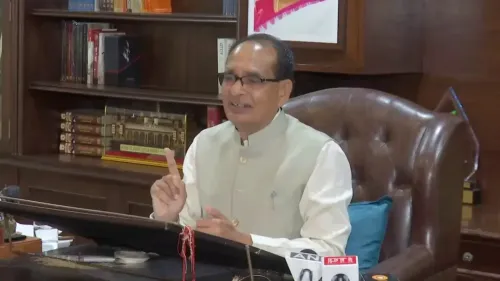
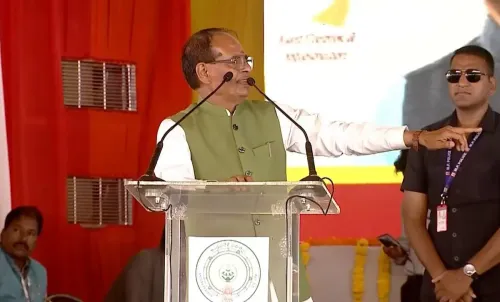
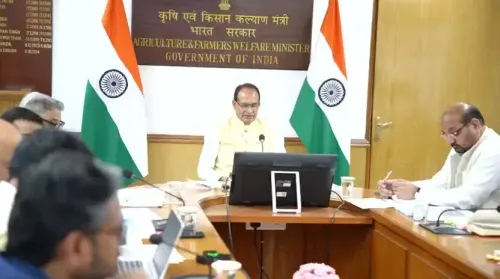
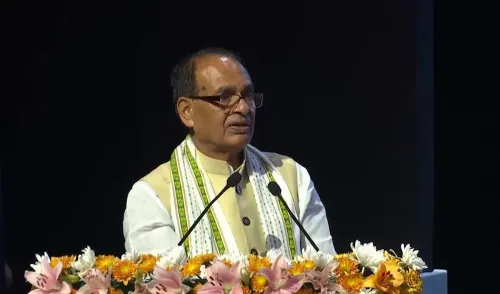
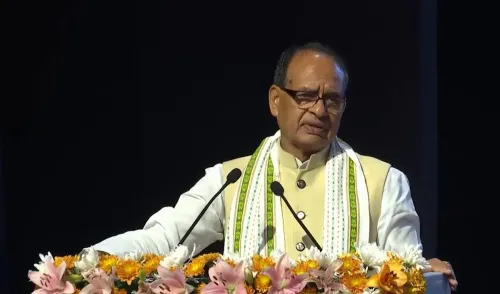
Union Agriculture Minister Shivraj Singh Chouhan on Sunday, 5 July 2026, called for strict adherence to digital verification protocols — including face authentication, digital presence, and geo-tagging — across all rural welfare and agriculture schemes, emphasising that speed of implementation must be matched by accountability and quality.
Posting in Hindi on X, the Minister stated: 'काम की गति जितनी महत्वपूर्ण है, उतनी ही महत्वपूर्ण पारदर्शिता भी है' ['The pace of work is as important as transparency itself']. He directed that all prescribed procedures — including face authentication, digital presence, and geo-tagging — be followed with complete transparency, adding that the objective is not merely to do more work, but to ensure 'credible, transparent and quality implementation.'
Context
The directive arrives as India's Ministry of Rural Development continues to oversee large-scale welfare programmes whose credibility hinges on verifiable, tamper-proof execution at the ground level. Chouhan, a former four-term Chief Minister of Madhya Pradesh, has consistently positioned governance accountability as central to his administrative philosophy. The post signals an internal push to field functionaries and implementing agencies to tighten compliance with digital verification norms already embedded in scheme guidelines.
Policy Backdrop
The three technologies Chouhan specifically named — face authentication, digital presence, and geo-tagging — are not new requirements; they are mandated under frameworks that have evolved over the past decade. The Direct Benefit Transfer (DBT) framework, launched in 2013, linked scheme payments to Aadhaar-based biometric verification to reduce leakages and ensure targeted delivery to genuine beneficiaries.
From 2016 onwards, geo-tagging of assets created under MGNREGA (Mahatma Gandhi National Rural Employment Guarantee Act) and PMAY-G (Pradhan Mantri Awaas Yojana — Gramin) was progressively rolled out to enable real-time monitoring of physical work on the ground. Face authentication through Aadhaar-enabled systems has since been extended to attendance tracking of workers and officials at scheme sites, making the digital trail a core accountability mechanism.
Successive Union Budgets and administrative orders have deepened this integration, reflecting a broad post-2014 policy consensus that faster welfare delivery must be accompanied by digital audit trails to minimise irregularities and ghost beneficiaries.
Stakeholders and Impact
The primary audience for this directive is the large ecosystem of scheme implementers: state government officials, district-level programme officers, panchayat functionaries, and field-level workers who manage day-to-day execution of rural employment and housing programmes. Rural beneficiaries — the crores of households dependent on MGNREGA wages, PM-Kisan transfers, and rural housing assistance — stand to gain most directly when verification protocols are rigorously followed, as it reduces the risk of funds being siphoned before reaching intended recipients.
For implementing agencies, the Minister's statement reinforces that performance metrics will be assessed not only on volume of work completed but on the quality and verifiability of that work, raising the bar for compliance reporting.
What's Next
The Ministry of Rural Development conducts quarterly implementation reviews of flagship schemes, and Chouhan's public emphasis on these three digital tools suggests that compliance with face authentication, digital presence, and geo-tagging norms could feature prominently in the next review cycle. Observers will watch for fresh administrative circulars or guidelines reinforcing these standards ahead of the next financial year's planning and budget cycle. The broader question is whether this statement translates into measurable enforcement action — such as audits or performance-linked accountability for implementing officers — or remains an aspirational directive.
Point of View
Geo-tagging, and digital presence is a pointed signal to the bureaucratic chain beneath him that the ministry intends to hold implementers accountable on process, not just output. It reflects a broader pattern in Indian welfare governance since 2014, where digital verification tools have been progressively layered onto existing schemes to close leakage gaps — but where ground-level compliance has remained uneven. By framing transparency as co-equal to speed, Chouhan is effectively raising the performance benchmark for field functionaries at a time when rural scheme delivery faces scrutiny ahead of budget planning. The statement's public nature also serves a political function: it projects ministerial vigilance and reinforces the ruling dispensation's 'good governance' narrative in the rural development space.
NationPress
5 Jul 2026
Frequently Asked Questions
What did Shivraj Singh Chouhan say about rural scheme transparency?
On 5 July 2026, Union Agriculture Minister Shivraj Singh Chouhan directed that face authentication, digital presence, and geo-tagging protocols be followed with complete transparency in all rural welfare schemes, stating that the goal is credible and quality implementation, not just faster work.
What is geo-tagging in MGNREGA?
Geo-tagging in MGNREGA refers to the process of capturing GPS coordinates of assets — such as roads, ponds, and check dams — created under the scheme, allowing authorities to verify their physical existence and location in real time. It was rolled out from 2016 onwards.
How does face authentication work in rural welfare schemes?
Face authentication uses Aadhaar-linked biometric data to verify the identity of beneficiaries or workers at scheme sites through a live facial scan matched against stored records, reducing the risk of impersonation or ghost entries in attendance and beneficiary lists.
What is the Direct Benefit Transfer (DBT) framework?
The Direct Benefit Transfer framework, launched in 2013, routes government scheme payments directly into beneficiaries' Aadhaar-linked bank accounts, reducing intermediary leakages and ensuring funds reach intended recipients.
Which ministry does Shivraj Singh Chouhan head?
Shivraj Singh Chouhan is the Union Minister of Agriculture and Farmers Welfare and Rural Development in the Government of India. He is a senior BJP leader and former four-term Chief Minister of Madhya Pradesh.