Shivraj visits ICAR-CRIJAF, meets jute SHG women in Kolkata
Synopsis
Union Agriculture Minister Shivraj Singh Chouhan visited ICAR-CRIJAF in Barrackpore, Kolkata on 14 July 2026, meeting women self-help group members whose jute products are reaching global markets — spotlighting the convergence of NRLM-backed rural livelihoods and India's natural-fibre policy.
Key Takeaways
Union Agriculture Minister Shivraj Singh Chouhan visited ICAR-CRIJAF, Barrackpore on 14 July 2026 .
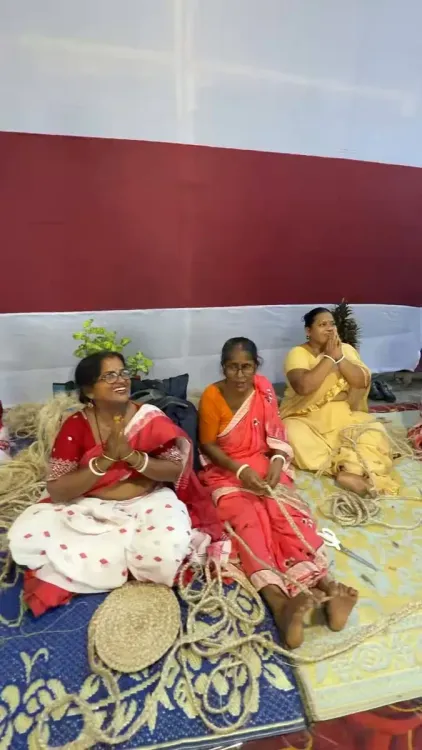
He met women members of self-help groups (SHGs) in Kolkata engaged in jute-based production and enterprise.
The Minister stated that SHG-made jute products are reaching markets across the world.
ICAR-CRIJAF serves as a technology-transfer hub linking natural-fibre research to rural women artisans.
The visit aligns with the DAY-NRLM framework and the Jute Technology Mission (2006) that together support SHG livelihoods in the jute sector.
Upcoming Union Budget discussions may include announcements on jute diversification funding and SHG marketing support.
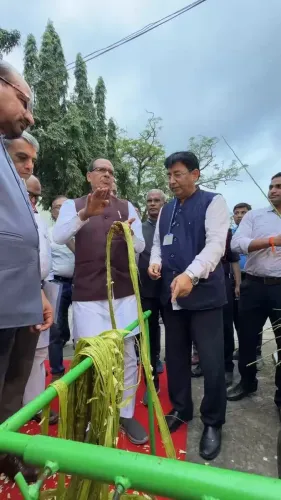
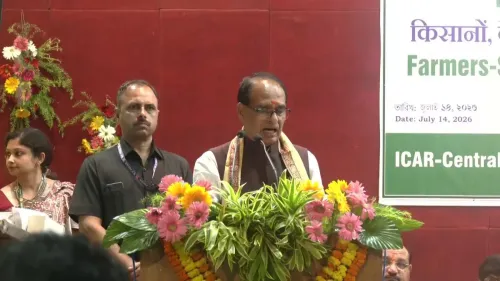
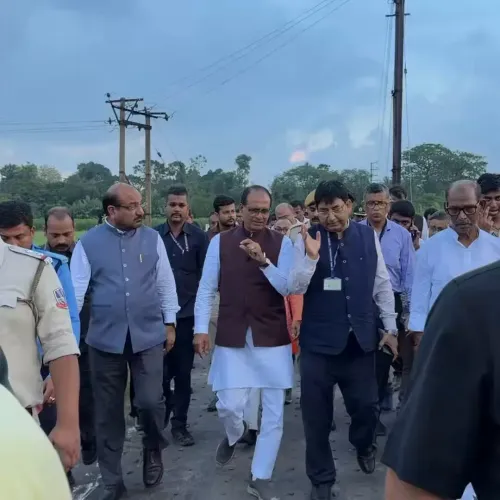
Union Agriculture Minister Shivraj Singh Chouhan on Tuesday, 14 July 2026, visited the ICAR-Central Research Institute for Jute and Allied Fibres (CRIJAF) in Barrackpore, Kolkata, where he met women members of self-help groups engaged in jute-based enterprises, expressing pride at their entrepreneurial journey toward self-reliance.
Context
Posting on X after the visit, the Minister wrote: 'Kolkata ke swayam sahayata samuho ki hamari bahnen jute ke madhyam se aatmnirbharta aur samridhi ki nayi kahani likh rahi hain' — ('Our sisters from Kolkata's self-help groups are writing a new story of self-reliance and prosperity through jute'). He added that products crafted by their hands are 'making their mark in markets across the world,' and that meeting them filled him with pride.
ICAR-CRIJAF, located in Barrackpore on the outskirts of Kolkata, is India's premier research institution for jute and allied natural fibres, responsible for varietal development, technology transfer and product diversification. Kolkata has historically been the nerve centre of India's jute processing and export trade.
Policy Backdrop
The visit connects to two long-standing policy pillars. The Deen Dayal Antyodaya Yojana-National Rural Livelihoods Mission (DAY-NRLM), launched in 2011, has mobilised millions of rural women across India into self-help groups, providing them access to savings, credit and micro-enterprise support. The Jute Technology Mission, launched in 2006, was designed to modernise jute cultivation, diversify end-products beyond traditional sacking and hessian, and strengthen market linkages for growers and artisans alike.
Together, these frameworks have enabled ICAR institutes such as CRIJAF to act as technology bridges — disseminating innovations in natural-fibre processing directly to SHG clusters. Mandatory jute packaging norms and export incentives have further expanded the commercial runway for SHG-made jute goods in both domestic and international markets.
Stakeholders and Impact
The primary beneficiaries are rural and peri-urban women in West Bengal who have organised into self-help groups to produce jute bags, home-décor items, apparel accessories and other diversified products. Their integration with an ICAR research institute provides access to improved fibre varieties, processing techniques and design inputs that raise product quality to export standards.
Jute artisans and small manufacturers in the Kolkata belt also stand to gain from stronger institutional linkages, while the broader policy goal of reducing single-use plastic consumption gives natural-fibre products a structural demand advantage in both regulated procurement channels and global eco-conscious retail markets.
What's Next
The Minister's field engagement with jute SHGs signals continued political attention to natural-fibre livelihoods ahead of the next Union Budget, where announcements on jute diversification funding, SHG marketing support or revisions to jute packaging regulations could follow. Parliamentary discussions on fibre research allocations and NRLM expansion are also worth watching as the government seeks to scale SHG success stories from West Bengal to other jute-growing states.
Point of View
A state where the BJP has invested heavily in grassroots outreach, particularly among women beneficiaries of central schemes. By personally visiting an SHG cluster tied to a Union government research institute, he reinforces the narrative that the Centre — not the state government — is the primary engine of rural women's prosperity. The emphasis on global market reach for jute products also serves the BJP's broader 'Atmanirbhar Bharat' messaging, framing traditional craft sectors as engines of export-led growth. Expect similar field engagements to intensify ahead of any state-level electoral cycle in the east.
NationPress
15 Jul 2026
Frequently Asked Questions
What is ICAR-CRIJAF and where is it located?
ICAR-CRIJAF, or the Central Research Institute for Jute and Allied Fibres, is India's premier jute research institution located in Barrackpore near Kolkata, West Bengal. It works on varietal development, fibre processing technology and product diversification for jute and allied natural fibres.
What are self-help groups doing with jute in Kolkata?
Women's self-help groups in the Kolkata region are producing diversified jute products — including bags, home-décor items and accessories — using technology support from institutes such as ICAR-CRIJAF, and are selling these goods in both domestic and international markets.
What is the Jute Technology Mission?
The Jute Technology Mission was launched in 2006 to modernise jute cultivation, diversify jute products beyond traditional sacking and hessian, and improve market linkages for growers and artisans across India's jute belt.
What is DAY-NRLM and how does it support jute artisans?
The Deen Dayal Antyodaya Yojana-National Rural Livelihoods Mission (DAY-NRLM), launched in 2011, mobilises rural women into self-help groups with access to savings, credit and micro-enterprise support. In jute-growing regions, this framework connects SHGs with research institutions for technology and market access.
Why did Agriculture Minister Shivraj Singh Chouhan visit Kolkata?
Agriculture Minister Shivraj Singh Chouhan visited ICAR-CRIJAF in Barrackpore, Kolkata on 14 July 2026 to meet women self-help group members engaged in jute-based enterprises, highlighting their role in achieving self-reliance and reaching global markets through natural-fibre products.