CM Siddaramaiah Defends Manmohan Singh's Legacy After Court Ruling

Synopsis
Karnataka CM Siddaramaiah has defended Dr Manmohan Singh's record as Prime Minister, citing a Supreme Court ruling upholding the CBI's clean chit in the coal allocation case and listing landmark UPA-era laws including MGNREGA, RTI, and the National Food Security Act.
Key Takeaways
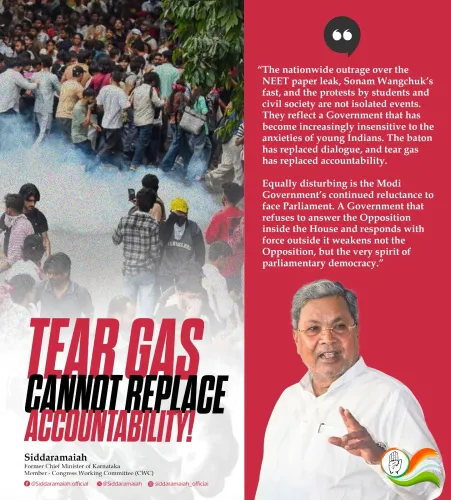
Karnataka Chief Minister Siddaramaiah posted a defence of Dr Manmohan Singh on August 11, 2026 , calling the political campaign against his integrity 'baseless'.
The Supreme Court upheld the CBI's clean chit in the coal block allocation case, which Siddaramaiah frames as institutional vindication of Singh's record.
Siddaramaiah listed MGNREGA (2005) , Right to Information Act (2005) , Forest Rights Act (2006) , Right to Education Act , and National Food Security Act (2013) as defining legislative achievements of the UPA decade.
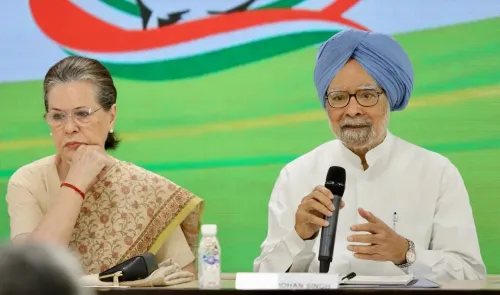
Smt Sonia Gandhi published an article reflecting on Singh's legacy, which Siddaramaiah urged readers to engage with.
Singh earlier served as Finance Minister in 1991 , architecting India's landmark economic liberalisation before his 2004–2014 premiership.
The post is part of a broader Congress effort to reclaim the UPA 2004–2014 period as one of economic growth and rights-based governance.
A Supreme Court ruling upholding the CBI's clean chit in the coal allocation case has reignited a fierce debate about one of India's most consequential — and most contested — prime ministerial legacies. Karnataka Chief Minister Siddaramaiah on Tuesday, August 11, 2026, stepped into that debate with a pointed defence of Dr Manmohan Singh, arguing that the court's decision exposes the 'baseless' nature of the political campaign waged against the former Prime Minister's integrity.
The Coal Case Verdict and What It Vindicates
The coal block allocation controversy was one of the defining political storms of the 2004–2014 UPA era — a CBI investigation into the allotment of coal blocks that generated years of parliamentary uproar and litigation. Siddaramaiah argues that the Supreme Court's latest ruling puts that chapter to rest. 'The political attacks of the past cannot erase this record,' he wrote, framing the judicial outcome as institutional vindication rather than a legal technicality.
It is a significant framing. For over a decade, the coal case was wielded as a symbol of UPA-era governance failures. A court clearing that cloud does not rewrite political history — but it does remove one of the most potent weapons from the opposition's arsenal against Singh's reputation.
The Legislative Record Siddaramaiah Wants Remembered
Beyond the court ruling, Siddaramaiah's post is a deliberate rehabilitation exercise — a line-by-line recitation of what the UPA built. He cites MGNREGA (2005), the rural employment guarantee that became one of the world's largest public works programmes; the Right to Information Act (2005), which gave ordinary citizens statutory power to interrogate the state; the Forest Rights Act (2006), which recognised land and livelihood rights of scheduled tribes and forest dwellers; the Right to Education Act; and the National Food Security Act (2013), which legislated subsidised foodgrain entitlements for roughly two-thirds of India's population.
These were not incremental reforms. They were structural shifts in the relationship between the Indian state and its citizens — rights-based in design, enforceable in courts. Siddaramaiah's point is that this architecture endures, regardless of the political narratives that have surrounded it since 2014.
Sonia Gandhi's Article and the Congress Counter-Narrative
Siddaramaiah also urged his followers to read an article by Smt Sonia Gandhi reflecting on Singh's legacy, published on August 11. The former Congress president and architect of the UPA coalition is a figure whose public writings on Singh carry particular weight — she led the political structure within which Singh governed, and her testimony on his character and record carries insider authority that a party statement cannot.
This is a coordinated Congress moment. Senior leaders amplifying a Sonia Gandhi piece on Manmohan Singh's legacy, timed to a favourable Supreme Court ruling, signals a deliberate effort to reclaim the UPA decade as a period of achievement rather than scandal. The party has periodically mounted such defences since 2014; the judicial backdrop this time gives it harder ground to stand on.
Singh's Place in the Long Arc of Indian Economic History
Dr Manmohan Singh's public life spans an arc that few Indian statesmen can match. As Finance Minister in 1991, he authored the liberalisation that dismantled the licence raj and opened India to the world economy. As Prime Minister from 2004 to 2014, he presided over a decade that included some of India's strongest GDP growth rates and a suite of social legislation that expanded the floor of citizenship rights.
The quiet, undemonstrative style that made him an easy political target also made him a difficult man to fairly assess in real time. Siddaramaiah's argument — and it is one that is gaining traction as the judicial record clears — is that the distance of time is doing what the noise of politics could not: rendering a clear verdict.
History, as Siddaramaiah implies, is catching up with the facts. And the facts, increasingly, favour Dr Manmohan Singh.
Point of View
RTI, the Forest Rights Act — rather than in contested macroeconomic claims, the post makes an argument that is harder to dismiss. The broader pattern suggests Congress is moving from defensive posture to active legacy reclamation, with senior leaders coordinating around judicial and media moments to shift the post-2014 narrative on the UPA era.
NationPress
25 Sept 2026
Frequently Asked Questions
What did the Supreme Court rule in the coal allocation case involving Manmohan Singh?
The Supreme Court upheld the CBI's clean chit in the coal block allocation case, a ruling that Karnataka CM Siddaramaiah cited as vindicating Dr Manmohan Singh's integrity. The specific order details post-date available verified records.
What laws did Manmohan Singh's government pass?
The UPA government under Dr Manmohan Singh enacted several landmark rights-based laws: the Mahatma Gandhi National Rural Employment Guarantee Act (MGNREGA) in 2005, the Right to Information Act in 2005, the Forest Rights Act in 2006, the Right to Education Act, and the National Food Security Act in 2013.
What was the coal block allocation scam?
The coal block allocation case involved a CBI investigation into the allotment of coal blocks during the UPA-I and UPA-II governments (2004–2014), which generated significant political controversy and prolonged legal proceedings. The Supreme Court has now upheld the CBI's clean chit in the matter.
Why is Siddaramaiah defending Manmohan Singh now?
Siddaramaiah's post is timed to the Supreme Court's ruling upholding the CBI's clean chit in the coal case and coincides with a published article by former Congress president Sonia Gandhi reflecting on Singh's legacy, making it part of a coordinated Congress effort to rehabilitate the UPA record.
What is Manmohan Singh's contribution to India's economy?
Dr Manmohan Singh is credited with architecting India's 1991 economic liberalisation as Finance Minister, dismantling the licence raj. As Prime Minister from 2004 to 2014, his tenure saw strong GDP growth, poverty reduction, and the passage of major social legislation expanding citizens' rights.