CM Siddaramaiah Marks 3 Years, Cites Revenue Milestones
Synopsis
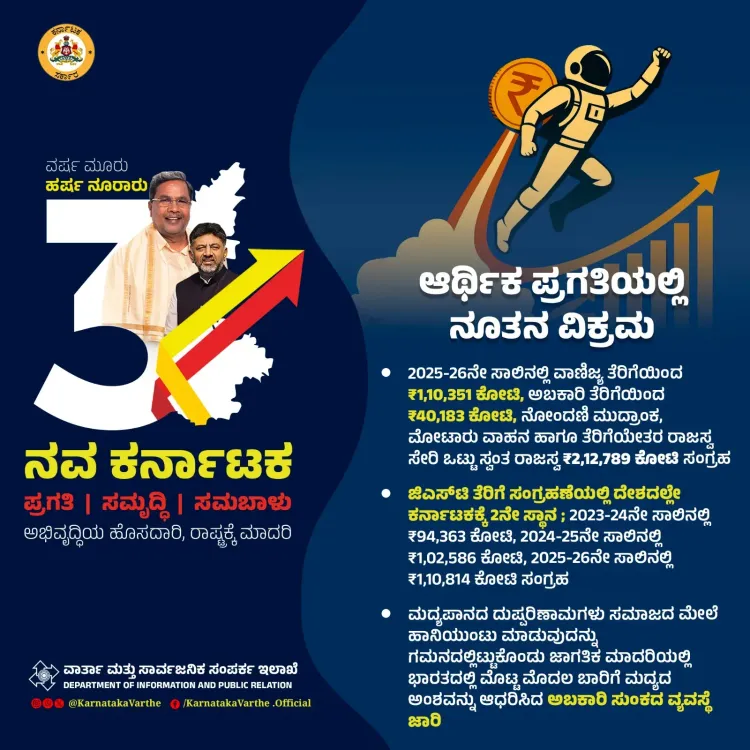
Karnataka Chief Minister Siddaramaiah marked three years in power on 24 May 2026, highlighting a total own revenue of ₹2,12,789 crore in 2025-26, a national second rank in GST collections, and India's first alcohol-content-based excise duty system under the #NavaKarnataka banner.
Key Takeaways
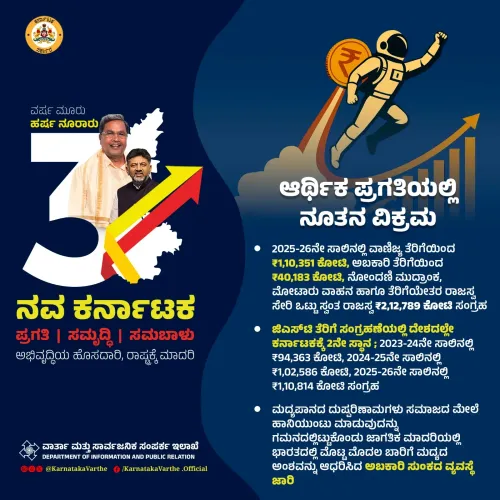
Karnataka's total own revenue for 2025-26 reached ₹2,12,789 crore , including ₹1,10,351 crore from commercial tax and ₹40,183 crore from excise duty.
Karnataka ranked second nationally in GST collections, with receipts rising from ₹94,363 crore in 2023-24 to ₹1,10,814 crore in 2025-26.
The state government claims to have implemented India's first alcohol-content-based excise duty system, modelled on global practices.
CM Siddaramaiah dedicated the government's three-year achievements to every Kannadiga and reaffirmed that all pre-poll promises have been honoured.
The government signalled that its governance and development agenda will proceed at a faster pace for the remainder of its term.
Karnataka Chief Minister Siddaramaiah on Sunday, 24 May 2026, marked the completion of three years of his Congress government in office, crediting every Kannadiga for the administration's achievements and reaffirming the government's commitment to its pre-poll promises.
Posting in Kannada on X under the hashtag #3YearsOfNavaKarnataka, the Chief Minister wrote: 'On this meaningful occasion of completing three years in power with the blessings of the people of the state, we dedicate the credit for all our government's achievements to every Kannadiga. We take pride in having walked the talk — honouring every promise made to the people before the elections. We have come a long way in the work of rebuilding a strong, prosperous and self-respecting Karnataka, and this effort will become even faster and more effective going forward.'
Revenue Highlights
The Chief Minister listed several fiscal achievements for the 2025-26 financial year. Commercial tax collections stood at ₹1,10,351 crore, while excise duty contributed ₹40,183 crore. Including registration and stamp duty, motor vehicle tax, and non-tax revenue, the state's total own revenue reached ₹2,12,789 crore.
On the Goods and Services Tax (GST) front, Karnataka claimed the second rank nationally in collections. GST receipts grew from ₹94,363 crore in 2023-24 to ₹1,02,586 crore in 2024-25, and further to ₹1,10,814 crore in 2025-26.
Context
Siddaramaiah returned as Chief Minister in May 2023 after the Indian National Congress won the Karnataka assembly elections. His earlier term from 2013 to 2018 was also marked by an emphasis on state revenue mobilisation and social sector spending. The current administration came to power on a manifesto that included several welfare guarantees, and the three-year milestone is being positioned as evidence of delivery on those commitments.
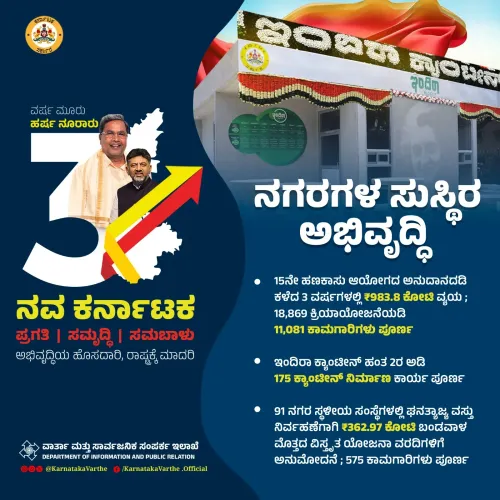
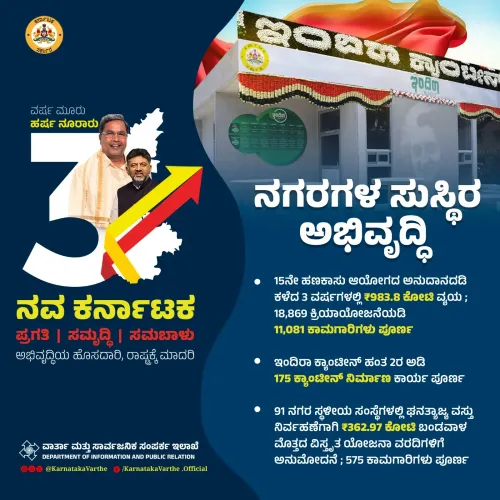
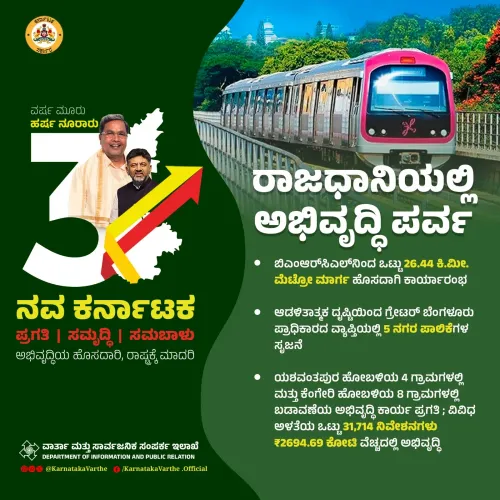
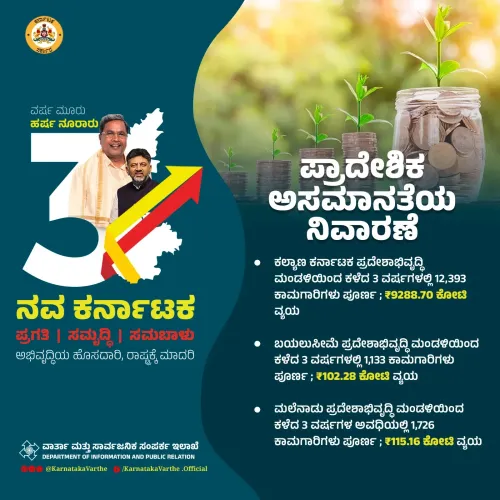
The post is accompanied by the hashtag #NavaKarnataka — a branding term the government has used to describe its vision of a rebuilt and reformed Karnataka.
Policy Backdrop
Karnataka's GST performance has been a point of pride for the state government amid ongoing centre-state fiscal debates. Indian states have been closely tracking their GST rankings since the tax regime's launch in 2017, particularly as disputes over compensation and devolution have shaped intergovernmental relations.
On the excise front, Siddaramaiah announced what the government describes as India's first alcohol-content-based excise duty system, modelled on global practices. The reform is framed as a dual-purpose measure — addressing the social harms of alcohol consumption while rationalising revenue collection based on the strength of the beverage rather than a flat rate.
Stakeholders and Impact
The revenue figures directly affect Karnataka's capacity to fund welfare schemes and infrastructure. Karnataka taxpayers, the state excise department, and alcohol consumers are among the key stakeholders in the new excise framework. A stronger own-revenue base also gives the state greater fiscal autonomy in negotiations with the Centre over grants and transfers.
The government's claim of honouring pre-poll promises will be tested against public perception of flagship welfare programmes that were central to the Congress campaign in 2023.
What's Next
The Siddaramaiah government signalled that the pace of its governance agenda will accelerate in the remaining period of its term. Analysts and opposition parties are likely to scrutinise the revenue figures and the operational details of the new excise model in the coming weeks. The alcohol-content-based excise framework, if it demonstrates measurable results in both revenue and public health outcomes, could invite attention from other state governments seeking to replicate the model.
Point of View
Framed as an India-first reform, adds a policy-innovation layer to what is otherwise a routine anniversary communication. Whether the government can sustain this momentum through its remaining term — and whether welfare spending has kept pace with revenue growth — will define the Congress's pitch in the next Karnataka assembly election.
NationPress
7 Oct 2026
Frequently Asked Questions
How long has Siddaramaiah been Chief Minister of Karnataka?
Siddaramaiah completed three years as Chief Minister of Karnataka in May 2026, having assumed office in May 2023 after the Indian National Congress won the state assembly elections.
What is Karnataka's total own revenue for 2025-26?
Karnataka's total own revenue for 2025-26 was reported at ₹2,12,789 crore, comprising ₹1,10,351 crore from commercial tax, ₹40,183 crore from excise duty, and the remainder from registration, stamp duty, motor vehicle tax, and non-tax sources.
What is Karnataka's GST rank in India?
Karnataka ranked second nationally in GST collections, with receipts of ₹1,10,814 crore in 2025-26, up from ₹94,363 crore in 2023-24.
What is the new excise duty reform in Karnataka?
The Karnataka government claims to have introduced India's first alcohol-content-based excise duty system, where the tax levied on alcoholic beverages is determined by their alcohol content rather than a uniform rate, following global models and aimed at reducing the social harms of alcohol consumption.
What is Nava Karnataka?
'Nava Karnataka' is the branding term used by the Siddaramaiah-led Congress government to describe its vision of rebuilding Karnataka as a strong, prosperous, and self-reliant state, used prominently in government communications and the hashtag #NavaKarnataka.