CM Siddaramaiah Marks 3 Years of Nava Karnataka With Media Push
Synopsis
Karnataka Chief Minister Siddaramaiah has marked three years of the Nava Karnataka agenda by highlighting state measures to support working journalists through free travel, clear long-pending film subsidies, and back documentary filmmakers — framing media and creative support as essential to democratic governance.
Key Takeaways
Karnataka CM Siddaramaiah marked three years of the Nava Karnataka agenda on 22 May 2026 .
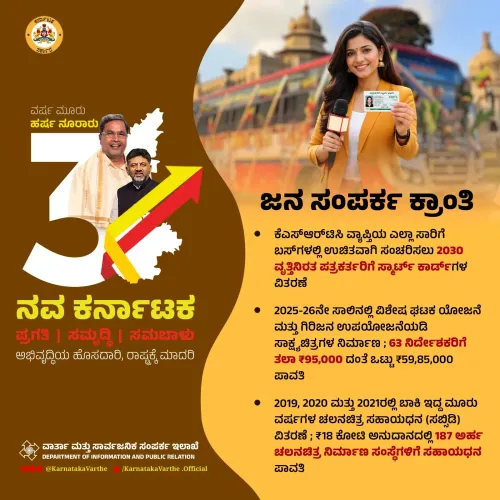
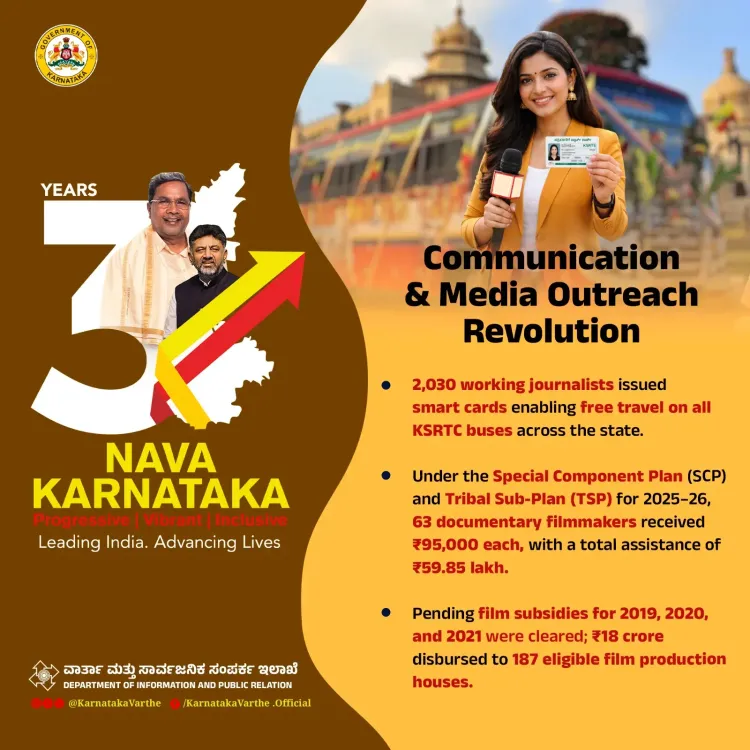
The government introduced free travel for working journalists across Karnataka as part of its media support measures.
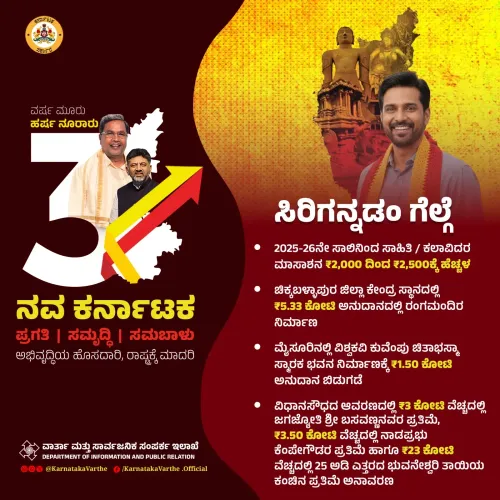
Long-pending film subsidies have been cleared and support extended to documentary filmmakers .
The measures are framed under the #GuaranteeSarkara brand, extending the Congress welfare model to media and cultural workers.
Further expansion of these benefits is expected to feature in upcoming state budget and legislative discussions.
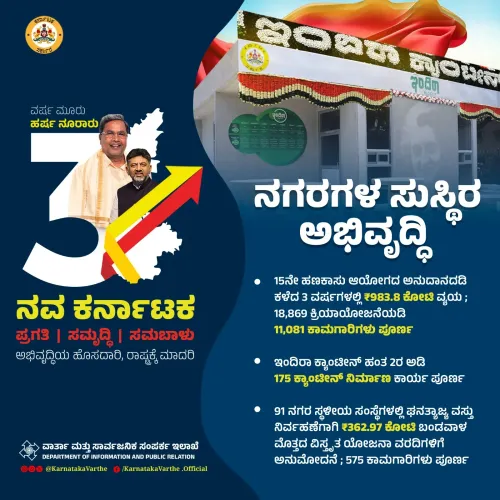
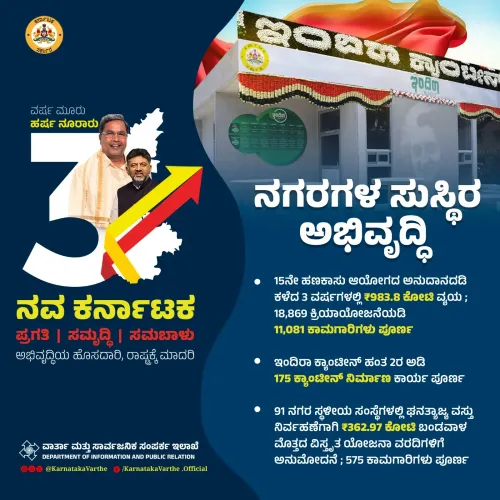
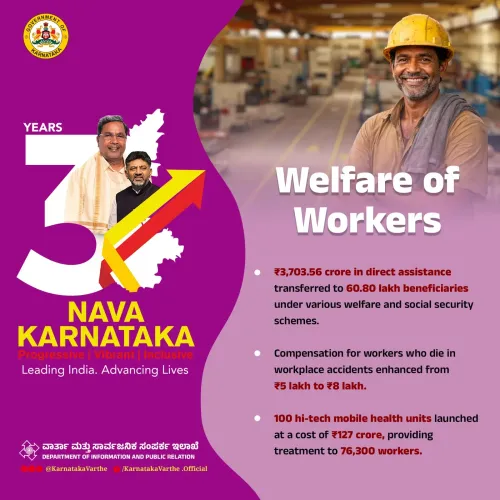
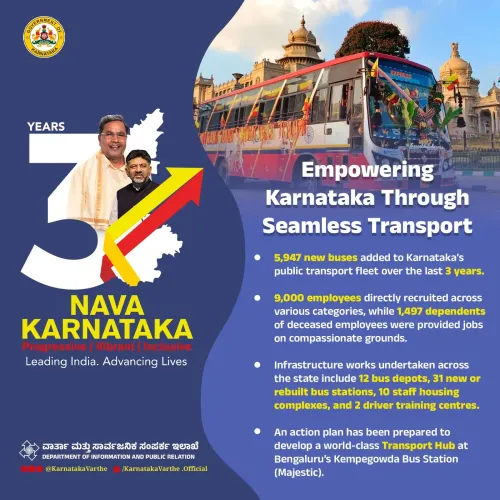
Karnataka Chief Minister Siddaramaiah on Friday, 22 May 2026, highlighted three years of his government's Nava Karnataka agenda, spotlighting measures to support working journalists, documentary filmmakers, and the broader media and creative ecosystem across the state.
Context
In a post on X, Siddaramaiah wrote that the government had focused 'not only on development, but also on empowering voices, storytellers, and the media ecosystem that connects people to governance.' He cited free travel for working journalists across Karnataka, support for documentary filmmakers, and the clearance of long-pending film subsidies as concrete steps taken during the three-year period.
The Chief Minister closed with a pointed democratic argument: 'A vibrant democracy grows stronger when journalists, artists, and creators are supported and heard.' The post was tagged under the hashtags #3YearsOfNavaKarnataka and #GuaranteeSarkara, framing the media measures as part of a wider governance compact.
Policy Backdrop
The Indian National Congress government came to power in Karnataka following the 2023 assembly elections, riding a campaign built around five welfare guarantees. Over subsequent months, sector-specific benefits were added to that framework, including journalist travel support — an extension of the welfare model into the media and cultural workforce.
The Nava Karnataka label has been used by the administration to brand its overall development and social outreach agenda. Clearing long-pending film subsidies addresses a recurring friction point for the state's film industry, where delays in government disbursements have historically disrupted production pipelines for smaller and regional-language filmmakers.
Stakeholders and Impact
The primary beneficiaries identified in the post are working journalists — particularly field reporters and stringers who travel extensively across the state — and documentary and film creators who depend on state subsidies to finance projects. Free travel support reduces a significant operational cost for journalists covering rural and remote Karnataka.
Broader creative-sector workers also stand to benefit from a government posture that treats cultural production as a public good. Karnataka's approach mirrors a wider Indian state-level pattern in which governments across political lines have extended welfare-style benefits to media and cultural workers, partly to improve communication channels between administration and citizens.
What's Next
The announcement arrives as the government enters a period of stock-taking on its guarantee-era promises. Upcoming state budget discussions and legislative sessions are expected to provide a clearer picture of how film subsidy clearances will be scaled and whether the journalist travel benefit will be formalised or expanded further.
The emphasis on media and creative support also signals that the Congress administration intends to keep governance-communication at the centre of its political messaging as it moves into the second half of its term.
Point of View
Using the three-year milestone to foreground benefits that directly affect the people who shape public narratives — journalists and filmmakers. By clearing film subsidies and offering journalist travel support, the Karnataka government is investing in stakeholders who have both practical needs and an outsized ability to amplify or critique state performance. This fits a broader Congress strategy of converting welfare delivery into durable political goodwill ahead of the second half of the term. The framing of media support as a democratic imperative, rather than a political concession, also insulates the policy from charges of co-opting the press.
NationPress
7 Oct 2026
Frequently Asked Questions
What is Nava Karnataka?
Nava Karnataka is the Karnataka state government's umbrella branding for its development and welfare agenda, launched after the Congress party won the 2023 assembly elections on a five-guarantee platform. It covers a range of social, economic, and sector-specific initiatives.
What free travel benefit has Karnataka given to journalists?
The Karnataka government has provided free travel for working journalists across the state as part of its media support measures under the Nava Karnataka agenda, reducing operational costs for reporters covering distant districts.
Has Karnataka cleared film subsidies under Siddaramaiah?
Yes, CM Siddaramaiah stated that the government has cleared long-pending film subsidies as part of its three-year record, addressing a longstanding concern of the state's film industry, particularly smaller and regional-language producers.
Why is the Karnataka government supporting journalists and filmmakers?
The government frames the support as strengthening democratic communication between the administration and citizens. It also fits a wider Indian pattern of state governments extending welfare-style benefits to media and cultural workers to improve public outreach.
When did the Congress government complete three years in Karnataka?
The Congress government in Karnataka, led by CM Siddaramaiah, marked three years in office around May 2026 , having come to power after winning the state assembly elections in 2023 .