Sikh Regiment signs MoU with Guru Nanak Dev University for Agniveer education
Synopsis
The Sikh Regiment has quietly addressed one of the Agniveer scheme's most contested pressure points — post-discharge employability — by partnering with Guru Nanak Dev University to give soldiers a university degree while still in uniform. With 75 per cent of Agniveers returning to civilian life after four years, a recognised BA, BCA, or B.Com could meaningfully change their prospects.
Key Takeaways
The Sikh Regiment signed an MoU with Guru Nanak Dev University (GNDU) , Amritsar , on 18 June .
Agniveers can now pursue diploma programmes (6 months) or undergraduate degrees — BA, BCA, B.Com (3 years) — during active service.
25 per cent of Agniveers are absorbed into regular defence forces; the remaining 75 per cent return to civilian life after four years .
The Ministry of Skill Development and Entrepreneurship formally recognises skills acquired during Agniveer service across all three armed forces.
The partnership is intended to serve as a model for holistic soldier welfare under the Agniveer scheme.
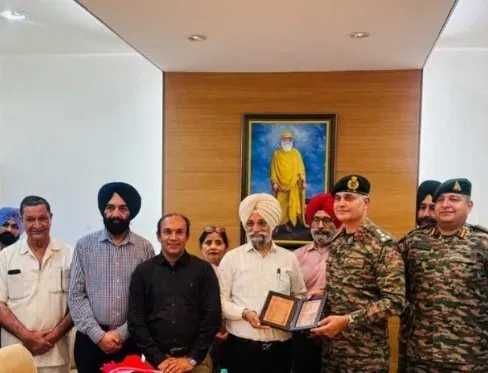
The Sikh Regiment has signed a memorandum of understanding (MoU) with Guru Nanak Dev University (GNDU) in Amritsar, enabling Agniveers to pursue higher education alongside their military service, officials confirmed on Thursday, 18 June. The partnership is designed to strengthen the academic qualifications and long-term career prospects of soldiers serving under the Agniveer scheme.
What the MoU Covers
Under the agreement, Agniveers serving in the Sikh Regiment will gain access to diploma programmes completable within six months, as well as three-year undergraduate degrees including Bachelor of Arts (BA), Bachelor of Computer Applications (BCA), and Bachelor of Commerce (B.Com). These programmes can be pursued concurrently with active military duties, removing the traditional trade-off between service and education.
Why This Matters for Agniveers
The Agniveer scheme, launched by the Centre, enrols youth for a four-year military tenure, at the end of which 25 per cent are absorbed into the regular defence forces. The remaining 75 per cent return to civilian life, making post-service employability a critical policy concern. By pairing military training with recognised university credentials, the Sikh Regiment is directly addressing that transition gap.
Notably, the Union Ministry of Skill Development and Entrepreneurship has already collaborated with all three wings of the armed forces to formally recognise skills acquired during Agniveer service — meaning graduates of this programme could enter the civilian job market with both a university degree and certified vocational credentials.
Broader Policy Alignment
The initiative aligns with the Indian government's stated goal of building a skilled, educated, and future-ready youth workforce. Officials described the collaboration as consistent with the Sikh Regiment's foundational ethos of 'Service Before Self', extending its commitment to soldiers' welfare beyond the duration of active duty.
This is among the more structured civil-military education partnerships to emerge since the Agniveer scheme was rolled out, and could serve as a replicable model for other regiments seeking to address the post-discharge welfare question that has drawn public debate since the scheme's inception.
What Comes Next
Agniveers in the Sikh Regiment are now eligible to enrol in GNDU programmes. The collaboration is expected to enhance both the attractiveness of the Agniveer scheme for prospective recruits and the post-service outcomes for those who complete their four-year tenure.
Point of View
But the real test is whether GNDU's distance or blended-learning delivery can hold up under the demands of active military duty. The Ministry of Skill Development's parallel recognition framework adds institutional weight, but uptake will depend on how rigorously the programmes are implemented — and whether civilian employers actually value the combination. Other regiments will be watching.
NationPress
19 Sept 2026
Frequently Asked Questions
What is the MoU between the Sikh Regiment and Guru Nanak Dev University?
It is an agreement signed on 18 June that allows Agniveers serving in the Sikh Regiment to pursue higher education — including diploma programmes and undergraduate degrees in BA, BCA, and B.Com — alongside their active military duties at Guru Nanak Dev University in Amritsar.
Which degree programmes are available to Agniveers under this MoU?
Agniveers can enrol in six-month diploma programmes or three-year undergraduate degrees: Bachelor of Arts (BA), Bachelor of Computer Applications (BCA), and Bachelor of Commerce (B.Com), all offered by Guru Nanak Dev University.
Why is education access important for Agniveers?
Under the Agniveer scheme, soldiers serve for four years, after which only 25 per cent are retained in the regular defence forces. The remaining 75 per cent re-enter civilian life, making recognised academic qualifications critical for employment prospects after discharge.
How does the government support Agniveers after their service ends?
The Union Ministry of Skill Development and Entrepreneurship has collaborated with all three wings of the armed forces to formally recognise the skills Agniveers acquire during service, giving them certified vocational credentials in addition to any academic qualifications earned.
Does this MoU set a precedent for other regiments?
Officials have framed the Sikh Regiment-GNDU partnership as aligned with the government's broader vision of a skilled, future-ready youth force. It is among the most structured civil-military education tie-ups since the Agniveer scheme launched, and could serve as a model for other regiments.