Sikkim Police receives President's Police Colour in Gangtok ceremony
Synopsis
President Droupadi Murmu handed the Sikkim Police one of India's highest law-enforcement honours in Gangtok — and used the occasion to call out the colonial mindset still embedded in Indian policing, urging forces nationwide to become partners of citizens rather than instruments of control.
Key Takeaways
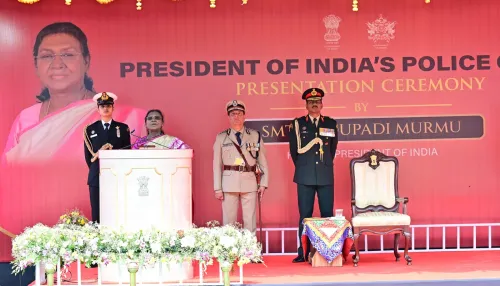
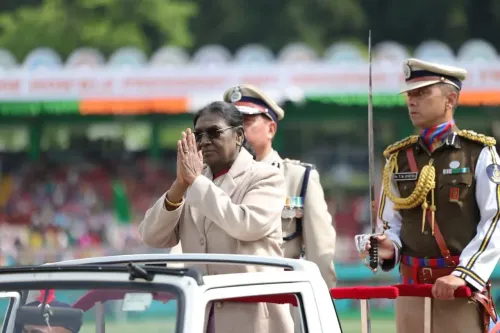
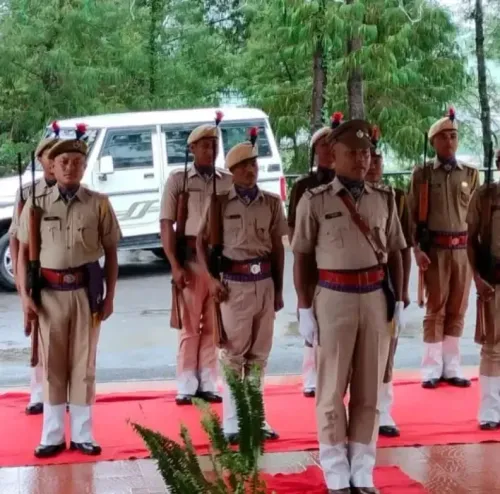
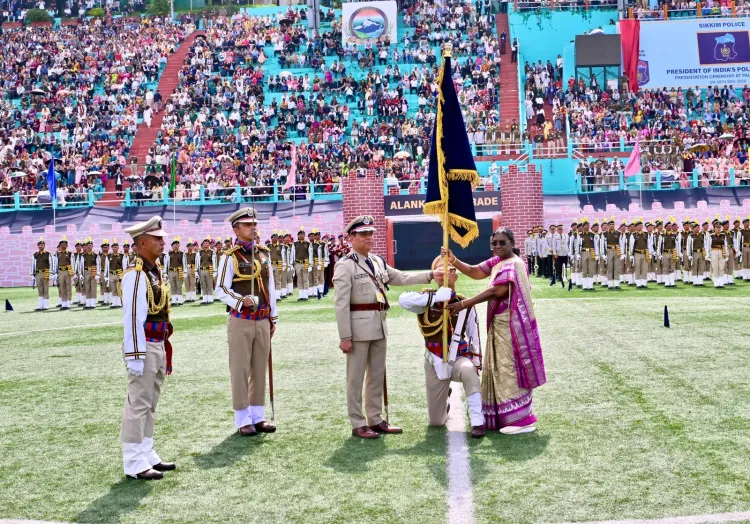
President Droupadi Murmu presented the 'President of India's Police Colour' to the Sikkim Police in Gangtok on 28 May .
The Sikkim Police has been operational since 1897 , and the award recognises its sustained record of peace-keeping and public trust.
President Murmu called for completely shedding the colonial mindset in Indian policing, stressing that forces must serve, not control, citizens.
She emphasised transparency, accountability , and a sensitive approach towards women, children, and vulnerable groups .
Police personnel were urged to become 'partners and guides' for citizens to build lasting public trust.
President Droupadi Murmu on 28 May presented the prestigious 'President of India's Police Colour' to the Sikkim Police at a ceremony in Gangtok, recognising the force's sustained contribution to peace, public harmony, and professional conduct across the state.
Why the Sikkim Police Was Honoured
The award acknowledges the Sikkim Police's consistent record of maintaining peace and security while fostering a cooperative relationship with citizens. Officials noted that the force's professional demeanour and approachable attitude have earned it widespread public trust and affection. The Sikkim Police has been operational since its establishment in 1897, making it one of the older state police forces in the country.
President Murmu's Address to the Force
Congratulating all serving and former officers of the Sikkim Police, President Murmu said she was pleased to note that the force had consistently worked to ensure peace, security, and justice in the state since its founding. She used the occasion to reflect on the broader evolution of policing in India, observing that the country's law enforcement system still carries the imprint of prolonged colonial rule. During that era, she noted, policing was designed to control citizens rather than serve them — a mindset that, she argued, had taken deep root within the system.
President Murmu welcomed the shift in outlook now visible across police forces and stressed that completely shedding this colonial mentality was essential to empowering citizens. 'Only then will the citizens be able to contribute wholeheartedly to the achievement of the goal of Viksit Bharat,' she stated.
Call for Accountability and Citizen-Friendly Policing
The President underlined that transparency and accountability are non-negotiable within the policing system. She called for making the police apparatus more accessible so that ordinary people can register grievances without fear. 'Priority must also be accorded to adopting a sensitive approach towards women, children, and vulnerable sections of society,' she remarked.
She further advised police personnel to evolve as 'partners and guides' for citizens, arguing that only such a relationship would strengthen public trust in law enforcement. She emphasised that the objective of policing must go beyond apprehending criminals to actively building a secure and socially conscious society.
Significance of the President's Police Colour
The President of India's Police Colour is one of the highest honours conferred on a state police force, awarded for distinguished service and exemplary conduct. Its conferment on the Sikkim Police reflects the force's standing as a model of community-oriented law enforcement, particularly notable given the state's sensitive border geography and diverse population.
Point of View
Still unresolved, is a pointed message from the constitutional head of state to every police force in the country. That a President chose this platform to call for structural attitudinal reform, rather than simply praise the awardee, signals how mainstream the critique of India's policing culture has become. The question is whether such ceremonial nudges translate into institutional change, or remain aspirational rhetoric in a system where police reforms have stalled for decades.
NationPress
24 Sept 2026
Frequently Asked Questions
What is the 'President of India's Police Colour' award?
The 'President of India's Police Colour' is one of the highest honours conferred on a state police force in India, awarded for distinguished service, professional conduct, and exemplary public engagement. It was presented to the Sikkim Police by President Droupadi Murmu in Gangtok on 28 May.
Why was the Sikkim Police given this honour?
The Sikkim Police was recognised for its substantial role in upholding peace and harmony in the state, its professional behaviour, and the cooperative attitude of its officers towards the public. The force has served since its establishment in 1897.
What did President Murmu say about colonial-era policing?
President Murmu said India's policing system still bears the imprint of colonial rule, when the primary objective was to control citizens rather than serve them. She called for completely shedding this mindset as a prerequisite for empowering citizens and achieving the goal of Viksit Bharat.
What reforms did President Murmu call for in her address?
She called for greater transparency and accountability within police forces, making the system more citizen-friendly so people can register grievances without fear, and prioritising a sensitive approach towards women, children, and vulnerable sections of society.
How old is the Sikkim Police?
The Sikkim Police was established in 1897, making it over 125 years old. President Murmu acknowledged the force's long history of working to ensure peace, security, and justice in the state.