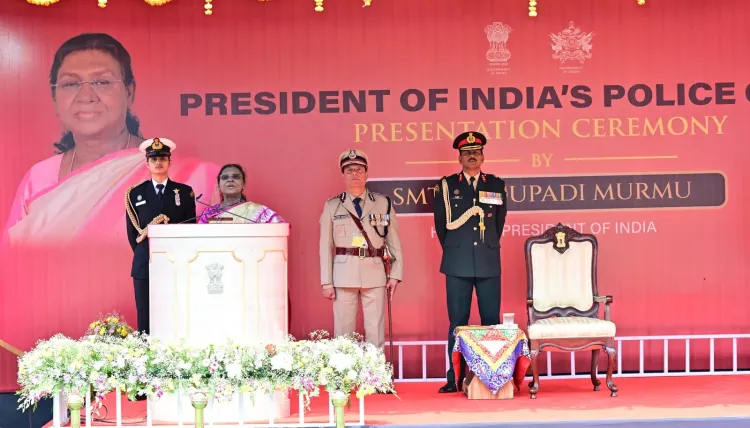
President Murmu presents Police Colour to Sikkim Police, urges citizen-centric policing
Synopsis
President Droupadi Murmu didn't just hand Sikkim Police a ceremonial honour in Gangtok — she used the occasion to demand a reckoning with India's colonial policing legacy. Her call to transform police from controllers into citizen partners, framed within the 'Viksit Bharat' vision, signals that the highest constitutional office is now actively pushing for a cultural overhaul of law enforcement.
Key Takeaways
President Droupadi Murmu presented the 'President of India's Police Colour' to the Sikkim Police in Gangtok on 28 May 2025 .
The Sikkim Police , established in 1897 , was recognised for its long-standing contribution to peace, security and public trust.
President Murmu called for the complete dismantling of India's colonial policing mindset , rooted in control rather than service.
She stressed that police must become citizen partners and guides , with special sensitivity towards women, children and vulnerable groups.
A people-centric policing model was described as essential to achieving the vision of a 'Viksit Bharat' .
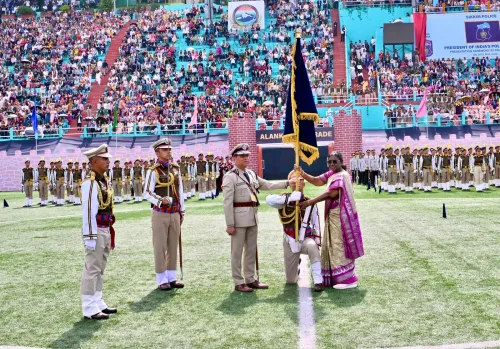
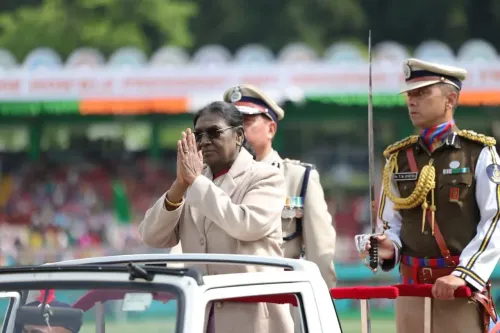
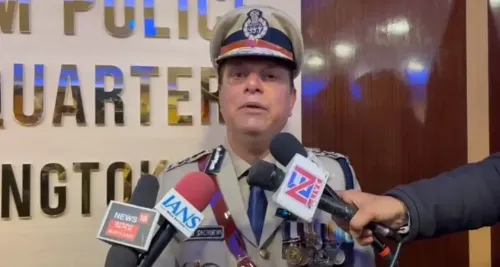
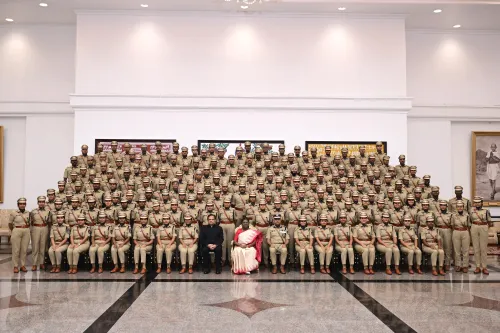
President Droupadi Murmu on Thursday, 28 May presented the 'President of India's Police Colour' — one of the highest honours conferred on a police force in the country — to the Sikkim Police at a ceremonial event in Gangtok, recognising the force's decades-long contribution to peace, security and public trust in the Himalayan state.
The Honour and Its Significance
The President of India's Police Colour is awarded in recognition of exceptional and distinguished service rendered by a police organisation to the nation and society. Addressing officers and personnel at the ceremony, President Murmu congratulated members of the Sikkim Police, both past and present, for earning this distinction. She noted that since its establishment in 1897, the Sikkim Police have consistently worked to uphold justice, maintain communal harmony and ensure the safety of citizens across the state.
Call to Shed Colonial Policing Mindset
President Murmu used the occasion to make a pointed call for transformation in India's policing philosophy. She observed that the country's police system still carries traces of its colonial past, noting that under British rule, policing was largely designed to control people rather than serve them — an orientation that entrenched a top-down, adversarial mindset within the system.
'This outlook must now be completely discarded,' she said, stressing that a fundamental shift is necessary to empower citizens and strengthen democratic values. She underscored that a people-centric policing model is essential to realising the vision of a 'Viksit Bharat' (Developed India).
What the President Said on Citizen-Friendly Policing
Emphasising transparency and accountability, President Murmu said police institutions must become sufficiently citizen-friendly so that ordinary people can approach law enforcement without fear or hesitation. She called for heightened sensitivity in dealings with women, children and other vulnerable sections of society.
'The police must evolve into partners and guides for the citizens,' the President said, adding that stronger public-police cooperation would build trust, improve social security and reinforce respect for the rule of law. She also broadened the scope of policing beyond law enforcement, arguing that the role of the police should extend towards building a secure, socially conscious and harmonious society — not be limited to arresting criminals alone.
Sikkim Police: A Record of People-Friendly Conduct
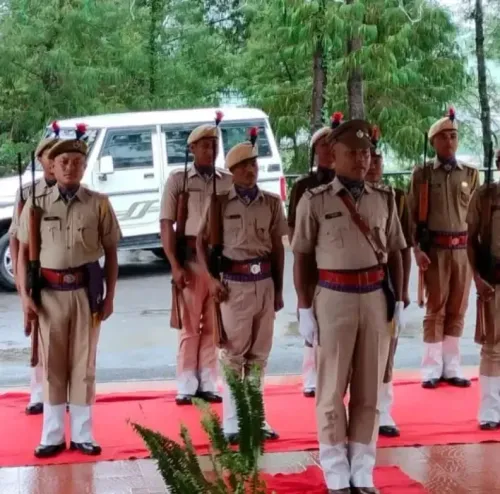
President Murmu specifically praised the Sikkim Police for maintaining peace and communal harmony in the state through professional conduct and a people-friendly approach. She said the force has earned the affection and respect of the people of Sikkim through its dedicated service and commitment to public welfare — qualities that made it a deserving recipient of the honour.
This comes amid a broader national conversation on police reforms, with successive governments and judicial panels having flagged the need to modernise India's policing framework, which continues to operate substantially under the Police Act of 1861 — a colonial-era statute. The Sikkim Police's recognition signals that forces can be acknowledged not merely for operational efficiency but for the quality of their relationship with the communities they serve.
What Comes Next
The ceremony in Gangtok is expected to reinforce momentum for police reform advocacy at the state level. With the President's remarks now on record, pressure on state administrations to adopt citizen-centric policing benchmarks is likely to intensify in the coming months.
Point of View
Including the National Police Commission, have recommended replacing for decades. The President invoking 'Viksit Bharat' in the context of policing reform is a signal that the constitutional executive is connecting development goals with institutional culture change. Whether state governments, which control police under the Seventh Schedule, translate this into structural reform or treat it as rhetoric is the real question mainstream coverage tends to gloss over.
NationPress
24 Sept 2026
Frequently Asked Questions
What is the 'President of India's Police Colour' award?
The 'President of India's Police Colour' is one of the highest honours conferred on a police force in India, awarded in recognition of exceptional and distinguished service to the nation and society. It is presented personally by the President of India at a formal ceremonial parade.
Why was the Sikkim Police given this honour?
The Sikkim Police was recognised for its long-standing contribution to maintaining peace, security and public trust in the Himalayan state since its establishment in 1897. President Murmu specifically praised the force's professional conduct, people-friendly approach and commitment to communal harmony.
What did President Murmu say about colonial policing?
President Murmu said India's police system still carries traces of its colonial past, where policing was designed to control people rather than serve them. She called for this mindset to be completely discarded in order to empower citizens and strengthen democratic values.
How does this relate to the 'Viksit Bharat' vision?
President Murmu stated that a people-centric policing system is essential to achieving the vision of a 'Viksit Bharat' or Developed India. She linked institutional culture change in law enforcement directly to broader national development goals.
What reforms did the President call for in Indian policing?
President Murmu called for greater transparency, accountability and citizen-friendliness in policing, along with special sensitivity towards women, children and vulnerable sections of society. She said the police's role must extend beyond arresting criminals to building a secure, socially conscious and harmonious society.