Sikkim Budget 2026-27: ₹18,455 crore plan targets infrastructure, tourism, healthcare
Synopsis
Sikkim's ₹18,455-crore Budget for 2026-27 is the most ambitious financial plan the Himalayan state has tabled in recent memory — combining a ₹5,896-crore capital push, the state's first government medical college, and a clutch of high-altitude tourism projects, all under the 'Viksit Sikkim @2047' banner. The real test is execution in a state still rebuilding from the 2023 glacial flood.
Key Takeaways
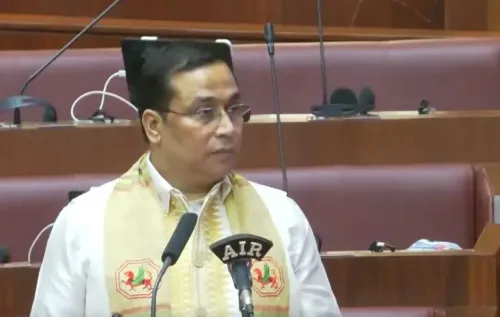
Sikkim CM Prem Singh Tamang presented a ₹18,455-crore Budget for 2026-27 in the state Assembly on 20 July .
State GSDP projected at ₹62,973 crore ; annual growth target set at over 13 per cent . ₹5,896 crore allocated for capital expenditure, including 570 km of climate-resilient roads.
Sikkim's first Government Medical College with 100 MBBS seats to be operationalised; first renal transplant programme also announced.
Education receives nearly 15 per cent of total Budget; Kisan Credit Card crop loan rate cut to 1 per cent for eligible farmers.
Suicide rate declined 15.8 per cent — from 43.1 to 36.3 per lakh population — between 2022 and 2024 .
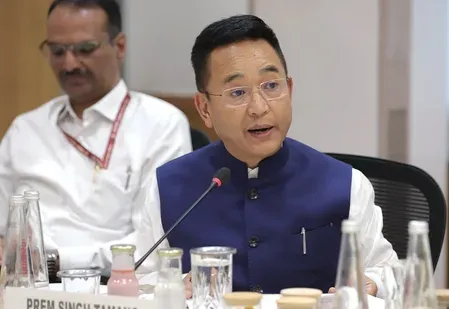
Sikkim Chief Minister Prem Singh Tamang on Monday, 20 July presented the state's ₹18,455-crore Budget for 2026-27 in the state Assembly at Gangtok, outlining an ambitious development agenda built around infrastructure, healthcare, education, sustainable tourism, and fiscal discipline. The Budget projects the state's Gross State Domestic Product (GSDP) at ₹62,973 crore and sets a target of over 13 per cent annual economic growth, anchored to the government's long-term vision of making Sikkim a high-income economy under the 'Viksit Sikkim @2047' initiative.
Capital Expenditure and Infrastructure Push
The single largest feature of the Budget is an allocation of ₹5,896 crore towards capital expenditure, underscoring the government's intent to build durable public assets. Among the headline investments is the construction of nearly 570 km of climate-resilient roads using mastic asphalt technology — a choice suited to Sikkim's challenging mountain terrain and recurring landslide risk.
The Budget also proposes modernisation of the state's electricity distribution network with assistance from the Asian Development Bank (ADB), development of satellite townships around Gangtok, and expansion of urban infrastructure. This comes amid growing pressure on Gangtok's civic systems from rising population density and post-disaster reconstruction needs following the 2023 glacial lake outburst flood.
Tourism and Cultural Projects
Tourism has emerged as a strategic revenue pillar for the Himalayan state. The Budget proposes the Bhaleydunga ropeway and skywalk, the Singshore adventure tourism project, upgraded visitor facilities at Nathula, and several eco-tourism initiatives. Plans have also been announced for a Swarna Jayanti Integrated Sports and Cultural Village and a world-class convention centre to promote MICE tourism (Meetings, Incentives, Conferences and Exhibitions) and destination weddings — a segment gaining traction across Himalayan states.
Healthcare and Education Priorities
Healthcare has been accorded priority status, with the Budget providing for the operationalisation of Sikkim's first Government Medical College with 100 MBBS seats. The government also proposes launching the state's first renal transplant programme, expanding HPV screening for women, and introducing fertility treatment facilities at STNM Hospital.
On public mental health, the government reported that Sikkim's suicide rate has declined by nearly 15.8 per cent — from 43.1 per lakh population in 2022 to 36.3 in 2024 — attributing the improvement to strengthened counselling services and expanded mental health interventions.
Education has been allocated nearly 15 per cent of the total Budget. Legislative reforms relating to private universities, open schooling, and vocational education have been proposed to improve employability and align the education system with future workforce needs.
Agriculture and Fiscal Management
In agriculture, the government announced an additional subsidy that will bring the effective interest rate on Kisan Credit Card crop loans down to one per cent for eligible farmers. The Budget also reaffirmed commitment to reviving large cardamom cultivation through the 'Mero Alaichi, Mero Dhan' mission — a nod to Sikkim's identity as one of India's leading cardamom-producing states.
On fiscal discipline, the government committed to keeping interest-bearing debt at around 32 per cent of GSDP over the medium term. Digital governance measures — including e-budgeting, e-sanctions, e-payments, and Aadhaar-enabled direct benefit transfers — have been proposed to improve transparency and expenditure efficiency.
Ceremony and Context
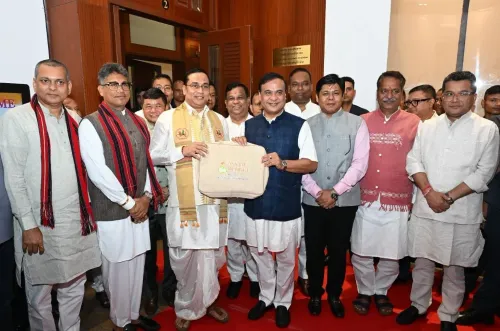
The Budget Session opened with a distinctive gesture: Chief Minister Tamang and his Cabinet attended the Assembly in traditional Lepcha attire, responding to Speaker Mingma Norbu Sherpa's appeal that legislators wear the traditional dress of Sikkim's ethnic communities during the four-day session. The Budget also acknowledges structural challenges — climate change, difficult terrain, limited market connectivity, and the need to attract greater private investment — as headwinds the state must navigate to achieve its 2047 vision.
Point of View
896-crore capital outlay is meaningful on paper, but Sikkim's chronic challenge has been absorbing allocated funds given contractor scarcity and terrain-linked delays. The medical college and renal transplant programme address a genuine gap — residents currently travel to Siliguri or beyond for tertiary care — but staffing a new medical college in a remote Himalayan state is a multi-year problem that the Budget does not yet resolve. The 'Viksit Sikkim @2047' framing mirrors the Centre's own Viksit Bharat language, which is politically astute but also sets a high accountability bar.
NationPress
20 Oct 2026
Frequently Asked Questions
What is the total size of Sikkim's Budget 2026-27?
Sikkim's Budget for 2026-27 totals ₹18,455 crore, presented by Chief Minister Prem Singh Tamang on 20 July. It projects the state's GSDP at ₹62,973 crore and targets annual economic growth of over 13 per cent.
What is the 'Viksit Sikkim @2047' initiative?
It is the Sikkim government's long-term vision to transform the Himalayan state into a high-income economy by 2047. The 2026-27 Budget is framed as a key step in that roadmap, with emphasis on infrastructure, healthcare, education, and sustainable tourism.
What are the major healthcare announcements in Sikkim Budget 2026-27?
The Budget provides for operationalising Sikkim's first Government Medical College with 100 MBBS seats and launching the state's first renal transplant programme. It also expands HPV screening for women and introduces fertility treatment facilities at STNM Hospital.
How much has Sikkim allocated for capital expenditure?
The Budget allocates ₹5,896 crore for capital expenditure — the largest single allocation — focused on building long-term public assets including 570 km of climate-resilient roads and modernisation of the electricity distribution network.
What tourism projects are proposed in the Sikkim Budget 2026-27?
Key tourism proposals include the Bhaleydunga ropeway and skywalk, the Singshore adventure tourism project, upgraded infrastructure at Nathula, and a world-class convention centre for MICE tourism and destination weddings. Several eco-tourism initiatives are also planned.