Sikkim Budget 2026-27: BJP welcomes ₹18,455 crore plan, flags revenue gaps
Synopsis
BJP's Sikkim unit gave a qualified endorsement to the state's ₹18,455 crore Budget — applauding farmer relief, housing, and road spending, but drawing a clear line on what's missing: a credible plan for revenue generation, rural employment, and fiscal independence from Central borrowings.
Key Takeaways
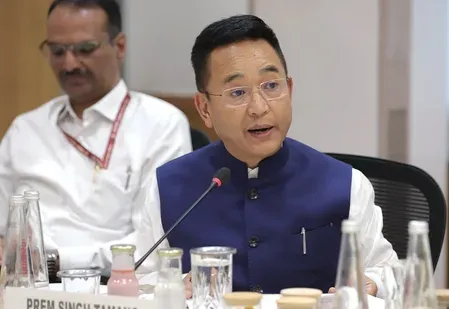
BJP-Sikkim welcomed the ₹18,455 crore Budget 2026-27 presented by Chief Minister Prem Singh Tamang on 23 July .
Capital expenditure set at ₹5,896 crore ; revenue expenditure at ₹11,733 crore . ₹546 crore allocated for weather-proof road carpeting; ₹362 crore for road repairs.
Farmers repaying Kisan Credit Card loans on time will pay only one per cent interest under the State Interest Subvention Scheme.
197 houses to be built under the Sikkim Garib Awas Yojana .
BJP flagged gaps in youth employment, dairy farming, tourism diversification, and fiscal self-reliance.
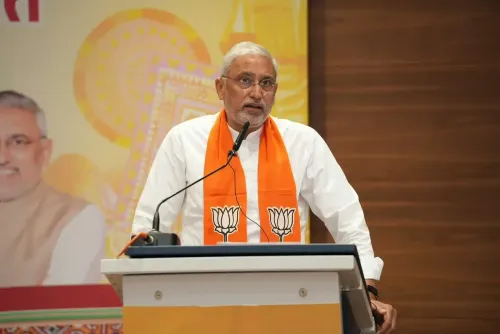
The Bharatiya Janata Party (BJP)'s Sikkim unit on Monday, 27 July welcomed the state government's ₹18,455 crore Budget for 2026-27, calling it development-oriented, while pressing the ruling administration to prioritise revenue generation, timely project execution, and youth employment. The Budget was presented on 23 July by Chief Minister Prem Singh Tamang.
Key Allocations BJP Acknowledged
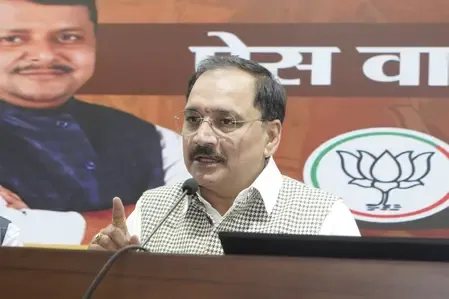
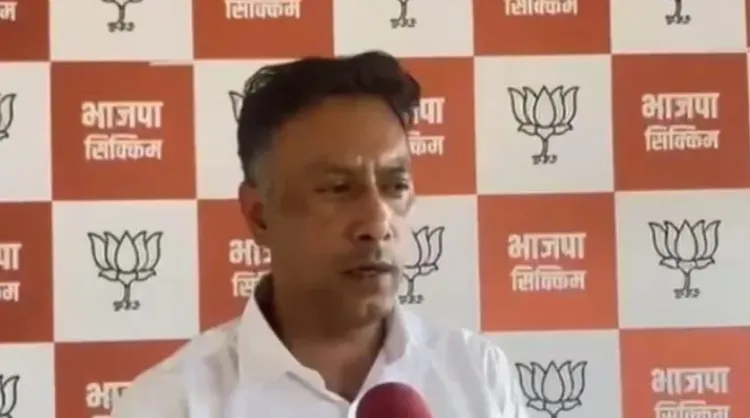
BJP-Sikkim spokesperson Passang Sherpa welcomed the allocation of ₹5,896 crore for capital expenditure and ₹11,733 crore for revenue expenditure, saying infrastructure investments would support Sikkim's long-term growth. He also appreciated the earmarking of ₹546 crore for weather-proof road carpeting using mastic asphalt technology and ₹362 crore for road repairs.
Sherpa, however, suggested that road improvement works should prioritise remote villages over tourism destinations first, to ensure balanced rural connectivity rather than concentrating development in high-visibility areas.
Relief for Farmers and Housing
The BJP leader welcomed the State Interest Subvention Scheme for farmers, under which beneficiaries repaying Kisan Credit Card crop loans on time will be charged only one per cent interest. Under the arrangement, three per cent of the interest burden is absorbed by the Centre and another three per cent by the state government.
Sherpa also appreciated the proposal to establish an Assisted Reproductive Technology Centre at STNM Hospital, describing it as a timely response to concerns raised by the Comptroller and Auditor General (CAG) over Sikkim's declining fertility rate. The announcement to construct 197 houses under the Sikkim Garib Awas Yojana was similarly welcomed.
Gaps in Employment and Fiscal Self-Reliance
Despite acknowledging several positives, Sherpa said the Budget fell short on youth employment and skill development. While he described the Sikkim INSPIRES programme as a positive step, he argued that additional financial support was needed to create meaningful job opportunities and build a stronger skilled workforce.
He also flagged what he called inadequate allocations for dairy farming and tourism diversification — sectors he said held significant potential for rural employment and economic growth.
Calling for greater fiscal self-reliance, Sherpa said Sikkim's long-term financial stability depended on building its own revenue streams rather than leaning heavily on borrowings and Central assistance. He urged the state to pursue implementation of provisions under the Companies Act of 1961 and 2013 in consultation with the Centre, and pointed to the State Bank of Sikkim as an underutilised instrument for strengthening state finances.
Execution and Timing Under Scrutiny
Sherpa cautioned that timely project execution and submission of utilisation certificates were critical for securing continued Central funding, warning that delays could result in funds being redirected to other states. Notably, the Budget was presented later than usual this year, and Sherpa said effective implementation within the remaining months of the financial year would be the real test of the government's intent.
Point of View
Target the fundamentals. The fiscal concern is legitimate: Sikkim's heavy dependence on Central transfers and borrowings is a structural vulnerability, and a ₹18,455 crore budget that does not meaningfully address own-revenue growth only deepens that exposure. The late Budget presentation, flagged by Sherpa, is also a quiet accountability signal — delayed budgets compress implementation windows and raise the risk of underspending on capital projects, which is precisely where Sikkim needs to deliver. Whether the ruling Sikkim Krantikari Morcha engages with these critiques or dismisses them as political posturing will say much about the state's fiscal seriousness.
NationPress
25 Oct 2026
Frequently Asked Questions
What is Sikkim's Budget size for 2026-27?
The Sikkim state government presented a Budget of ₹18,455 crore for 2026-27 on 23 July , with ₹5,896 crore allocated for capital expenditure and ₹11,733 crore for revenue expenditure.
What is the State Interest Subvention Scheme for Sikkim farmers?
Under this scheme, farmers who repay their Kisan Credit Card crop loans on time are required to pay only one per cent interest. The remaining burden is shared equally — three per cent by the Centre and three per cent by the state government.
Why did BJP criticise parts of the Sikkim Budget?
While welcoming several measures, BJP-Sikkim spokesperson Passang Sherpa said the Budget did not allocate sufficient resources for youth employment, skill development, dairy farming, and tourism diversification. He also urged the state to reduce its dependence on borrowings and Central assistance by building its own revenue sources.
What is the Sikkim Garib Awas Yojana announcement in the Budget?
The Budget announced the construction of 197 houses under the Sikkim Garib Awas Yojana, a housing scheme for economically weaker sections. BJP welcomed this allocation.
Who presented the Sikkim Budget 2026-27?
The Budget was presented by Chief Minister Prem Singh Tamang on 23 July 2025 , later than the usual schedule, according to BJP's Sikkim spokesperson.