TS Singh Deo: BJP distorts Hindutva; yatra can change power
Synopsis
At Niwari, former Chhattisgarh Deputy CM TS Singh Deo recast Digvijaya Singh’s temple-to-temple march as a power-change vehicle, accusing the BJP of distorted Hindutva, institutional capture and irregularities in Ram Temple donations, and tying it to the drop from 300-plus seats in 2019 to 240 in 2024.
Key Takeaways
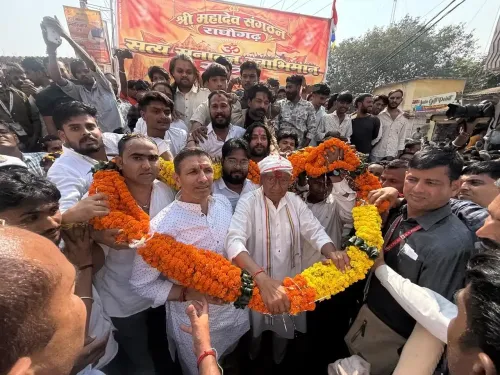
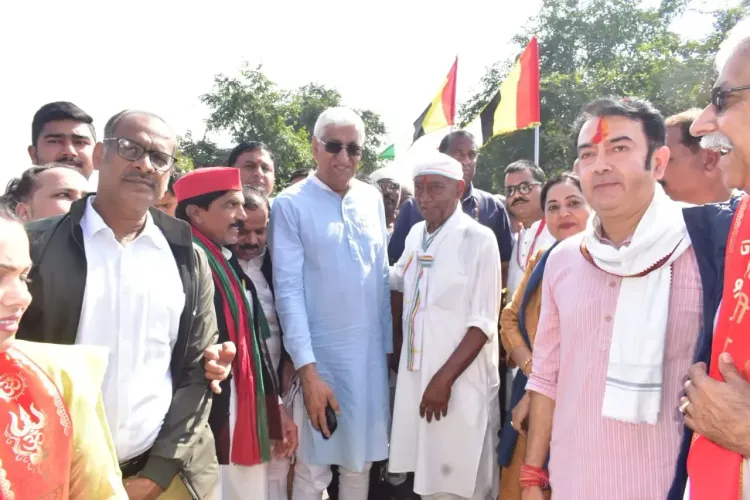
Former Chhattisgarh Deputy Chief Minister TS Singh Deo spoke on the Satya Sanatan Swabhiman Yatra in Niwari , Madhya Pradesh, on Wednesday .
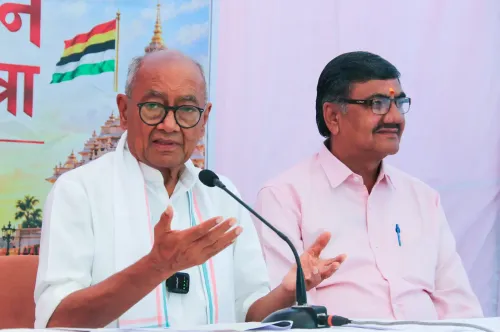
He said the yatra led by Congress leader Digvijaya Singh could bring a change in power.
He alleged BJP control over the ED , Income Tax Department, CBI and Election Commission to influence elections.
He claimed 92 to 93 per cent of voters who approached tribunals after roll deletions in West Bengal were found genuine.
He alleged irregularities in Ram Temple Trust donations in Ayodhya and said the BJP is promoting a distorted form of Hindutva.
The yatra began at Shri Mahakaleshwar Temple in Ujjain on 20 October and will cover about 930 km to Ayodhya.
Former Chhattisgarh Deputy Chief Minister TS Singh Deo on Wednesday accused the Bharatiya Janata Party (BJP) of weakening democratic institutions and using religion for political gains, saying the Satya Sanatan Swabhiman Yatra led by senior Indian National Congress (Congress) leader Digvijaya Singh could bring a change in power. He made the remarks while participating in the yatra in Niwari district of Madhya Pradesh. Singh Deo said the contest was not about the Congress or the BJP but about protecting democratic values.
Key remarks in Niwari
Singh Deo alleged that the BJP had taken control of institutions such as the Enforcement Directorate (ED), the Income Tax Department, the Central Bureau of Investigation (CBI) and the Election Commission of India to influence elections. He argued that some leaders who enter office through democratic processes then try to hold those same institutions in order to remain in power.
“Some people come to power through democratic processes but do not want to leave it. They are trying to take control of democratic institutions and weaken the country's basic values to remain in power,” he said.
The intervention puts a former Deputy Chief Minister of Chhattisgarh on a Madhya Pradesh stage of a march that is religious in its stops and political in its claim. This comes amid a Congress effort to contest the BJP on faith, institutions and temple administration rather than leave that ground unchallenged.
Voter rolls and the Election Commission
Questioning the Election Commission’s role, Singh Deo referred to the deletion of lakhs of names from electoral rolls in West Bengal. He claimed that 92 to 93 per cent of those who approached tribunals were found to be genuine voters and alleged that many people had been deprived of their voting rights.
Notably, he presented those deletions as a democratic problem rather than a narrow state grievance. The figures he cited relate to people who reached tribunals; in Niwari he did not set out a nationwide audit of rolls. The charge adds the poll body to a list that already included investigative agencies, widening the Opposition’s institutional-capture argument.
Ram Temple donations and the Hindutva charge
Singh Deo also accused the BJP of using Lord Ram’s name for political gains and raised allegations of irregularities in donations received by the Ram Temple Trust in Ayodhya. He claimed that the State Bank of India had raised questions over arrangements for counting currency notes, and that a chartered accountant had also flagged concerns.
He further alleged that the BJP wanted to take control of temple trusts across the country and misuse their funds. “The BJP is promoting a distorted form of Hindutva instead of following the basic values of Hinduism. Devotees donated money for the Ram Temple with faith, but allegations of misappropriation have surfaced,” he told a gathering.
Those remain allegations as stated by Singh Deo. By linking Lord Ram, temple accounting and Hindutva in one speech, he sought to separate popular devotion from what he described as partisan control of religious institutions.
2014 to 2024: the electoral backdrop
Referring to the BJP’s electoral performance, Singh Deo said the party had won a clear majority in 2014 and more than 300 Lok Sabha seats in 2019, but was restricted to 240 seats in the 2024 elections despite its ‘400 paar’ slogan. He used that drop to argue that the ruling party’s hold is not unassailable and that a campaign on democracy and temple-trust transparency could add to the pressure.
He appreciated Digvijaya Singh for starting the yatra and said it would create awareness about democratic values, religious harmony and transparency in the management of religious institutions. The political bet is that a temple-to-temple route can carry an institutional and financial critique into BJP strongholds.
Yatra route and what comes next
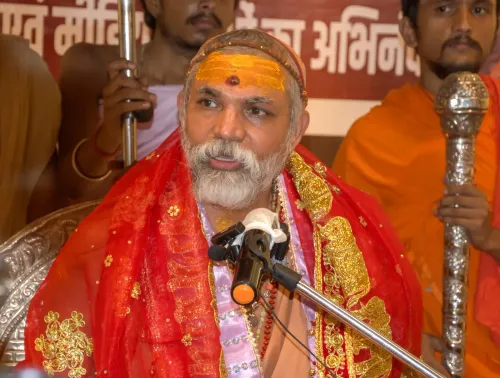
The yatra started from the Shri Mahakaleshwar Temple in Ujjain on 20 October, on Vijayadashami, and will cover around 930 km before reaching the Shri Ram Janmabhoomi Temple in Ayodhya. It is passing through various districts of Madhya Pradesh and Uttar Pradesh, with residents, social organisations, saints and devotees joining at different places.
Niwari is one stop on the Madhya Pradesh leg. The procession’s sharper test lies on the Uttar Pradesh stretch and at Ayodhya, where claims on donations and temple trusts will meet the BJP’s core religious-political symbolism. Whether the Satya Sanatan Swabhiman Yatra can bring a change in power, as Singh Deo asserted, will be measured less by crowds at temple gates than by whether those themes travel into the next round of elections.
Point of View
Hindutva and Ayodhya — instead of leaving that ground uncontested. The institutional-capture list covering the ED, CBI, Income Tax and the Election Commission is a stock Opposition charge; stitching it to Ram Temple donation accounting is the sharper, and riskier, move, because it asks devotees to see partisan misuse where the BJP sees civilisational repair. The 240-seat result in 2024 showed a ceiling; it did not by itself create a Congress alternative in the Hindi heartland. A 930-km yatra can set a narrative, but without a forensic paper trail on the trust funds he flagged, the distorted-Hindutva line may remain a slogan looking for evidence.
NationPress
25 Nov 2026
Frequently Asked Questions
What did TS Singh Deo say at the Niwari yatra?
Former Chhattisgarh Deputy Chief Minister TS Singh Deo accused the BJP of weakening democratic institutions and promoting a distorted form of Hindutva, and said Digvijaya Singh’s Satya Sanatan Swabhiman Yatra could bring a change in power. He spoke while joining the yatra in Niwari district of Madhya Pradesh.
What is the Satya Sanatan Swabhiman Yatra?
It is a Congress-linked march led by senior leader Digvijaya Singh that began at the Shri Mahakaleshwar Temple in Ujjain on 20 October, on Vijayadashami. It is to cover about 930 km through Madhya Pradesh and Uttar Pradesh before ending at the Shri Ram Janmabhoomi Temple in Ayodhya.
What did Singh Deo allege about the Ram Temple Trust?
Singh Deo alleged irregularities in donations received by the Ram Temple Trust in Ayodhya and claimed the State Bank of India had raised questions over arrangements for counting currency notes, with a chartered accountant also flagging concerns. He further alleged the BJP wanted control of temple trusts nationwide and was misusing the Hindu faith for political gain.
Why did Singh Deo criticise the Election Commission?
He pointed to the deletion of lakhs of names from electoral rolls in West Bengal and claimed that 92 to 93 per cent of those who approached tribunals were found to be genuine voters. He alleged that many people had been deprived of their voting rights and grouped the poll body with other agencies he said were being used to influence elections.
How did Singh Deo use the 2024 Lok Sabha results?
He said the BJP won a clear majority in 2014 and more than 300 Lok Sabha seats in 2019, but was restricted to 240 seats in 2024 despite its ‘400 paar’ slogan. He treated that drop as proof that the ruling party’s hold can be challenged and tied it to the yatra’s pitch on democracy and religious institutions.