Sitharaman backs India toy sector with trade deals, key schemes
Synopsis
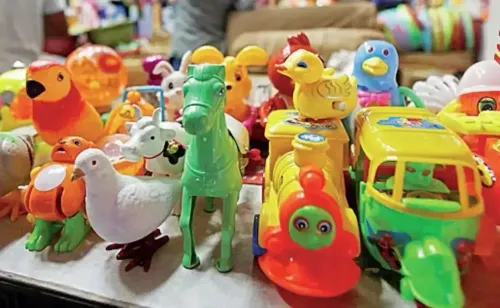
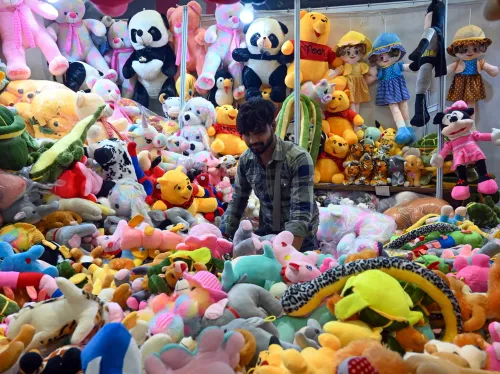
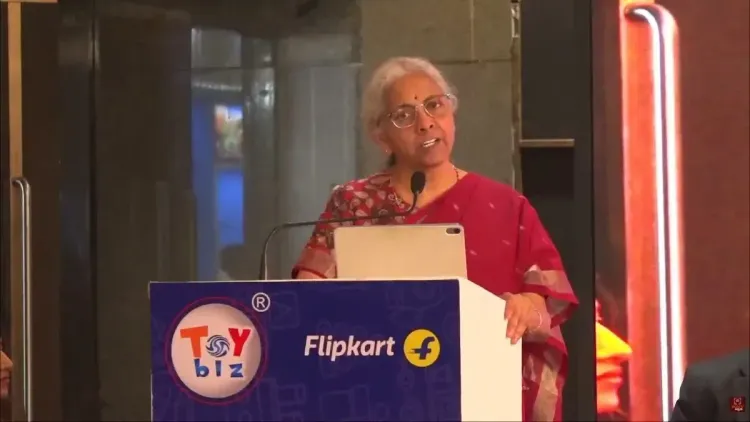
Finance Minister Nirmala Sitharaman, addressing the Toy Association of India in New Delhi on 7 July 2026, laid out India's strategy to build a globally competitive toy manufacturing sector through trade agreements with UAE and Australia and schemes including PM MUDRA, RoDTEP, and SFURTI.
Key Takeaways
Finance Minister Nirmala Sitharaman addressed the Toy Association of India event in New Delhi on 7 July 2026 .
She cited trade agreements with UAE (signed February 2022 ) and Australia (signed April 2022 ) as market-access enablers for Indian toy exporters.
PM MUDRA (micro-credit since 2015), RoDTEP (export duty remission since January 2021), and SFURTI (cluster development) were named as core support schemes.
The government's approach integrates quality standards, skilling, cluster infrastructure, and bilateral trade deals under the Atmanirbhar Bharat framework.
Toy manufacturing is being positioned as a test case for India's shift from import dependence to competitive exports in labour-intensive sectors.
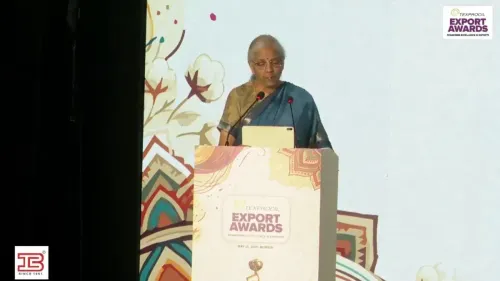
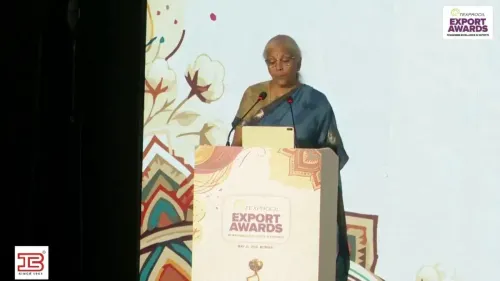
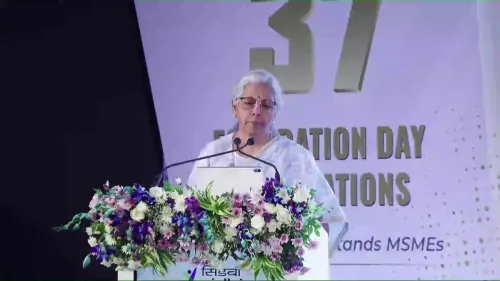
Union Finance Minister Nirmala Sitharaman on Tuesday, 7 July 2026, addressed an event organised by the Toy Association of India in New Delhi, outlining the government's multi-pronged strategy to transform India into a globally competitive toy manufacturing hub under the leadership of Prime Minister Narendra Modi.
Context
Speaking at the industry gathering, Sitharaman highlighted that India is pursuing a comprehensive approach combining 'higher quality standards, policy support, cluster development, skilling and market access' to build a world-class toy manufacturing ecosystem. She specifically cited bilateral trade agreements with the UAE and Australia as critical enablers for Indian toy exporters seeking to access new markets.
The minister also named three central government schemes — PM MUDRA, Remission of Duties and Taxes on Exported Products (RoDTEP), and SFURTI — as instruments empowering manufacturers to 'scale, export and compete globally.'
Policy Backdrop
The policy architecture Sitharaman referenced has been assembled over the past decade. The Make in India initiative, launched in 2014, first positioned domestic manufacturing as a national priority, with toys later identified as a sector where India could shift from import dependence to export competitiveness under the broader Atmanirbhar Bharat framework.
On the trade access side, the India-UAE Comprehensive Economic Partnership Agreement, signed in February 2022, and the India-Australia Economic Cooperation and Trade Agreement, signed in April 2022, opened tariff-reduced pathways for Indian manufactured goods. The RoDTEP scheme, introduced in January 2021 to replace the earlier Merchandise Exports from India Scheme (MEIS), remits embedded duties and taxes to sharpen export price competitiveness. PM MUDRA, operational since 2015, channels micro-credit to small and micro enterprises, while SFURTI targets cluster-level regeneration of traditional industries to enable scale.
Toy manufacturing has been explicitly positioned as a test case for this integrated model — one that links quality upgrades, skilling pipelines, cluster infrastructure, and market-access diplomacy into a single export-push strategy.
Stakeholders and Impact
The primary beneficiaries of the policy stack are MSME toy manufacturers and small exporters, who have historically struggled to compete against lower-cost imports, particularly from China. Access to MUDRA credit addresses working-capital constraints, RoDTEP reduces effective export costs, and SFURTI cluster support helps artisan-based and small-scale units modernise production.
Trade agreements with the UAE and Australia provide preferential market access that large-scale exporters can leverage once domestic capacity and quality standards are raised. The skilling emphasis signals a recognition that labour quality, not just price, will determine long-term competitiveness in global toy supply chains.
What's Next
Analysts and industry observers will watch upcoming RoDTEP benefit data for the toys category to assess whether export volumes are responding to the policy push. Any new cluster approvals under SFURTI in forthcoming trade policy reviews or Union Budgets will indicate whether the government is scaling its cluster-development commitment. As India deepens its free trade agreement network, the toy sector's performance could serve as a benchmark for how similar labour-intensive industries are integrated into the country's broader export diversification agenda.
Point of View
MUDRA, SFURTI) and bilateral trade deals into a coherent export-push narrative for a sector long overshadowed by Chinese imports. The choice of the toy industry as a showcase reflects the government's broader Atmanirbhar Bharat playbook: identify import-heavy, labour-intensive sectors and apply a layered combination of trade diplomacy, credit access, and cluster support. Whether the policy stack translates into sustained export growth will depend on how effectively quality upgrades and skilling programmes are implemented at the MSME level. The minister's remarks also signal that bilateral trade agreements signed in 2022 are now being actively marketed to domestic industry as commercial opportunities rather than diplomatic achievements.
NationPress
7 Jul 2026
Frequently Asked Questions
What did Nirmala Sitharaman say about India's toy industry?
Sitharaman said India is building a globally competitive toy manufacturing ecosystem through higher quality standards, policy support, cluster development, skilling and market access, citing trade agreements with UAE and Australia and schemes like PM MUDRA, RoDTEP and SFURTI.
How does RoDTEP help Indian toy exporters?
RoDTEP, introduced in January 2021, remits embedded duties and taxes on exported products, effectively lowering the cost of Indian goods in international markets and improving price competitiveness for toy exporters.
What is SFURTI and how does it support toy manufacturers?
SFURTI is a government scheme focused on cluster development and regeneration of traditional industries. It helps small and artisan-based toy manufacturers modernise production facilities and scale output through shared infrastructure and support.
Which trade agreements is India using to boost toy exports?
India is leveraging the Comprehensive Economic Partnership Agreement with the UAE, signed in February 2022, and the Economic Cooperation and Trade Agreement with Australia, signed in April 2022, to secure preferential market access for toy exporters.
What is PM MUDRA and who does it benefit in the toy sector?
PM MUDRA, launched in 2015, provides micro-credit to small and micro enterprises. In the toy sector it helps small manufacturers access working capital needed to scale production and meet export orders.