HP CMO Invokes Lord Ram's Ideals, Ramayana Tradition
Synopsis
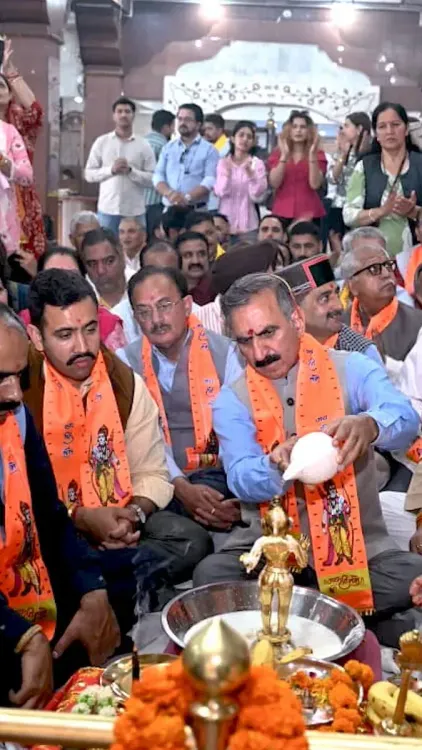
The Chief Minister's Office of Himachal Pradesh on 7 July 2026 posted a Hindi message honouring Lord Shri Ram and the Ramayana, describing how generations of Indian families have drawn moral inspiration from his ideals and household recitations of the epic.
Key Takeaways
The Chief Minister's Office of Himachal Pradesh posted a cultural message on 7 July 2026 honouring Lord Shri Ram .
The post states that 'many generations' have drawn inspiration from Lord Ram's sacred name and ideals.
It highlights the household tradition of listening to Ram's stories from ancestors and reciting the Ramayana as a family.
The concept of maryada — Lord Ram's principled, dignified conduct — is specifically cited as a value to be internalised.
The message follows a broader national pattern of official cultural statements intensified since the Ram Mandir consecration in Ayodhya on 22 January 2024 .
State-level cultural programmes in Himachal Pradesh tied to upcoming Hindu festivals in 2026-27 may build on these themes.
The Chief Minister's Office of Himachal Pradesh posted a message on 7 July 2026 invoking the enduring spiritual and cultural legacy of Lord Shri Ram, reflecting on how generations of Indian families have drawn inspiration from his life and the recitation of the Ramayana.
Context
The post, written in Hindi, states: 'Hamari anek peedhiyan Prabhu Shri Ram ke pavan naam aur unke aadarsho se prerana lete hue aage badhi hain' — 'Many of our generations have moved forward drawing inspiration from the sacred name of Lord Shri Ram and his ideals.' It further notes that from childhood, families have listened to the stories of Shri Ram passed down by their ancestors, and have internalised his maryada (principled, dignified conduct) through collective recitations of the Ramayana at home.
The message underscores an intimate, household-level relationship with the epic — not merely a public or religious one — framing the Ramayana as a living tradition transmitted across generations within the family.
Policy Backdrop
State governments across India have periodically issued statements invoking the Ramayana to highlight shared civilisational values, a practice that has grown more prominent since the mid-2010s as official emphasis on cultural heritage and traditional epics has intensified. Chief ministers' offices frequently align such messages with major Hindu festivals or national commemorations to reinforce the continuity of these narratives.
The consecration of the Ram Mandir in Ayodhya on 22 January 2024 marked a significant moment in this cultural emphasis, accompanied by nationwide Ramayana recitations and official messages from governments at both the central and state levels highlighting the epic's moral ideals. The Himachal Pradesh CMO's post sits within this broader pattern of official cultural affirmation.
Stakeholders and Impact
Hindu families and devotees in Himachal Pradesh — and more broadly across India — form the primary audience for such messaging. The Ramayana occupies a central place in household religious practice across the state, where recitations during festivals and family gatherings are a long-standing tradition.
By invoking the concept of maryada — the code of righteous, bounded conduct embodied by Lord Ram — the CMO's message connects personal and familial values to a wider civilisational identity. This framing positions the state government as a custodian of cultural continuity rather than a purely administrative authority.
What's Next
State-level cultural programmes and temple-related events in Himachal Pradesh tied to major Hindu festivals in 2026-27 are worth watching for further elaboration of these themes in official policy or public events. Such messaging often precedes or accompanies announcements of cultural grants, heritage conservation initiatives, or state-sponsored Ramayana recitation programmes. The government's sustained invocation of Lord Ram's ideals signals that cultural heritage will remain a visible strand of its public communication in the months ahead.
Point of View
Familial framing avoids overt political signalling while still anchoring the government's public identity to Hindu cultural heritage. It reflects a wider trend of chief ministers' offices positioning the state as a guardian of living tradition, not just a provider of services.
NationPress
7 Jul 2026
Frequently Asked Questions
What did the Himachal Pradesh CMO post about Lord Ram?
The Himachal Pradesh CMO posted a Hindi message on 7 July 2026 stating that many generations have drawn inspiration from Lord Shri Ram's sacred name and ideals, and that families have internalised his values through Ramayana recitations at home.
Why is the Ramayana significant in Indian household tradition?
The Ramayana is a Sanskrit epic traditionally recited in Indian households to transmit values of duty, family and ethical living from one generation to the next. It is considered a living tradition, not merely a religious text.
What does 'maryada' mean in the context of Lord Ram?
'Maryada' refers to Lord Ram's principled and dignified conduct — his adherence to righteous boundaries in every role, as son, husband, king and warrior. It is one of the most cited ideals drawn from the Ramayana.
How does this post relate to the Ram Mandir consecration in Ayodhya?
The Ram Mandir in Ayodhya was consecrated on 22 January 2024, triggering a wave of official cultural statements from governments across India. The HP CMO's July 2026 post continues this broader pattern of official affirmation of Lord Ram's cultural legacy.
What cultural events might follow this statement in Himachal Pradesh?
State-level cultural programmes, heritage conservation initiatives, or government-sponsored Ramayana recitation events tied to major Hindu festivals in 2026-27 are possibilities to watch, as such messaging often precedes related official activities.