CM Pema Khandu Raises Remote Flood Victims' Plight Before IMCT
Synopsis
Arunachal Pradesh CM Pema Khandu met the Centre's Inter-Ministerial Central Team on 7 July 2026, pushing for remote flood-devastated villages — often invisible due to difficult terrain — to be fully counted in the official damage assessment and subsequent relief allocation.
Key Takeaways
CM Pema Khandu met the Inter-Ministerial Central Team (IMCT) on 7 July 2026 to discuss flood damage assessment in Arunachal Pradesh .
The IMCT is led by Joint Secretary Ms.
Nishtha Tiwari and is mandated under the Disaster Management Act, 2005 to evaluate disaster damage for central funding.
Remote areas of Arunachal Pradesh face chronic under-reporting of flood damage due to difficult terrain and poor connectivity.
CM Khandu intervened to ensure hard-to-reach villages are included in the official damage memorandum submitted to the Centre.
The IMCT report will determine financial assistance released from the National Disaster Response Fund (NDRF) to the state.
The Chief Minister pledged that 'every affected village, however remote, receives equal attention and support.'
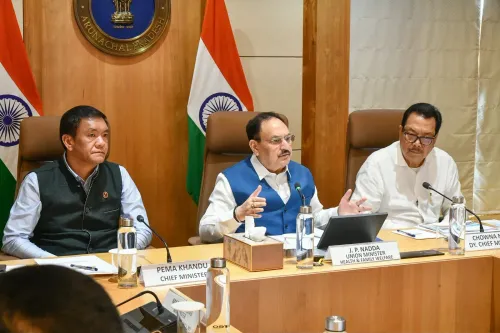
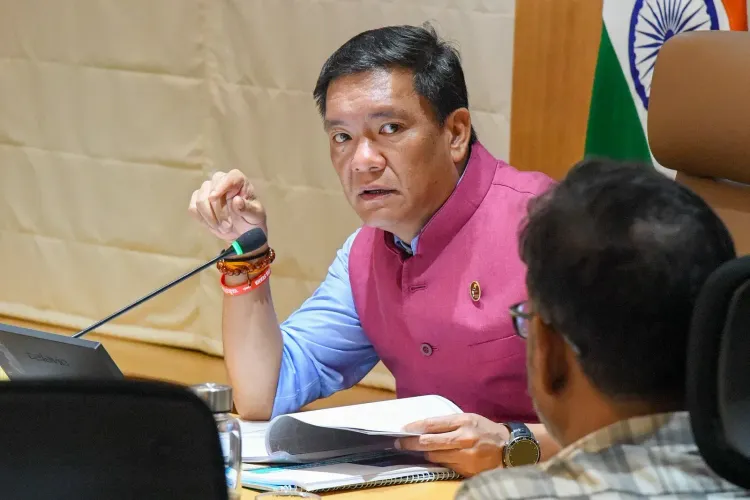
Arunachal Pradesh Chief Minister Pema Khandu on Tuesday, 7 July 2026, met with the Inter-Ministerial Central Team (IMCT) conducting flood damage assessment in the state, and pressed the team to include the devastation suffered by remote, hard-to-reach villages that risk being overlooked in official tallies.
Context
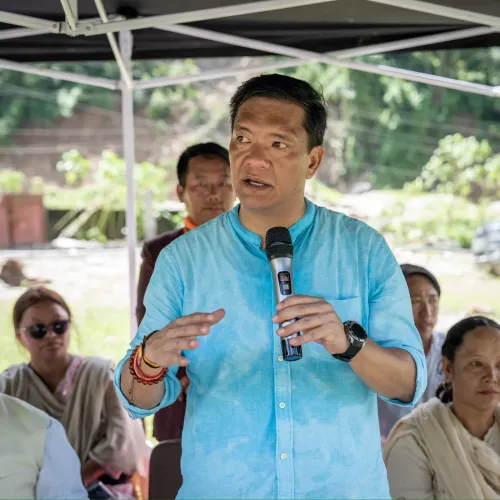
Posting on X, CM Khandu stated that 'several remote areas in Arunachal have suffered extensive devastation, but their stories remain largely unheard because of difficult terrain and remoteness.' He confirmed that during his meeting with the IMCT, led by Joint Secretary Ms. Nishtha Tiwari, he 'ensured these unheard voices were brought to the forefront of our flood assessment.' The Chief Minister added: 'No part of Arunachal will be forgotten.'
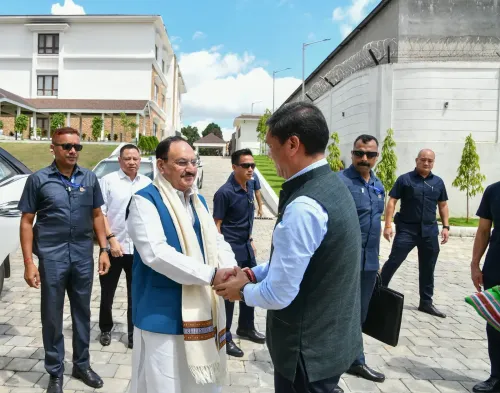
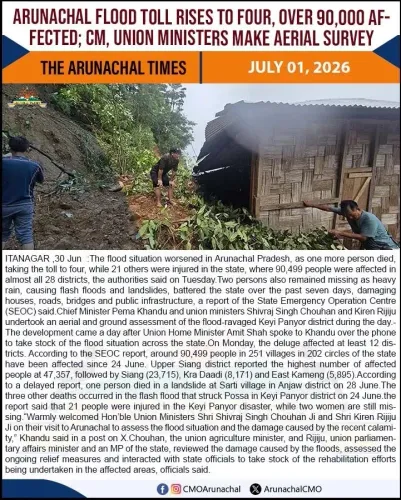
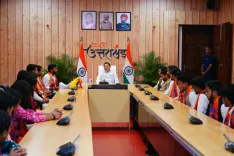
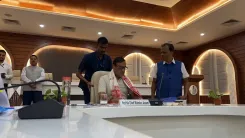
The post was accompanied by four photographs, indicating the meeting was a formal, documented engagement between state leadership and the central government's assessment body.
Policy Backdrop
The Inter-Ministerial Central Team is a mechanism established under the Disaster Management Act, 2005, which empowers the Centre to dispatch multi-ministry teams to disaster-affected states. These teams evaluate the scale of calamity damage and submit recommendations that determine the quantum of financial assistance released from the National Disaster Response Fund (NDRF).
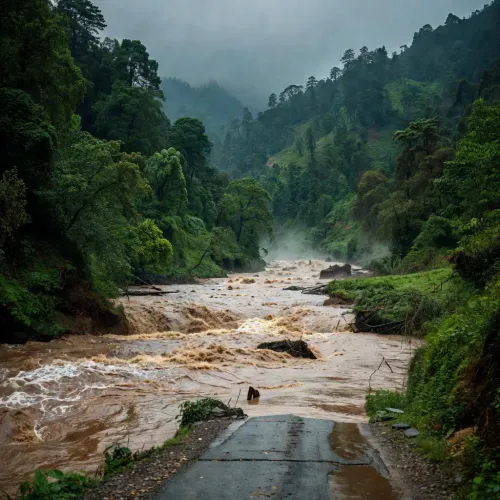
Arunachal Pradesh, a northeastern frontier state sharing international borders, is characterised by steep gorges, high-altitude valleys, and river systems prone to flash floods and landslides during the monsoon season. Its remote border districts have historically faced under-reporting of damage because assessment teams struggle to reach cut-off villages within the window of active relief operations.
Stakeholders and Impact
The communities most directly affected are tribal and frontier villages in districts where road connectivity is severed by landslides or flooding, leaving residents without access to emergency supplies or damage-reporting mechanisms. Under-reporting at the ground level can translate into lower damage estimates in the IMCT report, which in turn reduces the central financial assistance a state receives.
By personally intervening in the IMCT meeting, CM Khandu sought to correct this structural gap, ensuring that villages without the logistical means to document their own losses are nonetheless counted in the state's formal memorandum to the Centre. This approach reflects a broader federal principle that equitable relief distribution must account for access constraints, not merely reported damage figures.
Central teams regularly visit northeastern states each monsoon cycle to quantify losses, and successive governments at both the state and national level have emphasised inclusive coverage for tribal and frontier areas in relief distribution frameworks.
What's Next
The IMCT, after completing its field visits and reviewing the state's damage memorandum, will submit its assessment report to the Centre. The report forms the basis for any special financial package to Arunachal Pradesh from the NDRF. The critical test of Tuesday's intervention will be whether the final IMCT report reflects damage data from the remotest affected villages, and how quickly subsequent state-level disbursements reach those communities. CM Khandu's public commitment that 'every affected village, however remote, receives equal attention and support' sets a benchmark against which the relief rollout will be measured.
Point of View
He shifts accountability upward — if remote villages are later found to have been excluded from relief, the omission becomes a central government failure, not merely a state one. The intervention also fits a broader pattern of northeastern chief ministers using high-profile IMCT meetings to maximise their states' share of NDRF allocations. The real measure of success, however, will be the granularity of the IMCT's final report and the speed of last-mile disbursement.
NationPress
6 Oct 2026
Frequently Asked Questions
What is the Inter-Ministerial Central Team (IMCT) and why does it visit states?
The IMCT is a team dispatched by the Central Government, established under the Disaster Management Act, 2005, to assess the scale of natural disaster damage in affected states. Its report determines how much financial assistance is released to the state from the National Disaster Response Fund.
Why are remote areas of Arunachal Pradesh often left out of flood damage assessments?
Arunachal Pradesh's steep terrain, high-altitude valleys, and severed road links during floods make it physically difficult for assessment teams and local officials to reach remote villages, leading to under-reporting of actual damage in official records.
What did CM Pema Khandu do during the IMCT meeting on 7 July 2026?
CM Khandu met the IMCT led by Joint Secretary Ms. Nishtha Tiwari and specifically raised the plight of remote, flood-hit villages whose devastation risks being overlooked, pressing for them to be included in the central damage assessment.
What happens after the IMCT submits its flood assessment report for Arunachal Pradesh?
The Centre reviews the IMCT report and uses it to determine the quantum of financial assistance to be released from the National Disaster Response Fund to Arunachal Pradesh for flood relief and rehabilitation.
Which fund provides central financial assistance for flood relief to Indian states?
The National Disaster Response Fund (NDRF), constituted under the Disaster Management Act, 2005, is the primary source of central financial assistance to states for relief following natural disasters such as floods and landslides.